Among the many horrors of World War II was the construction of the Burma–Thailand Railway, where tens of thousands of prisoners dropped dead of illness, exhaustion, and malnutrition, and once strong young men were reduced to skeletal frames of flesh. Jacqueline Passman, daughter of a British prisoner of war, talks to us about the experiences of her father, Harry Silman, a doctor with the British Army who was there and kept a diary, now published for the first time.
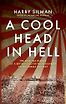
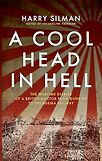
A Cool Head in Hell: The Wartime Diaries of a British Doctor from Dunkirk to the Burma Railway by Harry Silman & Jacqueline Passman
For many Brits and Australians, the Burma Railway symbolizes prisoner of war suffering in World War Two because the conditions were so awful and the death rates were so high. For anyone who doesn’t know the details of what happened, could you explain what it was all about?
It was a group of about 100,000 soldiers who were captured—approximately 85,000 British and 15,000 Australians. My father’s division had been en route to North Africa, as far as we know. But they were rerouted to support the Australians in Singapore after the attack on Pearl Harbor on December 7, 1941.
The British army arrived in Singapore just 10 days before it fell. Winston Churchill had thought Singapore was invincible. All the guns were pointing south to sea, and the Japanese came from the north through the so-called impenetrable jungle. I think it’s counted as one of the biggest military disasters in British history.
They surrendered on 15 February 1942 and all the prisoners of war were rounded up and sent to Changi. Anyone who has been to Singapore will know that’s the name of the airport today. There’s some confusion between Changi prisoner of war camp and Changi jail. There still is a civilian prison on the site but the prisoner of war camp was spread over an enormous area, covering what had been Australian and British army barracks.
But the area was not built to hold 100,000 people. The first, most important task was for the Royal Engineers to dig latrines. Diarrhoea was rife. I can’t imagine what it must have been like till they got the latrines going.
Eventually, things settled down. The soldiers learned to adapt. They had no idea their incarceration would be so long. In my book, I explain the ways they combated boredom, the food, the medical issues.
But gradually, maybe within a few months of arrival, different groups of people were sent away from Changi. All they knew was that they were going “up country.” That was the expression my father used for what we now know as the Thai-Burma Railway. They never got any information back, so they had no idea what was happening there but the impression was always given that they were going to a better place. Singapore is very humid and it was thought it would be more pleasant up in the hills. So succeeding groups of prisoners went off quite happily.
By April 1943—14 months after they arrived—there were not many people left in Changi. Each group that went off had been given an alphabetical title and the last one left was F Force. The problem with F Force was that two-thirds of the men were unfit and had originally been left behind for that reason.
They were told they were going to a wonderful place in the hills with a good climate and that they could take all their belongings. They even took their musical instruments, including pianos. Initially, they wanted my father to stay with the few thousand men who were going to be left behind in Changi because they weren’t well enough to travel, but he managed to pull some strings—along with his good friend, the Padre Eric Cordingly. In the end, they accompanied the group as their doctor and chaplain.
It was not as they’d expected. They arrived at the station, and the Japanese just laughed at all their musical equipment, which they had to leave behind. They then had a horrific train journey. It was very similar to how concentration camp prisoners were herded into trains. They were crammed in, but because of the tropical heat the metal walls of the carriages were so hot they couldn’t bear to touch them. My father said the floors were filthy. There was no water, nothing. There were people with dysentery who had to hang out of the doors—either holding on to chains or other prisoners—to relieve themselves. It was just horrendous. It took five days for them to reach Ban Pong, which was at the southern end of the railway they were building.
They then had a 200-mile march through the jungle, which took the best part of three weeks. That would have been all right if they had been fit people marching over reasonable terrain. But many of them were sick and it was jungle terrain. It was very, very hot, so they tended to march at night. It was dark and as they marched over parts of the railway that had been built, some of the men actually fell through the sleepers down the mountain. That’s the entry in the diary where my father wrote in capital letters: ‘HELL IN THE JUNGLE’—and he wasn’t prone to exaggeration. He wrote about it straight after the march, and then again a day later, so his account is very immediate.
That’s incredible. Tell me about how you came to put the book of his diaries together, because I think you say in the book that he didn’t talk about his experiences much, did he?
No, not at all. He never said a word. The only thing we knew as children was that he had been a prisoner of war, because if we left something on our plates, my mother would occasionally say, ‘Oh, your father would have been so happy to have had a meal like that when he was a prisoner of war.’ He also had recurring bouts of malaria, but when you’re a child, you take things like that for granted, and it certainly never occurred to me to connect it with his time in the Far East.
Then, in the 1980s, my parents went on a holiday to the Far East. It was a tour that included Singapore, and my father asked permission to visit Changi jail. My mother found it very unpleasant, hearing the prison gates clang shut behind them, but my father found his old cell and I think it had a cathartic effect. When they came back, I was round at their house one day, and he said, ‘Come upstairs. I’ve something to show you.’ He reached up to the top shelf of his wardrobe, and he got down a smallish brown leather suitcase. I’d never seen any of the content, but it was packed full of stuff. There were rolled up drawings and sketches and watercolors. There were the diaries. There were various bits of war memorabilia. There was his medical kit.
Then he said, ‘I’ve been thinking about doing something with my diary.’ What had happened is that the author of one of the books I’ve chosen, Towards the Setting Sun, knew my father kept a diary. He sent him a copy of his book after it was published with a letter saying, ‘Harry, you should really publish your diary.’
To begin with, Dad thought it all happened too long ago and that no one would be interested, but then he started dictating parts of it to me. Sometimes I was there in person, sometimes he dictated it onto a cassette. The only bits he thought anybody might possibly be interested in were the sections to do with the railway, starting with that journey up country, and also the part about Selarang, which is a very little-known, horrific incident.
So I transcribed them, and we sent them to the Imperial War Museum. We got a really nice letter back. I was quite surprised to learn that researchers were using his material. Dad never thought anything of it, but people started contacting him. Somebody interviewed him for a radio program. They did a big feature on him on a World War Two website. Then, about two years before he died, Yorkshire Television were doing a program called Doctors at War. They interviewed six doctors who had all had different roles in the war. Dad was the only one who had been in the Far East. So there was a 15-minute television program about him, which is really rather nice, because I do talks every so often, and I usually try and include a little bit of it to show what my father was like.
Well, you’ve written a wonderful, wonderful book. It’s so special. In the days after I read it, I kept talking to people about your father because he was so amazing.
It’s lovely of you to say that.
I don’t know if it’s a generational thing, but faced with these awful circumstances, he just got on with it. It’s so impressive, compared to some minor thing we get worked up about today.
They didn’t have a choice. There were some people who couldn’t cope, but I think those who did were the ones who just got on with it. Also, they were all army trained, so there was the discipline of following orders.
People did complain about the food. In his diary, my father mentioned a few times that there were more important things in life. He couldn’t really understand the petty squabbles that often happened.
In the book, you talk about your father being a doctor—that having a job to do helped. Also, his upbeat personality. Some people just couldn’t hack it. You describe one soldier who isn’t particularly sick, but just sort of gives up the will to live and dies.
I think there was a very strong core in my father. I don’t see how he could have survived otherwise, because he wasn’t well. He did live till he was 94, but when we were children, it was quite normal for us to come home from school and for dad to be in bed because he wasn’t feeling well. But he was always cracking jokes. It’s just what he was like. He was a lovely man to be around.
I only found out a few years ago that they were actually forbidden to talk about their experiences. They were issued with an order that basically said, ‘The war in Europe is over. People are getting on with their lives. They don’t want to hear these tales of woe. They don’t want to be upset by the thought of what people might have gone through.’ So they were told not to say anything.
It’s not surprising that there were lots of cases of PTSD. I’m friendly with Eric Cordingly’s daughter, Louise. She did some research on families, and found that ours was quite unusual in that Dad was still positive and optimistic, and the trauma hadn’t been transmitted to our generation. With other families, a bit like Holocaust victims, it was passed down, and there was something there all that time.
So not being allowed to talk about it was very bad, do you think?
Definitely. I think they needed to talk about it. I don’t know whether men told their wives. I don’t think my father told my mother everything, because she was a lot younger than he was. It was a real love match, and they were very, very happy. But I don’t think she really knew the details until we got the diary down and she read it for the first time.
How many years later was it that he brought out the diary?
It was around 1984-5, so 40 years after the end of the war. That’s when he started thinking about it. All we knew before then was that he used to watch anything on television that was related. So any films, for example, like Bridge on the River Kwai, he would watch. He always said, ‘That’s very sanitized. It wasn’t like that.’
That was his judgment on the David Lean/Alec Guinness movie?
Yes, certainly. I don’t know if you saw the recent dramatization of The Narrow Road to the Deep North? That was very graphic, and I think if he’d seen that, he would have said, ‘That’s what it was like.’ That’s one of the books I’ve included because while it is fiction, the reality is very much as my father experienced it.
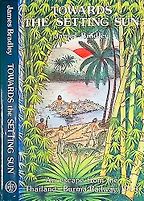
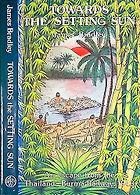
Let’s turn to the books you’ve chosen. First up is Towards the Setting Sun by James Bradley, which you mentioned. He was a lieutenant with the Sappers, the Royal Engineers, and managed to escape from the Burma Railway with nine others in 1943. Tell me more.
This was the most incredible escape story, because escaping from the railway was almost impossible. Surviving it was unheard of, and when you were caught, it was routine for all escapees to be executed. There was impenetrable jungle on all sides and the locals were offered a good sum of money to report anyone who did escape.
Still, they managed for a while. Five of them died in the jungle. And when they were caught—betrayed by someone who was bribed—and brought back, they somehow managed to have their sentences commuted to jail.
Dad went to see Jim Bradley in hospital after he came back. I actually included that in the diary, because it was so amazing—Dad’s words repeating what his friend had said. They’d been quite friendly all the way through, part of a group of officers. I’m a little bit uncomfortable about the separation between officers and the ordinary ranks. I’m sure the officers were more comfortable and had privileges, and I’m very conscious of that. But they also had responsibilities.
James Bradley was one of the engineers who were absolutely vital to their survival in the camps. I hadn’t realized what the engineers did…
Why were they so important to survival?
First of all, building the latrines. That was always the first thing they did when they set up camp. They built huts to sleep in. They provided electricity using batteries. They just made life more comfortable.
When they were sent to Selarang, there were 15,000 people in barracks built for 800. It was all concrete, and they had to dig into it to make latrines. It’s very difficult for us to imagine conditions like that. What we complain about now is nothing compared to what they had to put up with.
Tell me more about the escape. How long did they manage out in the jungle?
They survived nearly seven weeks. For the last three, they were virtually starving and only had water. Jim Bradley credited his survival to my father, because one of the conditions that caused a lot of unnecessary deaths was tropical ulcers. They were hacking their way through thick bamboo. It was sharp and cut their legs. My father had given Jim Bradley some sulphonamide, which he ended up needing.
Dad said that he had suspected why Jim Bradley had asked for it, but didn’t ask any questions because it was much better that he didn’t know. Unfortunately, every time people escaped, the ones who were left behind were put on starvation rations for a few weeks.
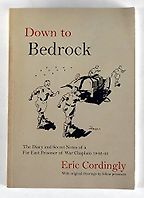
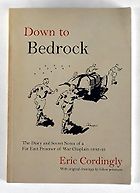
Let’s go on to the next book. This is Down to Bedrock by Eric Cordingly, the chaplain or Padre.
He’d also kept notes, but his diary is a lot shorter. It’s a very different perspective, because he talks a lot about faith. He was a very humane person. My father and Eric Cordingly were from different religions, but they got on really well. They both had a job to do. One thing I hadn’t realized is that they were both only ‘attached’ to the army. In all the records, it says Army Chaplain, Army Medical Officer, treated separately with non-combatant status.
Louise, his daughter, has sent me the books she’s written based on her father’s story. We were put in touch by a mutual Far East prisoner of war organization and she was thrilled her father was mentioned 86 times in my father’s diary. I also have quite a few photographs of our two fathers together. We’ve kept in good contact since.
Eric Cordingly writes that although it was maybe the worst time, it was also one of the best times in his life, because so many people who you wouldn’t have expected would come to his church services—whether it was for the religious side or just getting together and singing together. He found it a very fulfilling time.
He says at the beginning of the book that before he had felt a bit redundant, as a non-fighter in the army. But then, suddenly, in these very tough circumstances, he was really needed as a chaplain.
Yes. I can understand the attraction. I found the book very moving. The church in Changi was in a little mosque. I know Dad, in a way, was a little bit envious, because he said people were spilling out of the church. They also had Jewish services, but there weren’t so many people. I think 0.5% of the army was Jewish, and not all of them would have come.
What I liked was the way they used to have discussions about all sorts of topics at night. They just enjoyed each other’s company.
You mention it in the book, but did they know what was going on in Europe, what was happening to European Jews?
They had a fair knowledge of war events in Europe, thanks to their illegal radios. One of the reasons why my father’s diary was so difficult to decipher is that there are bits cut out. He realized that if the Japanese got hold of the diary, they would realize he could only have got certain items of news from an illegal radio. I don’t think they had any awareness of what Hitler was doing to the Jews in Europe, but then that also applied to people in the UK.
In Dad’s medical room, he had a chair with hollow bamboo legs. That’s where they kept the bits of the radio—inside the legs of the chair, and then some of it, apparently, in one of the pipes of the sink. If he’d been caught, I don’t think he would have survived to tell the tale because it was absolutely forbidden. Keeping a diary was bad, but having an illegal radio was the death penalty.
So the Japanese weren’t singling out Jewish prisoners?
No. I have read a huge tome about Jewish Far East prisoners of war and there’s only one anti-Semitic incident documented. As far as the Japanese were concerned, the prisoners were all the lowest of the low. Their religion was not an issue. In the last year, they actually provided materials for the Jewish prisoners to build a synagogue within the camp. They hadn’t previously had a proper synagogue; they just used odd rooms up to then.
The Japanese seemed to actively encourage religious services. I think it was because it kept the prisoners out of mischief. Also, I think they were a little bit superstitious: you didn’t upset other people’s gods.
The whole rationale in the Japanese army was brutal, so each successive level would brutalize the people below them. For the bottom-ranking, ordinary Japanese soldiers, the only people they had to take it out on were the prisoners.
There was a television programme, maybe two or three years ago, where they interviewed two Japanese guards. One had been a high-ranking officer and one was very low. The one who was high up said he had no guilt at all. He was just following orders and they didn’t do anything wrong. The one who was in the lowest echelon of the army ranks said he still, even after all this time, had sleepless nights about the way they treated the prisoners.
I think for a long time what happened in the prisoner of war camps coloured British perceptions of Japan, like in Bridget Jones’s Diary, when her mother says ‘cruel race’ every time someone mentions Japan. I feel in your book, you are trying to understand where they were coming from, and making distinctions. One Japanese soldier saved…was it Eric Cordingly?
Yes. The Padre was caught passing notes, so he was tied to another prisoner, and they were both put in a 10-foot-deep pit. They were given nothing. Then, at night, one of the Japanese soldiers, a Christian, climbed down a bamboo ladder and gave them sweetened tea and two bananas. This soldier would almost certainly have been shot if they’d found that out.
I’m not sure how much is available out there in English, but did you read any Japanese accounts of the war?
No, and that is a fault I ought to rectify. I have been to Japan. I went with my daughter and granddaughter a few years ago. The place that made the biggest impression on me was going to Nagasaki. I found that so horrific and so moving. I can’t really get my head around it, because I know that if it hadn’t been for the atomic bombs dropped on Hiroshima and Nagasaki, none of my family would be here. There was a limit to how long my father could have lasted under POW conditions. But does the end justify the means? I’m not sure. Also, it wasn’t just for that generation: the radiation effect spread through subsequent ones too.
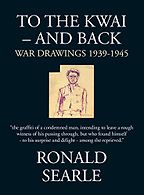
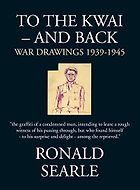
Now we’re at a book that’s more focused on the visual. It’s by the cartoonist and illustrator Ronald Searle, probably best known in the UK for creating St. Trinian’s, a comedy about an out-of-control girls’ boarding school. But he was also a prisoner of war. Tell me about To the Kwai and Back: War Drawings 1939-1945.
Ronald Searle documented what he saw in quite graphic detail. If you look here, you can see a soldier with a bayonet in a prisoner’s back. The prisoner has to hold a rock up in the air above his head, and if he lowers it, the soldier will bayonet him. It’s horrible.
He also went into the hospital, and, for example, here’s a picture of a man dying of cholera. There are a lot of pictures of men with prosthetic limbs.
It’s just drawings of people around, his equivalent of my father’s diary. It’s a wonderful book. It is so different from St Trinian’s. It is amazing it’s by the same person.
He wasn’t all doom and gloom. In my book, I talk about how they put on shows and Ronald Searle did the scenery. He also did a cartoon for my father—my brother has got that framed at his home.
Does the book have text as well?
There is a varying amount of text. Here’s a typical double page. The text (about cholera) reads, “Without sophisticated emergency treatment—and there was little or nothing in the way of treatment—one swiftly shrank to nothing and died within 24 hours. To reduce the sources of infection, there were no more burials and from then on our nights were illuminated not only by a great, ever-burning bonfire in the centre of the camp, but also by the Bosch-like glow of the funeral pyres that were now sending all too many of us up in smoke.” (By Bosch, he means the artist, Hieronymous Bosch).
I wasn’t sure about putting this as one of the five books, because it can be a bit hard to get hold of, but you can get it second-hand, or your library could order it.
I’m glad you did. Just seeing the men, how undernourished they were, with their ribs showing. They’re like skeletons.
That’s what my father said in the Yorkshire Television programme. They were just these skeletal bodies, desperate for relief that he couldn’t give them because he didn’t have anything. All he could give them was water. He had nothing else.
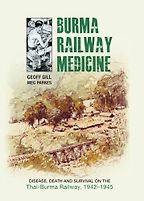
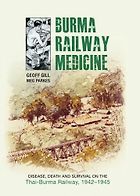
Let’s look at the next book you’ve chosen. This is Burma Railway Medicine: Disease, Death and Survival on the Thai-Burma Railway, 1942-1945 by Geoffrey Gill and Meg Parkes. Tell me more.
I included this one because if somebody is really interested in what happened from a medical point of view, this is a very readable book. It’s an academic assessment of the problems they had and it covers a lot. They have gone through every possible source of information. I was actually given a copy because they took bits from my father’s diary.
One of the interesting things that came out of the incarceration is that the medics from all the different divisions used to meet regularly for what was called the ‘Changi Medical Society.’ They would discuss how they treated different diseases and try to understand why treatments would work with some people and not with others.
It was a very good network of all the medics and they learned a lot. My father said they learned about eye conditions and they certainly acquired much knowledge about vitamin deficiencies, that’s for sure.
I loved the whole passage about vitamins in Eric Cordingly’s book: “Our life of late has been obsessed with a frantic talk about Vitamins. Never had I imagined could those nebulous things have assumed such vast importance.”
Yes, Dad was very focused on vitamin deficiency. He does mention it many times in his diary, but I didn’t want to make the book too heavily medical. It was difficult because there’s obviously a lot of medical detail in the diary.
Which vitamins were they desperately short of?
All of them, really, but particularly A and B. They got some vitamin C because they did have vegetables, though not many. The lack of vitamin A caused eye problems. Vitamin B is the one that’s in yeast and unpolished rice. The lack of it causes beriberi and there were a lot of outbreaks.
They were serving up bags of rice polishings that are normally discarded, because they contain vitamin B. Jim Bradley says in his book that they were horrible but they ate them because they were scared of being impotent.
Yes. Dad was disappointed because after a while he realised they were just being collected from the floor with all the dust, and there wasn’t enough vitamin B in them. They used to eat the weevils as well, because they were a small source of protein. They ate anything and everything – even a snake!
Did you get to the bottom of why the Japanese kept them so short of food? Were the Japanese themselves short?
I don’t think so. I do know the Japanese kept back a lot of Red Cross parcels that came with food for the prisoners of war, which were found afterwards. The prisoners were desperate for Marmite because it contains vitamin B. After Japan surrendered, they found jars and jars of Marmite stored in one of the larders of the Japanese officers.
The prisoners were allowed to keep ducks and chickens, which they bought from the locals. They grew crops and did what they could to supplement the diet, with mixed results. It worked better sometimes than others.
It’s odd because if you’re trying to build a railway, surely you want a reasonably healthy workforce? Starving the prisoners of war doesn’t seem to make sense from that point of view.
My father said he reckoned they had so many they didn’t care if half of them died. If one died, there was always another one to take his place. And in fact, of F Force—the last group to go up, who were sent to the northernmost camp—more than half of them did die on the railway.
They were in camps in a hitherto unexplored jungle area, cutting through jungle that people had considered wasn’t fit for putting a railway. The Japanese wouldn’t have had many amenities, so I assume they kept the best ones for themselves.
And I think you say in the book that the railway was finished, but it was never much used.
Yes, it was built, and the best thing for the prisoners of war when it was finished was that they could travel back on it. It took three days to travel back compared to the horrendous journey they’d had going up eight months previously.
Dad said that, as far as he knew, they hardly used it during the war and certainly, by a few years after, it was not used at all. In the end, it was mainly used by the Japanese to transport the soldiers who were guarding the prisoners.
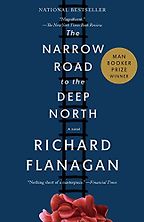
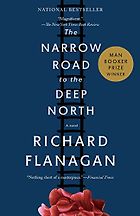
I put this on the list because I thought it’d be good to have something fictional. I’ve read quite a lot of novels based around the war in the Far East and this one is by far the most realistic. I think my father would have said, ‘This is what it was like.’ But it’s very graphic. It was televised recently, and many of my friends said they couldn’t watch it because it was so unpleasant.
The book won the Booker Prize. It is an interesting book, a compelling read, combining the horrors of working on the railway with a love story—an unusual combination.
It was partly based on his father’s experience, is that right?
Yes, his father was a doctor, which is why it resonated with me. It’s set in three time zones: the carefree period before the war, the horrors of the prison camp, and then, a section well after the war, when he was a celebrated war hero, and has been asked to promote a fellow POW’s book of war sketches As an old man he is tormented by memories of the past, and these shape the novel. When I read it, it was the first time I’d read a book set in this period where I thought, ‘This is by somebody who knows what it was really like.’
And you enjoyed it as a work of fiction as well?
Yes, I did. A friend who read it did not like the frequent time shifts, but that didn’t worry me. I thought Flanagan treated a difficult subject in a thoughtful way.
I don’t know what happens in the book, but it must also have been interesting for you, to read how the main protagonist’s father fares after the war.
He never forgets it and he still has nightmares about the horrific events he witnessed. As far as I know, my father never did. Obviously, that’s something I couldn’t know for sure, but Dad didn’t seem to be that sort of person. In the book, the doctor, as he gets older, gets very difficult, and people don’t really understand why.
That never happened with Harry—it didn’t come back to haunt him?
No, I can’t say that it did. I think you’re very lucky if you can compartmentalize your life and say, ‘This is the past. It’s not going to define me. I’m just going to get on with it.’ Dad did say to me that he had wondered if he would get out, and whether he would ever have a family. They actually thought they might all be impotent from the diet.
So the fact that he not only had children, but grandchildren, and then five great grandchildren before he died…
Did you inherit his sunny disposition?
I try very hard and I like to think I have. I’m definitely a glass-half-full person.
January 18, 2026
Five Books aims to keep its book recommendations and interviews up to date. If you are the interviewee and would like to update your choice of books (or even just what you say about them) please email us at [email protected]
Five Books interviews are expensive to produce. If you've enjoyed this interview, please support us by donating a small amount.
Jacqueline Passman
Jacqueline Passman taught in both mainstream and deaf education. The discovery of her father’s wartime diary sparked her interest in the experiences of POWs in the Far East, and she gives regular talks on this subject.
Jacqueline Passman taught in both mainstream and deaf education. The discovery of her father’s wartime diary sparked her interest in the experiences of POWs in the Far East, and she gives regular talks on this subject.