Venezuela has been in the news, with the arrest of its president, Nicolas Maduro, by the US. It has suffered decades of misgovernment and still has high levels of poverty, in spite of great oil wealth. Is Venezuela a classic example of a country devastated by the resource curse? Or is it much more complicated than that?
It’s certainly a country which has been devastated by a resource curse, but the curse has also been a curse of mis-governance, rather than simply the curse of the commodity itself. Venezuela’s challenge has really been about how they manage their oil resources, not just over the last three decades, but over many decades, dating back to 1922.
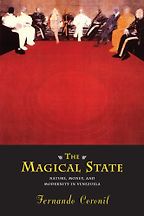
Let’s turn to the books, starting off with The Magical State: Nature, Money and Modernity in Venezuela by Fernando Coronil. Tell us about this one and why you’ve chosen it.
There’s a personal reason why I chose this book, which is that this book by Fernando Coronil was published in English in 1997, when I was just wrapping up my PhD in Venezuela. A very good friend of mine called Bernardo Alvarez, who was an academic at the time, said, ‘You have to read this book, but only when it is published in Spanish.’ Bernardo went on to become oil minister in Venezuela and the Venezuelan ambassador in the United States. The Magical State was published in Spanish in 2002 and Bernardo called to say this was a moment of national pride. He was always referring to this work of Fernando Coronil and how central it was to how he saw the Bolivarian Revolution’s understanding of its relations with the US.
There’s also an intellectual aspect for me. What’s fantastic about The Magical State is that it’s this wonderful ethnographic, anthropological analysis of how oil has shaped Venezuela’s perceptions of modernity, and how the assumption of oil wealth has created this idea of a transcendental president and an omniscient, omnipresent state, which is capable of granting all of the wishes of Venezuela’s people, because oil is seen as being such a lucrative commodity.
Fernando Coronil provides a rich history of Venezuela from the period after the Second World War, when Venezuela was moving towards democracy. He carves the story wonderfully of how oil has influenced Venezuela’s development, on the one hand, being this black gold, but then becoming the devil’s excrement, because it’s so catastrophically mismanaged, and Venezuela becomes so over-reliant on it. It has become such an influential book, in particular understanding what Coronil himself referred to as ‘subaltern modernity,’ which is understanding the experience of people who are peripheral to global capitalism, and that experience of modernity in context, such as Venezuela.
The ‘magical’ bit of the magical state is the benefits that are supposed to flow painlessly from having black gold. Is that right?
Absolutely. It’s this perception of endless wealth, that the state is permanently wealthy and can meet the needs of all of society. There is this notion of a positive-sum game that oil has structured. But obviously, the tragedy of Venezuela was that it was completely overdependent on its oil. So when it experienced oil price crashes, that had devastating economic consequences. It’s those contours of Venezuela’s political economy that Coronil really manages to navigate quite beautifully in this book.
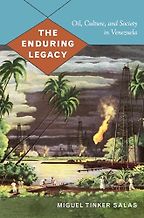
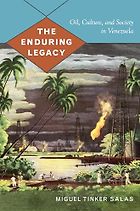
Next up is The Enduring Legacy: Oil, Culture, and Society in Venezuela by Miguel Tinker Salas. Tell us about this one. Why have you chosen it?
Miguel Tinker Salas’s publications have focused on oil and the enduring legacy of Venezuela’s patterns of oil exploitation. After the discovery of oil in Lake Maracaibo in 1922, US oil companies came into the country on very, very good terms for the companies themselves. Essentially, they were only paying rent on the land that they were drilling, rather than any taxes on the oil that they were actually digging out of the ground. Miguel is very interesting in discussing this process, how Venezuela entered the international oil economy on very, very unfavourable terms. And then, very similar to Coronil, he talks about how this sense of injustice—this idea that oil was very, very lucrative, but it was being exploited by somebody else, another country was profiteering—how that then feeds into oil nationalism in Venezuela and ultimately the nationalization of the oil sector in the early 1970s.
But what’s really, really interesting is the research Tinker Salas has done on life in the US oil camps. They were mainly based in places like Maracaibo, which is to the west, on Venezuela’s border with Colombia. He describes the life as secure living for the Americans who were working in these enclosed camps—with very high standards of education, of healthcare and all these American facilities—and yet Venezuelans living on the outside really having no access to either the jobs—because oil is a capital-, rather than a labour-intensive industry—or to the benefits: neither the healthcare nor the education that they saw on these camps. So the camps, as Tinker Salas argues, become very influential in Venezuela’s moves towards democracy, because people saw what kind of life they could have because it was provided in these camps.
In the early 1970s, was there a meaningful shift in how money flowed around the system, and were there social benefits that accrued, or did it just get hopelessly mismanaged by the state after that?
The challenge Venezuela had was that it didn’t really have a national oil company to nationalize. In effect, PDVSA, the Venezuelan national oil company, is essentially a state holding company. All of the oil exploration and exploitation was done by foreign companies. So Venezuela never had that domestic production capacity. And what’s proved really quite catastrophic, up to this contemporary period, is that most of the refineries of Venezuela’s very special blend of heavy crude are all based in the United States.
When nationalization did happen, more taxes and revenues came to the Venezuelan government. During this period, the president was a man called Carlos Andrés Pérez. It was a great boom period for Venezuela, with massive investments in education, healthcare, pensions, with subsidies for housing. But the catastrophe was huge. Levels of corruption ran side by side with this, and there wasn’t any real development of other economic sectors. So when the price of oil went down again in the late 1970s, Venezuela was catastrophically indebted.
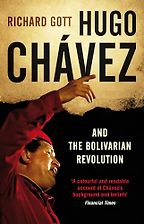
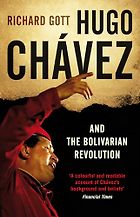
Book number three is Hugo Chávez and the Bolivarian Revolution by Richard Gott.
Richard was a very famous journalist in the UK, and worked for the Guardian for many years, reporting on Latin America. I had the great pleasure of meeting Richard on a number of occasions, at events around Venezuela and in official meetings on Venezuela. What was interesting about Richard was that he identified Hugo Chávez as being a very, very important political actor. Way before Hugo Chávez was actually elected to the presidency of Venezuela, Richard Gott was able to create a relationship with Hugo Chávez, in which Chávez was very comfortable discussing all aspects of his life with him. This book is a really interesting piece of political biography. Obviously, it’s very sympathetic to Hugo Chávez.
Some of us who work on Venezuela see the country under Hugo Chávez and Nicolas Maduro as going through different phases. The first phase of Hugo Chávez—essentially from when he was elected in 1998 through to the second presidential election in 2003—was seen as a very progressive period when many of the basic ideals of the Bolivarian Revolution were writ large.
What’s wonderful about this book is that Richard Gott really spoke to Hugo Chávez at that point in time. He was very clever at situating Chávez at that particular historical moment in Latin America, which was the beginning of the ‘pink tide’, this left-wing backlash, with people like Lula being elected in Brazil and Evo Morales in Bolivia. That was a big regional transformation and that’s what Richard Gott really captures in this book.
But it is also very important because it gives you an idea of how significant a political actor the Venezuelan armed forces are—the Bolivarian armed forces. Right now, one of the big challenges in Venezuela is trying to navigate around the Venezuelan military, because they’re the key stakeholder in the country. They’re the most powerful actor. Richard positions and explains the military, and the identity and the loyalties of the military, in a way that, unfortunately, US foreign policy has neglected. It’s really important in explaining why Chavismo remains in power today.
What makes the military such an important player? Do they have huge economic interests in state-owned companies?
Yes, they have. They have huge economic interests. There are lots of allegations of corruption and large numbers of senior military officers are currently under US sanctions. Partly as a result of that, the army has a very strong esprit de corps. At the same time—and this is frequently neglected, particularly by the US—there is also a very strong ideological cohort within the Venezuelan armed forces. Richard Gott captures this, that the Venezuelan military see themselves as the embodiment of the legacy of Simón Bolívar and the national independence struggle of Venezuela. There’s a very strong ideological tradition in the Venezuelan armed forces.
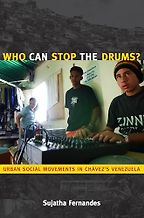
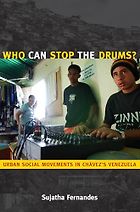
Book number four is Who Can Stop the Drums? Urban Social Movements in Chavez’s Venezuela by Sujata Fernandes. Tell us about this one.
There are very few women who write on Venezuela, so Sujata is up there for me. What’s important about this book is the way she captures urban social movements. What Sujata is looking at in this book is the barrios of Venezuela, the shanty towns around Caracas and other urban centres. She talks about the relationship that urban social movements had with Hugo Chávez’s government. Chávez is usually understood as being quite a populist figure, and a lot of the media narrative created this idea of unswerving popular loyalty to Hugo Chávez. What Sujata Fernandez points out is that, actually, this was a two-way process. This is really neglected and misunderstood.
She talks about the political history of the barrios, these urban shanty towns, this strong tradition of collectivization, revolution, struggle and resilience. She situates all of that in the 1960s with the growth of the barrios. Then, when she gets to the period of Hugo Chávez, she explains what the appeal of Chávez was to these communities, where people are excluded and living a life on the margins.
But she doesn’t just explain the appeal of Chávez in the barrios, but most crucially, she also explains that Chávez was dependent on the support of the people in the barrios. It was not only to bring him back to power after the coup against him in April 2002: the barrios were always the bedrock of Hugo Chávez’s support. As a result, he had to listen to the people in those communities. He had to put resources in and listen to their political demands. It was a very, very important two-way process, and that’s missed a lot because we have this assumption that Chávez is this great, charismatic, populist figure at the head of an authoritarian state.
Certainly, Chavez was a great populist figure. But the reality is that the Bolivarian Revolution would not have survived in the early days had it not been for that kind of reach into the barrios and the responsiveness to barrios’ demands. So some of the initial programs of the Venezuelan government—participatory democracy, devolving power down to local communities, a lot of emphasis on resources for community media—that’s all captured here by Sujata Fernandes, and she talks about how that was seen to democratize racial power, class power, and social power in Venezuela.
The last book I have chosen talks about how this was all squandered later on in the Chávez presidency and most clearly in the Maduro presidency. But I think what’s lovely about Sujata’s book is that it really is a very rich ethnography that captures a very particular moment in Venezuela’s revolution, the part when it was seen to be at its most democratic and participatory.
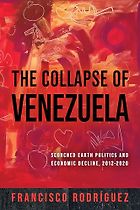
That’s fascinating. Finally, tell us about The Collapse of Venezuela: Scorched Earth Politics and Economic Decline 2012-2020 by Francisco Rodriguez.
This is an excellent book by my colleague, Francisco Rodriguez, at the University of Denver. He particularly focuses on the period between 2012 and 2020, from when Hugo Chávez died and into the Nicolas Maduro presidency. When I was choosing these books, I thought Francisco’s book was the best at capturing the state of degradation and at explaining the economic and social collapse that Venezuela has experienced since 2012, and after Maduro became president.
It also coincides with the incredibly aggressive US responses to the Nicholas Maduro government. So what we see is the beginnings of the Maduro government coinciding with a very tough response, initially from Barack Obama, then from the first Trump presidency, from the Joe Biden presidency, and again, currently, under the second Trump presidency. What Francisco does very cleverly in this book is to demonstrate—and it’s a very serious claim to make—that destroying Venezuela’s economy was actually a political strategy, both of the Venezuelan government and of the Venezuelan opposition. It hasn’t just been institutional failings that account for the fact that seven million Venezuelans have fled the country. It’s not just misgovernance. It’s been the strategy of the government to hollow out institutions—and also of the opposition, in an attempt to get US support. If that included US sanctions, then so be it, according to the opposition. Both of those strategies have combined to have a devastating effect on Venezuela’s economy.
Where we are right now is trying to see if the actions that have been taken in Venezuela, most recently by US President Donald Trump, are going to be able to reverse this calamitous situation that Venezuela now finds itself in, after many decades of misgovernance.
What do you think the outlook is following the decapitation of the country by Trump? Is it going to bring an end to this mutual antagonism that’s hollowing out the country as you described it?
We are in complete limbo with Venezuela right now. I think the decapitation strategy has been the most extraordinary thing we’ve seen on the part of the US. Right now, there is no way that the opposition leader, Maria Corina Machado, could have taken state power. From top to bottom, local government, the National Assembly, the judiciary, everything is controlled by the Chavistas, by Maduro’s people. So I don’t think Maria Corina Machado could have realistically stepped into power, but I don’t think any of us had really quite anticipated the Trump administration being able to work so smoothly with Delcy Rodriguez, the new president, as appears to be the case. But, realistically, no oil company, no investor is going to be going near Venezuela as long as we’re in this limbo. It’s just completely unrealistic to think significant investment is going to go into the country when we’ve got such legal and political uncertainty.
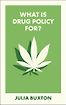
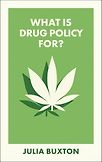
You’ve written extensively on Venezuela, but your latest book is What is Drug Policy For? How does it touch on this story?
It touches on this because the rationale for Trump going into Venezuela was that this was a narco regime. Anti-drug operations are a constant justification for US intervention in countries overseas.
The book discusses the evolution of the international system of drug control, which is overseen by the United Nations, but for which the US has been the lead architect. Basically, it’s arguing that drug policy is about everything apart from drugs. It has nothing to do with drugs whatsoever. For instance, we’ve heard that Maduro is running a narco-regime in Venezuela. But what people don’t seem to understand is that when a kilo of cocaine leaves Venezuela, it’s only worth £2,000. It’s only when it arrives in the UK that it’s worth £27,000. The price of cocaine in Venezuela is very, very low. You could barely run a narco village on the cocaine revenues, let alone a narco regime. More money is made in illicit gold, illicit oil and other things like that. I’m just trying to tackle some of the taboos and misunderstandings about what drug criminalization is for, how supply chains work, and how terribly unsuccessful drug policy has been.
Do you have recommendations for a reordering of the drugs regime? What should be put in place?
The main emphasis is on reform of the international drug treaty system. The whole of the global treaty framework is directed by the 1961, the 1971 and the 1988 UN conventions and there is very little latitude outside of those conventions themselves. Without some mechanism for flexibility, we are just seeing some very slow reforms to the thinking behind the UN international drug control. They are moving away from the model of decision-making by consensus, but at the moment it’s still a very, very sclerotic system. I’m trying to demonstrate in the book that there is a way forward. I’m not confident that initiatives such as small, local-level decriminalization of cannabis and things like that are actually doing us very much good or very much help at the moment.
It’s sort of ignoring the elephants in the room…
Exactly.
Five Books aims to keep its book recommendations and interviews up to date. If you are the interviewee and would like to update your choice of books (or even just what you say about them) please email us at [email protected]
Five Books interviews are expensive to produce. If you've enjoyed this interview, please support us by donating a small amount.