The Allied army that ultimately won against the Japanese in Burma was one of the largest in the world, with a million men under command. Military historian Lucy Betteridge-Dyson, whose grandfather fought in the Burma campaign, talks us through the best books to understand more about it, from big-picture strategic overviews to heart-wrenching memoirs and firsthand accounts of soldiers who were there.
Part of the reason I was interested in your book was because I wanted to know more about World War Two in Asia. You hear so much about Europe, but not so much about Asia and especially Southeast Asia. What I didn’t realize was that this was true at the time as well, that the 14th Army in Burma was called ‘the Forgotten Army.’
Yes, at first, many of the men felt forgotten. They were listening to broadcasts, and the news would always be about Europe and not about what they were doing. There was a real problem with morale with the Allies and the 14th Army in Burma until General Slim and Lord Mountbatten came on the scene, and made it their business to turn that around because they knew it was a problem for fighting troops.
They said, ‘Yes, it’s true, we don’t have the resources they do in Europe. Yes, it’s true, the news isn’t reporting on you, people don’t care, but let’s show them. Let’s prove them wrong. Let’s show them you are the best. You are going to win everything and you’re going to do it all with far fewer resources.’ And they turned it around so that the Forgotten Army became a name they wore with pride.
That’s always stayed with me.
For my grandfather, it all came back again when they came home from the war. A lot of the men who served in Burma didn’t get on the next ship home after Japan surrendered. My grandfather didn’t get back until 1947 because of peacekeeping duties in Hong Kong. There was a lot to sort out. By the time they got back, life had returned to a form of normality for many people in the UK. There weren’t people cheering in the streets like there were for troops returning from the war in Europe.
So again, there was this idea of being forgotten, and it had a slightly different feel. It wasn’t that people were ungrateful, but more a feeling of, ‘What was it all for? We’ve been through so much, and people here don’t even know about it. They don’t seem to care that we’ve come back all these years later. ‘
That was something that my grandfather got involved with later in life. He didn’t really do much about his war service immediately after leaving the military. He didn’t start going to reunions straight away. It took him some decades to come back to it. But in his later life, he did what he could to raise awareness of the campaign he fought in, the third Arakan campaign, which is what my book is about.
Is that how you got interested in the Burma campaign, because of the family connection, or were you just into military history in general?
It all stemmed from my granddad. When I was at school, I didn’t even do history for GCSE. My memories of history and the Second World War in particular would be my fellow classmates going, ‘Oh yes, my grandfather was at Dunkirk.’ When I asked my mum, ‘Where was granddad?’, she said, ‘Oh, he was in Burma at Myebon.’ And I’d go into school and everyone would be like, ‘Where? What?’ Nowadays it’s much better. There is a much greater awareness of the war in Burma.
That led me to want to know more and to understand it more. It really spurred an interest in me. Initially, I was reading a lot of memoirs, a lot of personal accounts. That took me to the First World War because there are so many. That’s where I started, funnily enough.
So it was my granddad’s service that led me to write the book.
And that’s because, like him, you wanted more people to know about what happened in Burma during World War II?
Absolutely. It was something I was threatening to do for years. I kept saying, ‘Nobody’s written about this, it’s so ignored!’ and a friend of mine, Rob Lyman, said, ‘Yes, that’s because it’s you who needs to write the book.’ I kept saying, ‘Yes, I will.’ Then, eventually, I did—but it took me a while to get there.
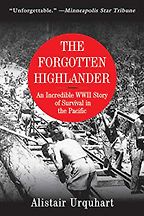
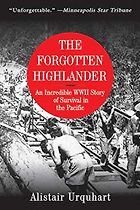
Let’s go through the books that you’ve chosen. First up, you’ve chosen The Forgotten Highlander by Alistair Urquhart, a Scot who served with the Gordon Highlanders, became a prisoner of war and ended up witnessing the dropping of the atomic bomb on Nagasaki. Tell me about his memoir—it sounds like an absolutely incredible story.
This book is a real page-turner and brings the visceral human cost of the war in the Far East to the fore.
As I said, the way I got into the history was by reading memoirs and personal stories. I saw an interview with Alistair on TV, years and years ago and I remember thinking, ‘Wow, what an incredible man.’
Urquhart survived the sinking of the ship he was on, worked on the Thai-Burma Railway, and ended up as a prisoner of war near Nagasaki. All these key events in the war against Japan—and this man was there. His descriptions are very harrowing in parts, but not in a gratuitous way. It’s just an honest man talking about what he experienced.
For me, it really clarified that the war in Southeast Asia was not a sideshow. It covered a vast area. In my opinion, it was the most brutal theatre of the war Britain fought in because of the Japanese ideology. For the Japanese, to be taken prisoner of war was a fate worse than death, so they treated any prisoners that they took with contempt. Alistair’s writing and his recollections really underline that. It helps me to understand why the Japanese army fought the way it did.
And the title, The Forgotten Highlander, links back to what we were discussing, about the men of the 14th Army feeling completely overshadowed by the troops who fought in Europe.
It’s incredible that he survived all these things—because many of his colleagues didn’t.
It’s amazing. It’s a survival story.
One thing that sticks in my mind from the book is when he talks about coming home to Scotland. He found sitting down and having meals with his family incredibly difficult. He was so pleased to be home but had this feeling of, ‘I can’t possibly explain what I’ve seen, what I’ve been through. We’re sitting here having a Sunday dinner and talking about the weather, but I’m still living with these horrors.’ That’s something that is true of all warfare—whether it’s Burma or Afghanistan.
So the human story is the reason I picked this as one of the books that people should read if they want to understand more about the war in Asia.
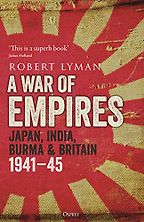
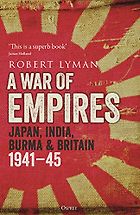
Let’s turn to your next book, which is A War of Empires: Japan, India, Burma & Britain: 1941–45 by Rob Lyman. Tell me more.
This is really a big picture, strategic book. It’s a great explanation of the political background and drivers of all of the nations that were involved in the war in British India—the Japanese, the British, the Indians and all the factions. It really helps to unpick it, because I think that’s something that really puts a lot of people off about understanding the war in Burma, that the social and political backdrop is so complicated.
Rob does an incredible job at taking you through it all, because we’re not just talking about the British Army, the Indian Army and the Japanese army. We’re talking about the hill tribes. We’re talking about the Indian National Army. We’re talking about the different parts of Burmese society and where their loyalties lie, the Chinese, the US. It covers a huge area.
If you’re coming to this fresh, it can feel overwhelming. A War of Empires is the book to read to really give you the context of the experiences of people like Alastair.
Is it primarily focused on Southeast Asia, or does it also cover China and Japan, and what’s happening further north?
It’s about all of them and understanding what each nation’s motivations were for being in Burma.
The book does a lot of mythbusting as well. There’s this old idea that Japan wanted to invade Burma for the resources—rubber and things like that. That’s not really true. They invaded Burma because they wanted to cut off the American supply to China, because the Japanese had been fighting China for a long time.
It’s about understanding why the Americans were so invested in China. China was very, very important to America. It wasn’t actually that important to the British, but because it was important to the Americans, it became important to the British and so therefore it became important to British India.
The book is about the geopolitics of it all, and that’s what makes it a fascinating read.
It sounds really good, because my knowledge is blurry when it comes to India in World War II—other than needing to keep open the Hump.
It all links to the Burma campaign and what the Burma campaign meant for imperialism and for British India after the war. There is quite a lot in the book about the Indian nationalist cause and whether this affected the conflict as much as some say or not. It’s also about the American idea of imperialism. They wanted to support China because they thought China would be good for America. People forget that China was an ally in the Second World War.
So it’s really giving that context. It’s a must-read if you want to understand why the men and the women who were part of this vast 14th Army were there in the first place.
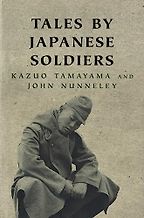
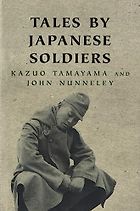
The third book you’ve chosen also looks fascinating. It’s called Tales by Japanese Soldiers, and it’s 62 stories told from their perspective. 180,000 Japanese soldiers died in the Burma campaign, which is quite staggering.
Something that, as a historian, you need to understand and check yourself on is your bias when you’re writing. My granddad and many veterans say that the Japanese were cruel soldiers and did things that were against the unwritten rules of warfare. The reason why I like this book is because it forces you out of the Allied perspective. It’s primary testimony from the mouths of Japanese soldiers themselves, talking about their experience in the war.
They weren’t the jungle robot super-soldiers that they were often made out to be, with no heart and no empathy. They also had families. They also felt lost. They also wept when their comrades died.
This book humanizes them, and it makes you remember that there was a reason behind the atrocities that the Japanese carried out. It might not be a reason that we would comprehend now or even then, because it’s not our culture. But they believed in it for reasons linked to their own history.
For me, as a historian, the book is also quite interesting in how it’s been written, because—if I remember rightly—all the testimony is from oral interviews with soldiers, including from later years as well. So it’s the view of men who’ve had time to reflect. So that was interesting, also because Japan, still today, is not great at talking about its role in the Second World War. It’s quite rare to get books about it using first-person testimony from the soldiers who were there.
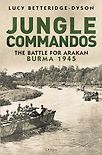
In Jungle Commandos, I did manage to weave quite a lot of Japanese testimony in. I got my hands on a copy of the 154 Regiment’s official history. I found it online in a bookshop in Japan, and had to use Google Translate to buy it and get it sent over. It is largely a lot of personal accounts of the men who fought against my granddad. I absolutely loved diving into that, and I wish my granddad had been alive so I could have shown him and spoken about him with those accounts. I’d have loved to have known his view on some of the things that they were saying.
I felt my eyes welling up when you quoted one Japanese captain’s account – about his fallen men saying, “Excuse me, I regret dying.” Then there is one who is lying on the battlefield and sees a vision of his mother.
Yes, she tells him to get up. Again, it humanises the Japanese soldiers. They missed their mums too.
It was Tales by Japanese Soldiers that inspired me to bring the Japanese perspective into my book. I hadn’t intended to, but after reading it, I realized it was the natural thing to do.
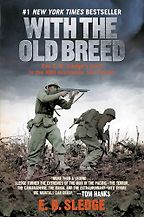
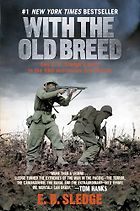
Let’s go on to your fourth book recommendation, which is the memoir of a US Marine. This is With the Old Breed: At Peleliu and Okinawa by Eugene Sledge.
This is a really famous memoir. It’s not about Burma, it’s about the Pacific and told from the American perspective. If anybody has seen the HBO show The Pacific—which was the follow-up to Band of Brothers—it’s partly based on Eugene’s memoir.
I chose this book to understand what island warfare in the Pacific was like. Burma is a vast country with many different types of environments. The war in the Pacific that the Americans fought was a completely different game in many ways.
It’s a brilliant combat memoir and a real page-turner. It’s unflinching and quite morally serious at times, very big picture reflective, but it also covers a lot of the action on the ground, keeping you gripped by the story.
Like The Forgotten Highlander, it brings the personal horror of the war against the Japanese to the fore, but it’s a different flavor of it entirely. You’ve got these two memoirs covering the war in Asia, but it’s completely different experiences, both uniquely awful in their own way. Again, it brings home just what a vast, horrific war it was in Asia.
What are the U.S. Marines trying to do — are they just slowly moving towards Japan?
Yes, they’re island hopping, landing on these Pacific islands. My grandfather was a Marine as well, though a different kind—he was a British Commando. Nevertheless, it’s amphibious landings onto areas where they don’t necessarily know the Japanese strength and what they’re going to be facing there.
In some ways, it has similarities with the fighting on Hill 170 at Kangaw, where my grandfather was. It’s a slightly different environment, but they’re facing the same enemy. They’re fighting the same ideology.
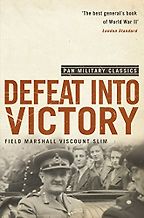
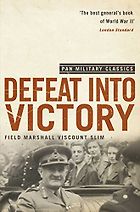
Let’s turn to your last book, Defeat into Victory by William Slim. So he was the commander in charge of the 14th Army, so absolutely key in the Burma campaign. Can you tell us about him and his book?
Bill Slim was, arguably, Britain’s greatest commander of forces in the Second World War. He was a soldier’s general, really in touch with his troops. I think in the past his name was overshadowed by the likes of Montgomery but nowadays—thanks to people like Rob Lyman—most people in military history will know his name, and hopefully a lot of the general public as well.
I would say that Defeat into Victory is the finest military memoir written by a commander in the English language. It’s a fantastic book. He’s very honest about his failings and his failures, which is rare. He’s generous to his troops, and he’s analytical. Don’t mistake his generosity for a lack of skill or nous in terms of understanding the military situation.
In the book, he discusses the campaign, what went wrong, things that he managed to fix, and things he wished he’d done better. If somebody only reads one book on leadership and what it takes to rebuild an army—which had broken down in terms of their morale and what they thought they could achieve—this is the book to do that.
The title says it all: Defeat into Victory. That’s what he had to do. When the 14th Army was created, and he was given command, it was an army that had been beaten out of Burma. It was an army which had been involved in a terrible initial escapade into Burma, the first Arakan campaign, which went disastrously wrong, with huge numbers of casualties. They did not have the training to fight in the jungle. They did not have the tactics. They did not have the imagination to fight this enemy, the Japanese, who were fighting in a way that the British Army had not dreamt could be possible.
Slim was the man who came in and said, ‘No, these guys are not unbeatable. We’ve just got to change what we’re doing and the way we’re looking at things. We’ve got to understand the landscape. We’ve got to respect it and use it to our advantage. The Japanese are not unbeatable, but the tactics we’re using, these big advances with a huge number of troops, are not going to work. The Japanese are very mobile; they move around us, they cut us off and then we’re stuffed. What we need to do is take a leaf out of their book. We need to work in smaller numbers. We need to not be afraid of being cut off .’
Slim famously developed the use of the ‘box’ tactic, which is that if British troops were cut off and surrounded—a tactic favoured by the Japanese—that rather than panicking, the British and Indian forces were to stand strong. They were to defend their perimeter and wait for help to arrive, which it would. They were not to panic about being surrounded.
That’s what they did at the Battle of the Admin Box in early 1944, which was really a turning point for the troops’ morale. They waited out the Japanese who had surrounded them. The Japanese ran out of rations because they relied on these very quick manoeuvres and scaring the British and Indian troops to retreat. They waited them out, and the Japanese were starving and had to retreat themselves.
Slim was really the architect of this. It’s not all down to him. There were many other people involved, but he was the commander who grabbed the bull by the horns and made it work.
What’s the rest of the story he tells in the book?
It just takes you through the campaign and this idea of what you do when you take command of a situation. For me, it’s a book that goes beyond military history, because it’s about being in a situation where the odds are against you, taking the time not to panic, and breaking it down and saying, ‘No, these are the ways that we can fix it’—and how he made that happen.
We tend to forget that the British Army and the Indian Army won in Burma. It was a victory. It’s about the evolution that the Allies went through to get there.
One thing I found useful in your book was the explanation of what exactly the British Commandos were.
Yes, originally the book was just going to be about 3 Commando Brigade, which my granddad was in. Then, I quickly realized that what they did wouldn’t have been possible without the Indian and West African divisions.
That’s the other big, important point to take away about the war in Burma. The 14th Army was one of the most culturally and racially diverse groups of men fighting together and alongside one another that has ever been. The Indians were the biggest group, but there were also British, West African, and Nepalese men in the 14th Army fighting alongside Chinese and Americans. People forget that.
Yes, if you visit the war graves in Southeast Asia, so many of the names are Indian. They made huge sacrifices in World War II.
Again, the conversation comes back to imperialism and British India, and what was right and what was wrong, though I think the idea of Indian nationalism at the time and its impact in the Burma campaign has been overblown. The fact that the Indian Army which was mobilised to fight in Burma was the largest volunteer army in history says it all. These men weren’t corralled into it: they wanted to fight against the Japanese.
Five Books aims to keep its book recommendations and interviews up to date. If you are the interviewee and would like to update your choice of books (or even just what you say about them) please email us at [email protected]
Five Books interviews are expensive to produce. If you've enjoyed this interview, please support us by donating a small amount.
Lucy Betteridge-Dyson
Lucy Betteridge-Dyson is a military historian, broadcaster and PhD candidate at the Defence Studies Department, King’s College London, specialising in the First and Second World Wars. She has built a successful career as a public historian, appearing as an historical expert and presenter on major networks including Channel 4, Global Radio, the BBC, National Geographic, and PBS. She holds an MA in military history from the University of Wolverhampton.
Lucy Betteridge-Dyson is a military historian, broadcaster and PhD candidate at the Defence Studies Department, King’s College London, specialising in the First and Second World Wars. She has built a successful career as a public historian, appearing as an historical expert and presenter on major networks including Channel 4, Global Radio, the BBC, National Geographic, and PBS. She holds an MA in military history from the University of Wolverhampton.