Thank you for this excellent selection of biographies of 18th-century figures. What do you look for in a biography? What makes a biography a great biography?
I think a great biography has to be a fabulous read and has to be about an interesting person. Not a simple recounting of a life but it should also reveal something about the time the person lived in. By reading about this life, you also get a history lesson about the arts, culture, science, and politics of that period.
I’m originally from Germany and I was always a voracious reader but mostly of novels. But when I moved to England some 30 years ago, I discovered the joy of narrative nonfiction. It was a bit of an epiphany when I realised that history could be told through a person’s life story. There were all these wonderful books that read like novels, but were based on true stories.
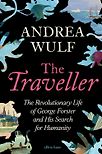
You’ve written eight books, including The Invention of Nature, a biography of Alexander von Humboldt and, more recently, The Traveller, a biography of the explorer and revolutionary George Forster. When you are looking for a new subject, what do you take into consideration?
My books very much look at the person within their social and historical context. That’s also the reason why I love group biographies, because we don’t exist in a vacuum. Unless you’re a hermit, we all exist within a family, a group of friends, a community, a society, a country. I look for a protagonist who is ideally part of a network of fascinating people.
And I do love writing about explorers – it’s a great excuse to travel the world in their footsteps.
It also has to be a life that can reveal something about our times today. I don’t think that history is a pile of dusty ideas that have nothing to do with us today – quite the opposite, I think that the past can illuminate the present. I’m interested in history because I want to understand why we are who we are. In Invention of Nature (my book about Humboldt), for example, I looked at the relationship between humankind and nature in order to understand why we’ve destroyed so much of our planet.
In my new book The Traveller, I’m unearthing the story of a man who placed his faith in humankind. At its heart is George Forster’s quest to find what connects us, rather than what sets us apart – an idea which seems quite important in our current climate. It’s both a serious book about humanity and racism but it’s also a tale of adventures and revolutions, about distant lands, exploration and love.
What’s also important for me when choosing a subject are the sources – ideally there are lots and lots of diaries and letters. Sometimes there are deeply fascinating people who I would love to write about but without the sources I just can’t bring alive – unless writing a historical novel.
So the sources need to be right. Their social network needs to be interesting. And I like people who are not bound to one discipline. Humboldt, for example, united the arts and the sciences. And George Forster was an explorer, ethnographer and revolutionary who also fought against racism and white supremacy.
And I really like ‘forgotten’ people – it’s much more fun to write about them than about someone everybody has heard about.
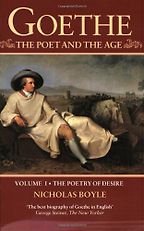
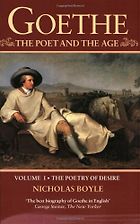
Could we talk first about Nicholas Boyle’s Goethe: The Poet and the Age? This is a monumental biography of the German writer and polymath. So far, two volumes have been released: the first, ‘The Poetry of Desire,’ covers the years 1749–1790; the second, ‘Revolution and Renunciation,’ covers 1790–1803.
I admit, this is not a holiday read. You probably won’t take it to the beach and read it in one go. Boyle has produced two dense volumes which cover only half of Goethe’s life. Two more volumes are projected, although I don’t know when they will be published.
I put it on my list because, first of all, it’s an incredible achievement. If you want to understand Goethe, this is the book to go back to again and again. I also choose it because Goethe was a fascinating man. He is one of the greatest poets, but he was also a scientist. He lived a very long and full life. He was a privy councillor in the state of Saxe-Weimar. He ran the theatre, he was in charge of the mines and he met a great many interesting people. So you have politics, you have science, you have theatre, you have literature, you have geology, you have 18th century society.
But Boyle also shows us the private Goethe – the lover who lived for many years with the woman who would only much later become his wife or the loving father who went ice skating with his son. Boyle takes Goethe down from his pedestal. At the same time, there are long sections where he analyses Goethe’s work. So the reader also receives lessons in literature. I think Boyle’s biography is a perfect example of how you can put these things together. But, saying that, it’s not a book to flip through.
Yes. And its remarkable length I suppose speaks to the central challenge of the biographer’s work, which is that you can’t produce a 1:1 reproduction of a life on the page. So you must always be wondering what is important to this life, and what is not. I suppose Boyle has erred on the side of caution.
He certainly has – and this is the most comprehensive Goethe biography we have. But I find it also fascinating that it was not written by a German – but by a British academic in English, then translated into German. Sometimes it might help not to be part of the culture, so you can bring an almost alien gaze to the story. You might approach the subject slightly differently.
Yes. Although being bilingual must be very useful.
Sometimes, yes. For my book about George Forster book it certainly was. He was a citizen of the world who lived in Russia, England, Lithuania and Germany. He wrote in English and German.
Though German is my mother tongue, I write my books in English. And it’s always a bit strange when my books are translated into German. I must be a nightmare for my poor translator, because I fiddle around with every sentence: ‘No! That’s not what I want to say.’ I can point out what I don’t like, but often I can’t fix it myself.
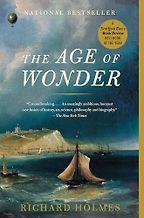
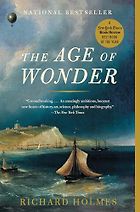
Let’s move to your second book recommendation, which is Richard Holmes’ The Age of Wonder. It was published in 2008 and has appeared on our site several times since then. People seem to have great passion for this book!
We agreed that I would recommend biographies of a 18th-century figure. Strictly speaking, this is not a biography about one person but about a group. But that’s also why I chose it.
My two favourite group biographies are Jenny Uglow’s Lunar Men and Richard Holmes’ The Age of Wonder. I chose this, because for me, it was such a revelation. I devoured it in one or two sittings. It’s such a great story. It’s about a period that covers roughly two generations, from Joseph Banks to Charles Darwin, and it brought together the two things I love most, which is art and science. Until I read The Age of Wonder, I thought, you had to keep these things separate. You either read a book about a poet or artist, or a book about a scientist. But this book brings them together in the most beautiful way.
There’s one scene where Coleridge goes to Humphry Davis’s lectures on chemistry. He said he was doing this “to enlarge my stock of metaphors.”
Ha!
In a way, that encapsulates this book. Richard Holmes was the perfect person to write it, because as the biographer of Shelley and Coleridge, he was able to see the influence of science in their poetry and in their work.
The Age of Wonder is a jewel of a book. If I had to choose only one of the five books here, this is the one I would choose. It’s a masterpiece.
What do you think a group biography can offer that a solo biography might not?
Two things. One comes back to what I said earlier: we do not exist in a vacuum. We are, very often, part of a group. There are these amazing moments in history when a group of rather brilliant people come together and something extraordinary happens: such as the Bloomsbury Group in the early 20th century, or Uglow’s Lunar Men in the 1760s, or in the case of my book Magnificent Rebels, a group of young Romantics who came together in the small German town Jena and who changed the way we think about us, the world and nature.
And secondly, a group biography allows you, as a story teller, to focus the narrative. Instead of having to be comprehensive about someone’s entire life, including their childhood or retirement, you can concentrate on the period where, for most people, the action is happening. There are of course exceptions – George Forster, for example, had a childhood packed with action, including a wild expedition through Russia but most of the time you just want to get past that to the interesting bit.
A group biography allows you to choose these key moments and stage them in a completely different way to a solo biography.
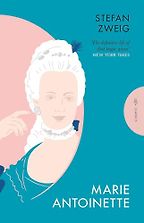
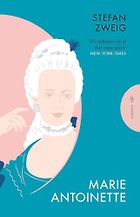
I’d like to talk next about Stefan Zweig’s Marie Antoinette, originally subtitled ‘The Portrait of an Average Woman.’ It was first published in 1932.
When I compiled this list, I went through my bookshelf and pulled out my very old copy and saw that I read this in 1988, when I was 20. I think it is the first biography that I ever read and it kind of blew my mind.
It helps that Zweig was a novelist. Strictly speaking, I don’t even know if it is a biography, or a historical novel. But everything is based on thorough historical research.
What has stuck with me is that Zweig’s Marie Antoinette is a human being, rather than a distant figure in a palace who eventually has her head chopped off. This is a psychological portrait. Zweig begins with her engagement, when a very young Marie Antoinette met her fiancé and future king Louis XVI near the border of Austria and France. She was just a frightened teenager. Throughout the book, she continues to be portrayed as a human – a very famous human with feelings and flaws.
I felt that, wow, this reads like a novel but at the same time, I can learn about the French Revolution. It was a real eye-opener. Most German non–fiction books seemed so boring compared to this. When I moved to England in my late 20s, I discovered the joy of narrative non–fiction and many more biographies that were as thrilling as a novel.
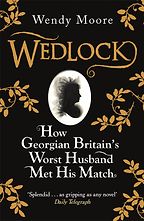
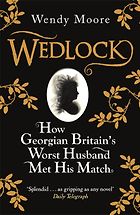
The next biography on your list is far from boring. This is Wendy Moore’s Wedlock: How Georgian Britain’s Worst Husband Met His Match. I was going to describe it as salacious, but perhaps that minimises the suffering of the subject. Tell us more.
This is the story of Mary Eleanor Bowes, a rich heiress in the 18th century, whose husband dies. She is rich, she is enjoying her life, she has affairs, she is going to parties and everything is fabulous. Then an Irish soldier comes along, a bit of a dandy who has no money. He decides that she’s the solution to his problems and that he’s going to marry her.
But she says no, because why should she? As a widowed heiress, she has freedom and money. Why would she give that up?
Then he tricks her. As you read this book, you think: My god, this can’t be happening. Several salacious articles are published about her and he offers to defend her honour by challenging the editor to a duel. Then she receives the news that he has been mortally wounded. His last wish is to get married, which of course she grants him, but then he miraculously recovers and basically imprisons her.
Terrible.
He’s an abusive and brutal husband. He burns her, rapes her, hits her. It’s just horrendous. When she finally escapes, he kidnaps her … You couldn’t make this up. If it were a novel, you’d think it was too much. But it’s a true story, that’s what makes it so extraordinary.
Moore could have told this as a gory story. But she also shows how Mary Eleanor Bowes was not just imprisoned by her husband, but also by 18th century society and law. The moment you married, as a woman, you lost everything.
Wedlock reads like a crime story, an absolute page-turner. And it has the most fabulous title.
When you are writing, do you have to think very explicitly about how to balance the personal and the political, or do you find that tends to happen naturally?
I think it happens quite naturally, because the person is living in their political and social reality. But it’s important to consider where and when you weave this information into the story – otherwise one ends up with something that feels like a Wikipedia entry about, say the French Revolution. The challenge is to make it feel part of the person’s own story.
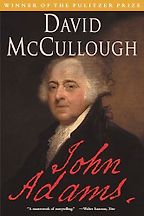
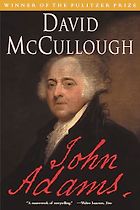
And I suppose the subject of our final book, John Adams, the Pulitzer Prize-winning biography by David McCullough, really sits at the intersection of those two things.
When this book came out in 2001, John Adams was mostly regarded as a second-tier figure in the founding of the American nation, almost in the shadows of George Washington and Thomas Jefferson.
But McCullough takes you into the room with him. You get to meet John Adams. He’s loud, he’s shouting but he’s also warm-hearted. A brilliant mind who was at the nexus of the making of America. I don’t think McCullough discovered any new sources, but he went back to the letters. And when you read John Adams’ letters, his heart is right there on the page. When he reads a book, he writes in the margins: no, no, yes, ! It’s almost like listening to him.
Adams is a rich source for a biographer because there are so many private letters. The letters between Washington and his wife, for example. were all burned by Martha Washington. But the letters between Abigail and John Adams still exist, and they show an incredible partnership.
John Adams discussed everything with Abigail before making a political decision. This is not only a great biography of John Adams, but also of Abigail, their marriage and their partnership.
At the same time, this is a biography about the making of a nation. It’s a portrait of the time, but also a very human portrait of a politician.
All the books I’ve chosen—except Wedlock—are of famous people, but removed from their pedestal. We see them as humans, fathers, husbands, wives, daughters. But, because they are famous, they were at the heart of what was happening, whether it was the French Revolution or the American Revolution … Whatever was happening, they were in the middle of it. And you get all these extraordinary facts without having to read a dry history book. It’s all brought to life through the eyes of the people who lived through these amazing times.
Interview by Cal Flyn, Deputy Editor
May 18, 2026. Updated: May 20, 2026
Five Books aims to keep its book recommendations and interviews up to date. If you are the interviewee and would like to update your choice of books (or even just what you say about them) please email us at [email protected]
Five Books interviews are expensive to produce. If you've enjoyed this interview, please support us by donating a small amount.