What drew you to writing a novel set in World War II?
I’ve had a fascination with that period that goes back almost as long as I can remember. I grew up with the classic, military history-obsessed father, so most weekends we would spend visiting an aviation or tank museum. We had a family holiday in Normandy based around the 50th anniversary of D-day. Another based around the battlefields of the Somme. It was always just part of my life.
I think my dad’s own fascination stemmed from my grandfather; we don’t know much about what he did in the war—he was young when it started, only 16, but we know he had something to do with the resistance in Belgium. So I suppose it was part of our family folklore.
I read a lot about the Second World War, ended up studying it at university, and so when I came to write a novel it felt like the natural place to start, because I already had so much in my head about the period.
But I actually don’t really see my novel, The Shock of the Light, as a war book. The war is almost like an extra character who comes between the main characters and forces them apart. It’s as much set in the years before the war and the immediate post-war period as it is in the war itself.
That’s an interesting way to frame the war—as an actor moving, shaping the plot.
No one was left untouched by this conflict, and it forced people into the most extraordinary circumstances. And even though there is so much written about that time, there are still things we don’t know, and things that are still secret.
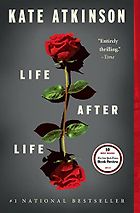
Let’s look at World War II novels that you’ve chosen to recommend. Can we start with Kate Atkinson’s Life After Life? She takes a speculative approach—could you explain?
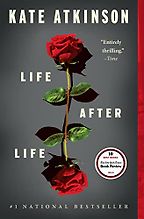
If I had to have a favourite, it would be this. Life After Life poses the question: what could happen if you could start life over and over again, until you get things right?
It’s about a girl called Ursula Todd, who is born into a quite affluent, middle-class, Edwardian British family, who lives an extraordinary life in which she repeatedly dies and comes back to life. Sometimes she can almost remember things that have happened—a sort of hazy déja vous—which allows her to avoid the mistakes she made last time around. Sometimes that enables her to save herself, sometimes it enables her to save people that she loves.
“Life After Life asks: if you had the opportunity to kill Adolf Hitler, would you take it?”
So it’s really about the different courses that life can take, the way trauma and experience ripple through time. Only parts are set during the Second World War, but they are quite extraordinary—really raw, really graphic, and actually quite hard to read. The depictions of the Blitz will stay with you, particularly. And it asks a really important question: if you had the opportunity to kill Adolf Hitler, would you take it?
Structurally, it’s a very ambitious novel. It’s quite a thing to pull the rug out from under the reader over and over again—and to get away with it, which is what Atkinson achieves with this book.
Right. Because, if a character behaves differently, is it the same character?
Yes, absolutely, because every time she starts again she is slightly different, slightly changed by the experience of the past—even if she can’t quite remember them, they are somewhere in her mind. It’s a brilliant book.
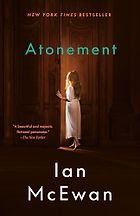
Thank you. Next we have Ian McEwan’s Atonement. For those who haven’t read it, would you introduce it?
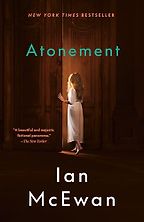
I think a lot of writers can related to Briony Tallis, the main character, who is a young girl with an incredibly rich imagination. But hopefully not many of us have used our imaginations to provoke such a dreadful series of events as Briony does. She witnesses and, crucially, misunderstands, an interaction between her sister Celia and their gardener Robbie. She uses her imagination to fill in the blanks of this interaction, in which a flirtation becomes, in her head, a crime, with tragic consequences for everyone involved.
It’s a book that doesn’t hold back on the carnage of war, though in a different way to Kate Atkinson’s. It has this laser focus on the evacuation from Dunkirk and the resulting casualties. The Dunkirk chapters are just extraordinary, and so grim. They really give us an insight into what it must have been like, not just for the men going through it, but the civilians who met the casualties when they returned to this country, the trauma of it all.
In both of these first books, we get the sense of the clash between the orderliness of society pre-war, then the chaos of war itself. And they both have an interesting structure. Atonement is a novel within a novel: Briony is an inspiring writer who has submitted a novella to an editor and gets feedback that she has to ramp up the tension. i.e., to use literary devices to make it a more enticing story. McEwan is basically telling us that this is happening in the story we’re reading: it is a retelling of events from her childhood, but with her own imaginative contributions.
History is a perception of the past, a constructed narrative. There is always something implicitly unreliable about this; even with recent history we are always getting things wrong, losing part of the truth of what actually happened. Some voices shout louder than others.
You mentioned earlier that you studied this period in history. What do you lose and what do you gain from choosing to write fiction over nonfiction?
What you can gain is a much more human take on it. You can step out of the facts and figures of history and put a voice to the experience. You don’t necessarily get that writing nonfiction. I don’t think that anyone should ever use fiction as an academic account of the past, but it can give you a way of stepping into the past, a way to explore the atmosphere of the time.
These novels are obviously not history books. They are fiction, but they still give unique insight into the emotions people might have been feeling: they give voice to the terror of war.
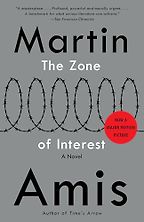
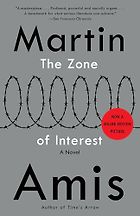
Next you’ve selected Martin Amis’s The Zone of Interest. I think many of our readers will be familiar with the recent film, but I think it was quite a loose adaptation?
Yes, the film is very different to the novel. The film is brilliant, really extraordinary, and the book is too but in a different way.
It’s actually a difficult book to recommend because it almost falls into the category of can’t-look-away. He’s sort of written the unwrite-able, the almost incomprehensible.
In the afterword, Amis explains how he found it really difficult to understand what he calls “the wild, fantastic disgrace of the Holocaust,” the “electric severity with which it repels our contact and our grip,” until he read an interview with Holocaust survivor Primo Levi in which he said that the actions of the Nazis should always remain beyond comprehension, because the act of comprehension is to in some way find justification for the actions.
The ‘Zone of Interest’ of the title is the area immediately around Auschwitz, which here he calls Kat Zet. And it’s the banality of evil in all its unceasing mundanity, the concentration camp as workplace. You’ve got office politics, rivalries, romantic crushes.
There are these three characters: Paul Doll, the camp commandant and a kind of psychopath, a hideous man; Angelus ‘Golo’ Thomsen, an employee of the camp who is preoccupied with his crush on Paul Doll’s wife, and who is morally ambivalent about the work he’s doing—it’s just a job; and then you’ve got Szmul, who is part of the Sonderkommando, prisoners in the camp who were given the job of disposing bodies from the gas chambers. They were spared death by being given this role, but they would be surrounded by death all day every day.
“Primo Levi said that the actions of the Nazis should always remain beyond comprehension”
What’s interesting about The Zone of Interest is the way each character tells the story. There are huge differences in style and tone and the language with which they describe their circumstances. For example, Szmul’s chapters are really short, quite abrupt, because he just doesn’t have the words for what he’s witness to. He uses these horrific procedural euphemisms to describe mass murder. Basically, he has been completely blunted by the horror of it.
Then there’s Paul Doll, a grandiose sociopath, almost absurd. He says of Szmul’s work: “I never cease to marvel at the abyss of moral destitution to which certain human beings are willing to descend.”He sees himself as above Szmul, morally, because he’s just giving instructions. He can’t believe that people actually do them. He’s become completely removed from reality in a different way.
It’s not a book to pick up if you’re looking for an easy read. It’s not a relaxing page turner. But it is absolutely brilliant. I think it’s one of his best books, an extraordinary achievement.
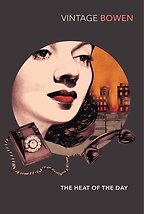
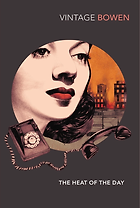
Shall we talk about The Heat of the Day by Elizabeth Bowen? It was published in 1949, not long after the period it portrays.
I’ve just been re-reading this novel. It’s such a great book, a noir-ish masterpiece of intrigue and atmosphere. Everyone in the book is such a complex and alluring character.
It’s set during the tail end of the Blitz. It starts at the end of 1942, and Elizabeth Bowen started writing it in 1944, so it was written very close to the events that she’s describing in the novel. She hasn’t had the t distance of time. We also know that a lot of it overlapped with Elizabeth Bowen’s own life—the main characters Stella and Robert are the same age as Bowen and her lover. Stella’s home is clearly Elizabeth Bowen’s house in Regent Park. It’s a great novel on its own, but it’s also a kind of eyewitness account of the war.
Stella’s lover Robert is a Dunkirk evacuee. He has a limp and a very ambiguous government job that sees him disappear for days on end. He’s accused of selling secrets to the enemy, the Germans. His accuser, Robert Harrison—I don’t know why she called both of her main male characters Robert—blackmails Stella for his silence.
It’s wonderful. Bowen has a real cinematic eye for detail. Here’s Stella:
She had one of those charming faces which, according to the angle from which you see them, look either melancholy or impertinent. Her eyes were grey. Her trick of narrowing them made her seem to reflect the greater part of the time in the dusk of her second thoughts.
I thought that was wonderful. She’s also really great at relating the inner lives of her characters to their external world. The allegations against Robert burst open Stella’s relationship with him, like a bombed-out building. Elizabeth Bowen is not having to read loads and loads of books on this period or go to the National Archives like I did. She’s just opening her front door and looking at the scene around her.
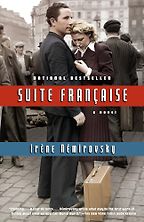
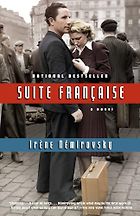
That’s a great recommendation, thank you. Let’s turn to your final World War II novel recommendation, Irène Némirovsky’s Suite Française.
Like The Heat of the Day, this is a contemporary account. Némirovsky was experiencing the war in real time. It’s not a finished book, as many people might know: it’s the first two parts of what should have been a five-part collection. Suite Française will always be shadowed by the tragedy of its incompleteness, because Némirovsky, a Ukrainian-born Jew, was deported from France to Auschwitz in 1942 and murdered within a month of her arrival.
Némirovsky and her family had converted to Catholicism. When they moved to Paris, they had been very focused on assimilating into French society, but under German racial laws that just didn’t matter.
It’s a novel focused on displacement, which was an enormous part of the Second World War. The first part, ‘A Storm in June’, examines the flight of families from Paris as the Germans close in, which is obviously something Némirovsky experienced. They desperately cling on to things they hold dear. The second part, ‘Dolce,’ examines life under the occupation in a small village, which is what Némirovsky was living in at the time she was writing. It’s a very pointed and candid examination of French society, which hadn’t yet recovered from the First World War. There are very visible scars, both physical and mental, and she’s fascinated with the way in which different classes in society respond to the war, and how the occupation can bring out both the best and worst in people.
Deprivation can serve as a barrier to community, because people don’t have the capacity to look after each other when they can’t look after themselves. She examines whether that’s an implicit moral failure in the human condition or simply a mechanism of survival. She’s very critical of the upper classes, in particular. That’s the class to which she herself belonged.
Considering it’s not finished, it’s not edited, it’s not polished, it’s an extraordinary novel. It actually does read as very polished and very moving. It’s interesting to think where she would have taken it if she’d had the opportunity to revise it.
It’s just such a moving, moving book, and the story of how it came to be published is almost part of the story itself. Her daughter carried it around in a suitcase for 60 years before it was published. It’s so sad, but again, an eyewitness account.
Thank you for five really excellent book recommendations. To close: you mentioned the research you have sunk into your own novel. How have you gone about capturing the spirit of World War II?
The best research I did was in the Imperial War Museum in London. They have a sound archive. They interviewed as many people connected to the war as they could. You can just sit there and listen to them. It’s fascinating to put voices to people you’ve been reading about in history books, it adds so much colour.
I love the very human aspects—you can hear people sucking on cigarettes, you can hear them pause when they’re finding something very difficult to talk about, you can tell when they are holding back, hesitant to say something.
It’s a brilliant resource, and I don’t know if many people really know about it outside of academia, but anyone can make an appointment to go and listen.
Also, in the National Archives, I went through the personnel files of women who were involved in the Special Operation Executive, which features in my book. The personnel accounts are very dry—names and dates, where people lived—but there was one bit of paper in a file belonging to an agent called Noor Inayat Khan, an extraordinary woman, who practiced the signature of her alias over and over again, trying to drill it into her head, trying to make it look natural. She’d got a bit of ink on her thumb and left a thumbprint on the paper. Suddenly there she was: this person, right there in front of me.
Interview by Cal Flyn, Deputy Editor
March 16, 2026
Five Books aims to keep its book recommendations and interviews up to date. If you are the interviewee and would like to update your choice of books (or even just what you say about them) please email us at [email protected]
Five Books interviews are expensive to produce. If you've enjoyed this interview, please support us by donating a small amount.