

March 15 is the Ides of March — the day in 44 BCE when Julius Caesar was assassinated by Marcus Junius Brutus, Gaius Cassius Longinus, and their fellow conspirators. His death triggered the final civil wars of the Roman Republic, which culminated in Octavian’s victory over Mark Antony at the Battle of Actium and the subsequent rise of the Roman Empire. To mark this historic date, I’ve selected five books on Roman history specifically for readers new to the subject
1
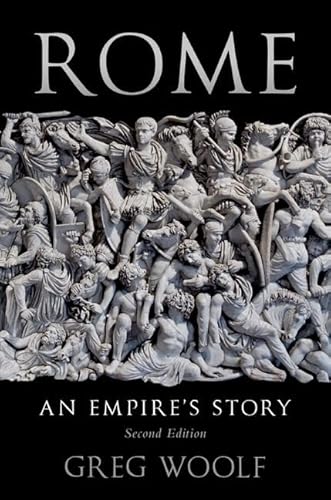
Greg Woolf’s Rome: An Empire’s Story is an excellent starting point for studying Roman history. While Edward Watts’ The Romans: A 2,000-Year History may currently be the best single-volume narrative (I'm thoroughly enjoying it), Woolf organizes this vast history into concise, thematic essays. The first chapter offers a fast-paced panorama from the city’s founding through the 7th-century Roman-Sassanid wars, where Woolf somewhat controversially marks the Empire's end. Each essay concludes with a helpful timeline and further reading list. You can read this book cover-to-cover for a broad overview or use it as a reference for specific topics. If you choose only one book from this list, make it this one.
2
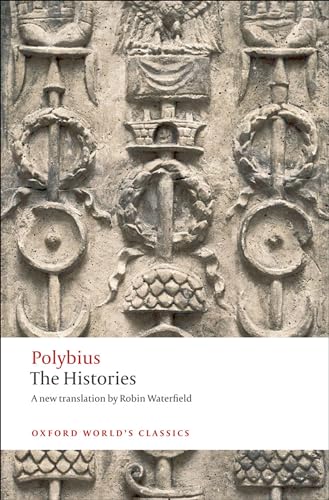
Reading primary sources on Roman history requires a specific mindset. They are, of course, translations, and the writing and references can be a bit hard to follow. Expect to spend a fair amount of time checking footnotes and re-reading the introduction to situate yourself. However, for truly getting a sense of the ancient Greco-Roman world, nothing beats reading what contemporaries had to say. There are many places one could begin: Cicero's speeches and letters, Tacitus's The Annals and Germania, Livy's History of Rome, or Plutarch's Lives. All are excellent. But for me, the best and most enjoyable way to understand Roman history is to begin with Polybius's The Histories. Polybius was a Greek statesman and a hostage of Rome who developed a close personal friendship with the Roman general Scipio Aemilianus. As a Greek watching the Romans expand and dominate a Mediterranean world that had long been controlled by the Hellenistic kingdoms following the death of Alexander the Great, he wanted to explain what led to Rome's rise. His work serves as both a history of Rome from 264 BC to 146 BC, coinciding with epic events like the wars against Carthage and Hannibal, and as a work of political theory. Polybius attributes Rome's success to its mixed constitution, which balanced monarchical, aristocratic, and democratic elements, as well as its adaptability. He also adopts a broad interpretive lens, viewing Rome's rise within the context of the wider Mediterranean. In this sense, the work reads like a study of international relations, a theme taken up in Arthur Eckstein’s Mediterranean Anarchy, Interstate War, and the Rise of Rome, which relies heavily on Polybius. For me, The Histories is the first "volume" in a trilogy that includes the next two books on this list.
3
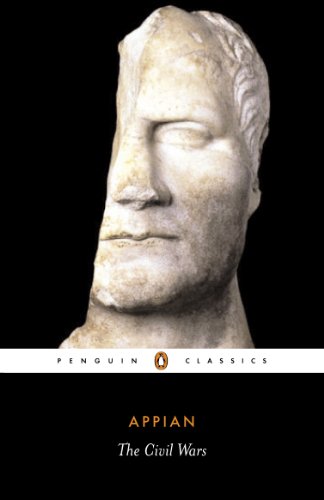
If Polybius’s The Histories tells the story of the Roman Republic’s rise to great power status, Appian’s The Civil Wars tells us how that Republic fell and became an empire. For me, this is the second "volume" in an unofficial trilogy of Roman history. Appian picks up just over a decade after Polybius leaves off. Rome has territories across the Mediterranean, but, much like our modern world, the best land and most of the wealth are in the hands of a small elite. Figures like Tiberius and Gaius Gracchus emerge with plans for economic reform, only to be met with violent resistance. At the same time, people from Rome’s conquered Italian territories seek political representation and citizenship, leading to further conflict. Clever politicians realize that the unmet demands of these groups can be a source of power, leveraging that energy to build private armies and beginning a cycle of violence that would eventually collapse the Republic. This history covers the period from 133 BC to 35 BC, spanning the lives of the Gracchi, Marius, Sulla, Caesar, and Mark Antony and Octavian. While written nearly two millennia ago, Appian’s history is poignant for its modern relevance; reading it is almost like seeing modern headlines about our own democratic backsliding and the rise of political violence.
4
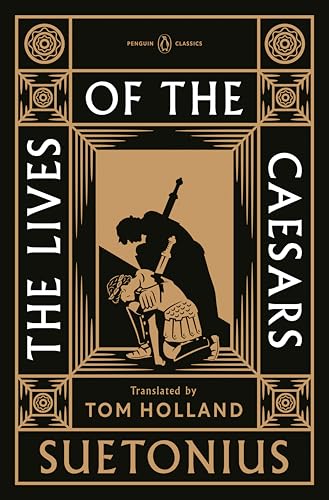
The Lives of the Caesars (or The Twelve Caesars) by Suetonius concludes the unofficial three-part trilogy of Roman history I’m proposing. Suetonius served as a secretary to the emperor Hadrian and had unique access to imperial archives, allowing him to write an account of the first twelve rulers of Rome. The result is part history, part biography, and part gossip. You’ll find fascinating personal details, such as the fact that Augustus kept a fossil collection, alongside a broader view of these rulers’ careers, personalities, and the times they lived in. With Suetonius, we have firmly reached the imperial period. From this point on, emperors--not the people or the Senate--shape policy, though some did so more effectively than others. Yet, as Suetonius shows, they were never all-powerful. They constantly had to worry about scheming family members, their own bodyguards (the Praetorians), and successful generals whose popularity with the troops made them potential rivals. This book covers the first two major imperial dynasties: the Julio-Claudians, including figures such as Augustus, Caligula, and Nero; and the Flavians, such as Vespasian, who began construction of the Colosseum. The narrative concludes around 96 AD, just before Suetonius’s own time. After reading these three books, you will have covered nearly four centuries of Roman history. While I’m generally skeptical about drawing direct parallels between Roman history and the modern day, I agree with Mary Beard that the value of reading Roman history is not to extract a list of dos and don’ts for the present. Rather, it is to understand a heritage that, in many ways, is still with us. See Mary Beard's great article on the relevance of Roman history here: https://www.theguardian.com/books/2015/oct/02/mary-beard-why-ancient-rome-matters
5
What kind of list on Roman history would it be without at least one book examining how the Roman Empire finally fell? Although there are probably almost as many explanations for Rome’s fall as there are books about it, there are still plenty of good ones to choose from. Adrian Goldsworthy’s How Rome Fell is one of the best narrative accounts of the empire’s collapse, while Chris Wickham’s The Inheritance of Rome offers an excellent look at the fall and its consequences, which stretch all the way to 1000 AD. But Peter Heather’s The Fall of the Roman Empire has always struck me as one of the best-written and most compelling explanations. Heather’s account is persuasive because it integrates several different kinds of causation. He brings together structural factors, such as the increasing strength and size of Germanic tribes (partly the result of their trade and military service with Rome), contingent events, such as the westward migration of the Huns, which pushed Germanic peoples like the Goths onto Roman territory, and human agency, such as Flavius Aetius’s decision to prioritize the defense of Gaul against the Huns over the defense of Carthage. Few books have been more helpful to me -- not only in understanding Roman history, but also in thinking about how historical outcomes emerge from the interaction of different forces.
1
Greg Woolf’s Rome: An Empire’s Story is an excellent starting point for studying Roman history. While Edward Watts’ The Romans: A 2,000-Year History may currently be the best single-volume narrative (I'm thoroughly enjoying it), Woolf organizes this vast history into concise, thematic essays. The first chapter offers a fast-paced panorama from the city’s founding through the 7th-century Roman-Sassanid wars, where Woolf somewhat controversially marks the Empire's end. Each essay concludes with a helpful timeline and further reading list. You can read this book cover-to-cover for a broad overview or use it as a reference for specific topics. If you choose only one book from this list, make it this one.
2
Reading primary sources on Roman history requires a specific mindset. They are, of course, translations, and the writing and references can be a bit hard to follow. Expect to spend a fair amount of time checking footnotes and re-reading the introduction to situate yourself. However, for truly getting a sense of the ancient Greco-Roman world, nothing beats reading what contemporaries had to say. There are many places one could begin: Cicero's speeches and letters, Tacitus's The Annals and Germania, Livy's History of Rome, or Plutarch's Lives. All are excellent. But for me, the best and most enjoyable way to understand Roman history is to begin with Polybius's The Histories. Polybius was a Greek statesman and a hostage of Rome who developed a close personal friendship with the Roman general Scipio Aemilianus. As a Greek watching the Romans expand and dominate a Mediterranean world that had long been controlled by the Hellenistic kingdoms following the death of Alexander the Great, he wanted to explain what led to Rome's rise. His work serves as both a history of Rome from 264 BC to 146 BC, coinciding with epic events like the wars against Carthage and Hannibal, and as a work of political theory. Polybius attributes Rome's success to its mixed constitution, which balanced monarchical, aristocratic, and democratic elements, as well as its adaptability. He also adopts a broad interpretive lens, viewing Rome's rise within the context of the wider Mediterranean. In this sense, the work reads like a study of international relations, a theme taken up in Arthur Eckstein’s Mediterranean Anarchy, Interstate War, and the Rise of Rome, which relies heavily on Polybius. For me, The Histories is the first "volume" in a trilogy that includes the next two books on this list.
3
If Polybius’s The Histories tells the story of the Roman Republic’s rise to great power status, Appian’s The Civil Wars tells us how that Republic fell and became an empire. For me, this is the second "volume" in an unofficial trilogy of Roman history. Appian picks up just over a decade after Polybius leaves off. Rome has territories across the Mediterranean, but, much like our modern world, the best land and most of the wealth are in the hands of a small elite. Figures like Tiberius and Gaius Gracchus emerge with plans for economic reform, only to be met with violent resistance. At the same time, people from Rome’s conquered Italian territories seek political representation and citizenship, leading to further conflict. Clever politicians realize that the unmet demands of these groups can be a source of power, leveraging that energy to build private armies and beginning a cycle of violence that would eventually collapse the Republic. This history covers the period from 133 BC to 35 BC, spanning the lives of the Gracchi, Marius, Sulla, Caesar, and Mark Antony and Octavian. While written nearly two millennia ago, Appian’s history is poignant for its modern relevance; reading it is almost like seeing modern headlines about our own democratic backsliding and the rise of political violence.
4
The Lives of the Caesars (or The Twelve Caesars) by Suetonius concludes the unofficial three-part trilogy of Roman history I’m proposing. Suetonius served as a secretary to the emperor Hadrian and had unique access to imperial archives, allowing him to write an account of the first twelve rulers of Rome. The result is part history, part biography, and part gossip. You’ll find fascinating personal details, such as the fact that Augustus kept a fossil collection, alongside a broader view of these rulers’ careers, personalities, and the times they lived in. With Suetonius, we have firmly reached the imperial period. From this point on, emperors--not the people or the Senate--shape policy, though some did so more effectively than others. Yet, as Suetonius shows, they were never all-powerful. They constantly had to worry about scheming family members, their own bodyguards (the Praetorians), and successful generals whose popularity with the troops made them potential rivals. This book covers the first two major imperial dynasties: the Julio-Claudians, including figures such as Augustus, Caligula, and Nero; and the Flavians, such as Vespasian, who began construction of the Colosseum. The narrative concludes around 96 AD, just before Suetonius’s own time. After reading these three books, you will have covered nearly four centuries of Roman history. While I’m generally skeptical about drawing direct parallels between Roman history and the modern day, I agree with Mary Beard that the value of reading Roman history is not to extract a list of dos and don’ts for the present. Rather, it is to understand a heritage that, in many ways, is still with us. See Mary Beard's great article on the relevance of Roman history here: https://www.theguardian.com/books/2015/oct/02/mary-beard-why-ancient-rome-matters
5
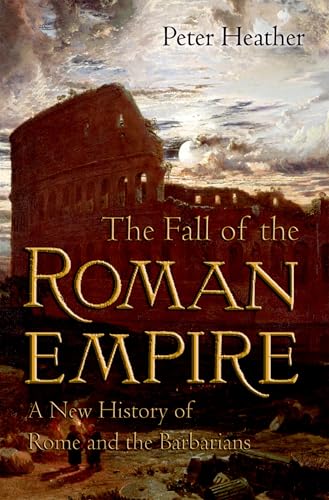
What kind of list on Roman history would it be without at least one book examining how the Roman Empire finally fell? Although there are probably almost as many explanations for Rome’s fall as there are books about it, there are still plenty of good ones to choose from. Adrian Goldsworthy’s How Rome Fell is one of the best narrative accounts of the empire’s collapse, while Chris Wickham’s The Inheritance of Rome offers an excellent look at the fall and its consequences, which stretch all the way to 1000 AD. But Peter Heather’s The Fall of the Roman Empire has always struck me as one of the best-written and most compelling explanations. Heather’s account is persuasive because it integrates several different kinds of causation. He brings together structural factors, such as the increasing strength and size of Germanic tribes (partly the result of their trade and military service with Rome), contingent events, such as the westward migration of the Huns, which pushed Germanic peoples like the Goths onto Roman territory, and human agency, such as Flavius Aetius’s decision to prioritize the defense of Gaul against the Huns over the defense of Carthage. Few books have been more helpful to me -- not only in understanding Roman history, but also in thinking about how historical outcomes emerge from the interaction of different forces.
© Five Books 2026
