The award-winning fantasy novels of 2025 are notable for spanning the breadth of the genre: murder mysteries and legal thrillers have been honoured alongside monsters, mythologies and folk tales. Our fantasy editor Sylvia Bishop introduces the five books that took the top spots, and the immersive worlds they offer readers.
The Nebula and the Hugo awards for best novel can go to fantasy or sci fi books. This year, both winners were fantasy novels, right?
Yes. These are two prestigious awards for speculative fiction, with the winners chosen by fans. The novella awards were sci fi choices, but the novel awards went to fantasy.
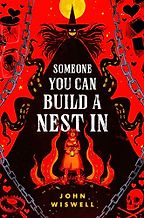
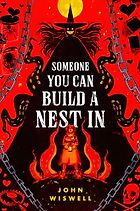
Let’s start there, then. The Nebula went to Someone You Can Build a Nest In, by John Wiswell. An intriguing title – what’s it about?
The title is literal. Our protagonist is Shesheshen, a shapeshifting monster, for whom lust consists of an overwhelming desire to plant her eggs in someone; they will then become a nest for the young who will feed on their corpse. Unfortunately, she has fallen in love as well as lust, and doesn’t want to subject her beloved Homily to this without her consent. Consent she will struggle to obtain, since Homily’s family is busily hunting down the monster – that’s Shesheshen herself – to lift a family curse.
This neat set-up then undergoes a series of satisfying twists and turns. Neither Homily nor Shesheshen know everything there is to know about themselves. As readers, part of the tension comes from waiting to find out whether there is any configuration of the chessboard that would let them be together happily – the rest of the tension comes from constant threats to their lives.
Is Shesheshen a largely human perspective, then, despite her monstrous nature?
Yes and no. She’s relatable enough for us to crack on with the story. But her distance from humanity allows for a lot of fun: she observes human behaviour, from small gestures to social conventions, from the perspective of someone constantly trying to divine the meaning. Some of our peculiarities are endearing to her, some are baffling, many are downright annoying. It allows for Wiswell to make some very sharp observations.
It allows for a beautifully unusual love story too, where the two partners can negotiate what their involvement means from the ground up. There’s not only Shesheshen’s nature to manage, but also Homily’s trauma in her monster-obsessed family, as well as simple preferences – so there’s nothing cookie-cutter about their relationship. It feels truly like a love story, rather than a romance story, if I can make that distinction.
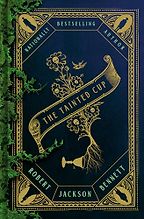
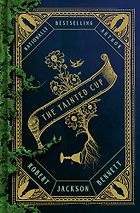
Let’s talk about the Hugo award winner next… That went to The Tainted Cup, by Robert Jackson Bennett, which also won the World Fantasy Award. Tell us about this one.
This sounded to me like it might be a classic epic quest from the title, but don’t be fooled. There’s something far more original going on here. It’s a murder mystery, set in a rich secondary world – beset by leviathans, defended by a sea-wall, building itself from lightweight fern-paper because of the frequent leviathan-quakes, and battling contagion – a terrifying affliction where plants take root within living humans and kill their host. This world features its own complex power structures, within which our protagonist Dinios Kol is apprenticed to something like a detective inspector.
This inspector, Ana Dolabra, is a particular delight. She’s caustic and brilliant, and her dialogue sparkles. Dinios is her sublime, an enhanced human – in his case, enhanced to have a perfect memory.
And the two of them have a murder to solve?
Multiple murders, enmeshed in layers of secrecy. It’s more thriller than cosy – whatever’s afoot is clearly a calculated and weighty plot, and more folks die as the novel moves along at a thoroughly entertaining pace. Grimdark Magazine describe it as a “whirlwind of a mystery novel”, and that’s absolutely true. But somehow, that’s not at the expense of the world-building – this world feels fully realised and lived-inside, accomplished without shaving a moment off the pace.
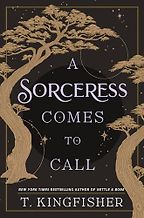
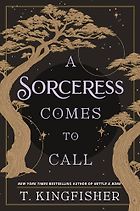
Another fan-chosen award is the Locus, which honours both a fantasy and a sci fi novel every year. This year the fantasy award went to A Sorceress Comes to Call, by T. Kingfisher. Could you introduce us?
I love T. Kingfisher’s writing – both as Kingfisher, and when she writes as Ursula Vernon. There’s something so matter of fact and grounded about her tone; she could invent absolutely anything and I’d find her believable. And she imagines some wonderfully peculiar things.
Here, the main magic we are acquainted with is ‘being made obedient.’ Cordelia’s mother can make her obedient, which means to control her body like a puppet, making it walk and talk as directed. For brow-beaten Cordelia, this is just part of her mother’s general reign of terror, and she is a little hazy on the distinctions between what is cruel, and what is cruel-and-unusual. She certainly doesn’t initially associate it with sorcery, a kind of magic generally accepted to be low-key and something of a joke.
The extent of her mother’s evil is slowly revealed, and obedience is used in ever-more shocking ways, so that there’s a really satisfying ratcheting up of the horror.
And this story was inspired by the Grimm tale of The Goose Girl?
Yes. There are often influences like this for Kingfisher/Vernon. She told us in our interview that “The Princess and the Pea” was a jumping off point for Hugo-winning Nettle and Bone, and the Hugo- and Locus-winning Thornhedge is a re-imagining of Sleeping Beauty… Her familiarity with strange old fairy tales really shows in her writing, which has the resonant, deep feel of an old tale.
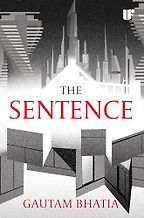
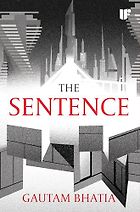
For the Ignyte awards, fans can vote from a selection chosen by committee, and the awards honour books by BIPOC writers of speculative fiction. Tell us about this year’s winner – Gautam Bhatia’s The Sentence.
This is a legal thriller set in a futuristic fantasy world. We are in a city-state that is riven in two – High Town, and the anarchist commune of Low Town. A hundred years ago, there was a political assassination followed by the revolution that birthed the commune. A constitution was brought in to create peace, but it was only designed to last a hundred years. That one hundred years is about to be up: enter the lawyers (or in this world, Guardians).
Except that our protagonist, Guardian Nila, isn’t one of the Guardians chosen to work on the case. Still smarting from her disappointment, she is contacted by the great-granddaughter of the assassin who started everything, and was given ‘the sentence’ – condemned to be cryogenically frozen, a workaround for a society that has abolished the death penalty. People are kept alive for as long as the technology allows, in case new evidence comes to light. After a set period, the freezing will be terminated. And that period is – of course – a hundred years.
Nila has a week to prove the assassin was wrongly convicted, at the same time as the constitution’s clock is ticking, and the state’s fragile peace may break.
A high-stakes novel.
In a really interesting, thoughtful way. Rather than spoon-feed us terrifying outcomes – “If this side wins, this terrible thing will happen” – Bhatia builds a world where the characters cannot know the outcomes of their actions.
This starts with musings on the proper role of the Guardians – can they really be impartial, and does that excuse them from responsibility? – but expands as Nila grapples with the political implications of her case. It makes for a really interesting tension. As you watch her desperate hard work, you can’t help wanting her to win, but you aren’t totally sure whether she’s being played or exactly what winning would entail.
Bhatia himself is a lawyer, right?
Yes, and a public commentator on civil and constitutional rights in India. He uses his expertise in all the right ways – there’s a satisfying sense that the Guardians are going about their work in properly lawyerly ways, without us getting bogged down in legal technicalities.
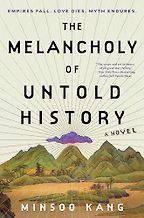
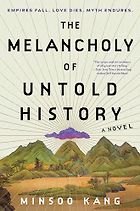
Finally, the Mythopoeic award goes to a work that “best exemplifies ‘the spirit of the Inklings.'” This year, that was Minsoo Kang’s The Melancholy of Untold History. Another well-informed author – just as Bhatia is a lawyer, Kang is a historian, right?
Yes, and it shows, in the best way. The novel is deeply concerned with the myth-making aims of a society’s history, in ways that are woven into both plot and form. Kang teaches a course called Historical Myth, looking at exactly these themes, and this is a really intelligent novel – as well as being a lot of fun.
We follow three separate layers: a myth-like tale of gods, the life of a storyteller from the ancient past, and the life of a contemporary historian. The relationship between the three becomes clear as the novel goes on, but at first you are just enjoying each layer in its own right and waiting to find out why you’re being told all three. There’s something wonderfully assured about Kang’s style which makes you very happy to wait, confident that something is being unfurled for you.
The story is set in an imagined country, right? What sort of world is it, and what sort of mythic world?
Yes. In our interview with him, Kang described the fictional version of East Asia he already has in his imagination, where instead of modern-day China, a confederation of states has evolved. The mythic layer draws on classic Chinese fantasy novels for its tone and world. It’s a wonderful blend of beautiful and irreverent.
Locus magazine described this book as “inventive and intellectually provocative”, and that’s a good summary. I’ve covered why it might be ‘intellectually provocative’, but it really is inventive too – with a whole colourful cast of gods, a mischievous sky-baby, and a satisfying and original millennia-spanning mystery.
December 9, 2025. Updated: March 27, 2026
Five Books aims to keep its book recommendations and interviews up to date. If you are the interviewee and would like to update your choice of books (or even just what you say about them) please email us at [email protected]