This year's crop of sci fi award-winners encompasses sentient AI, lost species revival, and genetic mutations, with novels, graphic novels and novellas all scooping prizes. Our fantasy and sci fi editor Sylvia Bishop introduces the prize-winning page-turners that have taken this year's top spots.
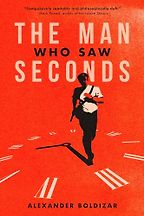
Let’s start with the winner of the Locus Sci Fi award, which is chosen by public vote. Could you tell us about The Man Who Saw Seconds, by Alexander Boldizar?
This is such a clever book. Our protagonist, Preble Jefferson, can see five seconds into the future. More specifically, he can see five seconds into an array of alternate futures, and if there’s an outcome he wants he can start with that and work backwards – for example, if he wants to open a safe, he can work backwards to the present where he uses the right code. In a gunfight, he can find the future where he doesn’t die – in the next five seconds, that is. So he’s both a formidable force in some ways, and importantly limited.
He gets into a fight with two police officers, which brings him to the attention of the authorities. As the implications of his gift sink in – the ways it could allow him to compromise any world leader, evade any authority – a manhunt gets underway. So begins a convincing parable about the relationship between fear and evil, as the conflict shapes Preble more and more into exactly the terror that they were trying to prevent, and the stakes rise and rise.
A fortune-telling gift might sound like it belongs on fantasy shelves rather than sci fi. Boldizar gives us a neuroscience-infused version. He builds heavily on recent ideas about the brain as a primarily predictive machine, and intelligence as fundamentally the ability to predict the future. We learn which layers of Preble’s brain are overdeveloped, and speculate with doctors on possible causes of the mutation, and whether it is sufficient to classify him as a different species.
Sounds thoroughly researched…
On all counts. An anarchist lawyer will take you through the niceties of the political philosophy at stake; the story will walk you through the nitty-gritty of military and civilian power structures, and the incentives of decision-making; there’s a section in the Canadian wilderness that is lovingly packed with geographic and survivalist information. This is a meticulously researched book, which gives it a wonderfully convincing feel.
It also won the CIBA Mark Twain Grand Prize Winner for Best Satire, and was shortlisted for the Foreword INDIES Book of the Year Award for Thriller & Suspense, and the Eric Hoffer Award – notably, none of those are sci fi awards. This is delighting readers across genres.
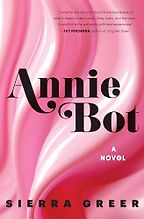
Next up we have the Arthur C. Clarke Award winner: Sierra Greer’s Annie Bot. What’s this one about?
This is a clever take on the conscious-AI theme. Annie Bot was designed to be a ‘cuddle bunny’, a sexual partner for her owner, Doug. He’s chosen to make her autodidactic, which allows her to be a more convincing partner for him, but also to develop her consciousness in ways not fully understood.
In Greer’s world, the consciousness of Annie is not in doubt – indeed, she has specialists interested in her particular development – but she doesn’t have any rights. And her emotions are set to want to please Doug. She finds herself also wanting specific forbidden things, or trying to cover up accidental mistakes, but her programming makes the idea of actively wanting to leave Doug off limits. To an extent, because of how she’s been set up, pleasing him and looking after her own welfare are fused together. And the reports we receive of him are through her eyes.
So it’s playing with her naivety – an unreliable narrator?
Yes, but in a way that doesn’t make her feel hugely limited or inhuman. Greer has created a fully rounded protagonist who just has certain priors, and those priors aren’t different to real humans who would never consider leaving their bad relationships. The book feels like an exploration of that situation, and of the roles women may automatically assign themselves in relationships, more than of robot consciousness. It’s compounded by the fact that a lot of the time Doug is not behaving awfully, if you can stomach the fact that they have an owner-pet dynamic – there are worse human relationships! As The Guardian put it – “this is an intense, compelling tale that, like all good stories about robots, is ultimately about the human condition.”
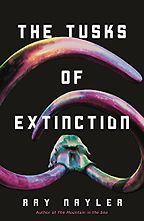
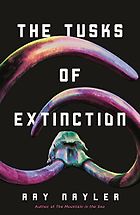
While the Hugo and Nebula awards for best novel both went to fantasy books this year, both awards for best novella went to sci fi. These are prestigious awards in the industry, chosen by fans. Let’s start with the Hugo: could you tell us about The Tusks of Extinction, by Ray Nayler?
The premise of this book is very neat: mammoths have been recreated, but they are also being hunted for their ivory, in a future where elephants have already gone extinct. We see a few different perspectives, including a boy dragged along with an illegal hunting party, a disgusted husband brought along on a luxury hunting trip – and a mammoth.
Specifically, the mammoth has a previously-human consciousness. I won’t say more on that, as part of the enjoyment is slowly piecing together how the puzzling first few perspectives can all hang together.
A mammoth must be a tricky perspective to handle…
It’s done very well. For my tastes, Nayler does just the right amount – it’s not overdone, and I think it would be easy to get bogged down. He sticks to the interesting stuff: the sensory organs, and the behaviour of the herd. Our mammoth is the matriarch, so she has to teach and enforce this behaviour to the others.
The novella explores its own past and makes relatively little progress through its present, certainly not reaching any world-altering new states of affairs. Locus magazine writes, “In its braiding of associations, the novella operates poetically… [it] unpacks, if not forgives, the forces and influences that lead to particular life choices or traps”.
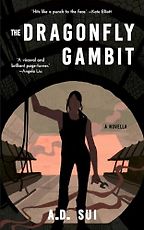
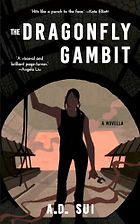
Meanwhile, the Nebula for best novella went to The Dragonfly Gambit – could you introduce us?
This is a really tight piece of military sci fi, which functions as a thriller – you aren’t exactly sure who’s planning what, and therefore who’s winning. We follow Inez Kato, who is determined to bring down an intergalactic empire called the Rule, and has been brought to its heart to be forced into aiding it with her engineering knowledge. She is pitted against Ennis Rezál, running the Rule’s side in an ongoing war against the rebellion. Each main player is hoping to use the other. Also, they fancy the pants off each other.
So are we flipping between the two?
No, we stay with Kato, in first-person, so Rezál is a black box to us. And our narrator herself, we learn early, does not reveal everything to us.
It’s not just a two-person cast – most notably there’s an ex-girlfriend and an old friend too, and the four are all intertwined together in different ways. But the others mostly function to flesh out the world as a place with history and depth. The core dynamic is tightly focused on those central two, which pays dividends in pacing and tension.
Notably, for military sci fi, the military does not come off well. The characters are all difficult, but we forgive them because they are the products of their system. In our interview with A. D. Sui, she explains, “This was my attempt at military sci fi that was critical of the military-industrial complex… I wanted to play with the idea of the other side of military propaganda: how do people come out on the other end?”
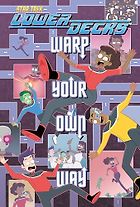
Finally, the Hugo award for best graphic story went to the first original graphic novel from the Star Trek: Lower Decks franchise:Warp Your Own Way, written by Ryan North, with art by Chris Fenoglio.
First, some context. Star Trek: Lower Decks is an animated series from Paramount+, and it explores the junior officers in the Star Trek universe. There have been five seasons, and accompanying comic miniseries, but this graphic novel tells a separate story, following Officer Beckett Mariner aboard the Cerritos as she tries to have a day off.
It’s also the first interactive graphic novel in the Star Trek franchise. By interactive, I mean choose your own adventure. And more than that – a reason for the choose-your-own-adventure nature is baked into the story itself. It’s been very well received – Strange Horizons have described it as “a clever, delightful book”, and Comics Beat as “worth more than its weight in Latinum.” (The Strange Horizons review is also in choose-your-own-adventure format, to tickle any hard-core format-fans.) It’s really fun to see something formally playful take the graphic story prize.
Five Books aims to keep its book recommendations and interviews up to date. If you are the interviewee and would like to update your choice of books (or even just what you say about them) please email us at [email protected]