The art of bookmaking is alive and well. Which art, architecture, design and photography books have we added to our library in 2025? Romas Viesulas, art & architecture editor at Five Books, takes us through his personal choice of beautiful reference books to add visual and conceptual interest to any well-appointed bookshelf.
Even for those of us who do much or most of our reading online, isn’t it a quiet thrill to hold a well-made volume in your hand? In a year of desperate digital distractions, here are a few of the books that called out to be handled, admired and read — not simply because they shine on the shelf, but for the way they prompted me to think anew about art, building, design, and indeed memory.
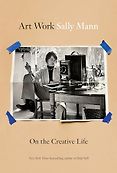
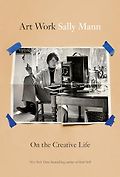
Art Work is less a survey than a conversation: part memoir, part workshop, part exhortation to anyone who wants to make something honest. Photographer Sally Mann has always been frank and fearless. The tone is occasionally outrageous, and upends the abiding myth of the artist’s life, that it is some sort of effortless epiphany. Art is work. It is risk and doubt with the occasional flash of inspiration. This generous and provocative guide to the creative life blends photographs, journal-entries, letters and reflections on creative success and its essential counterpart, failure.
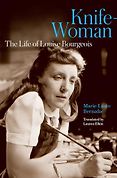
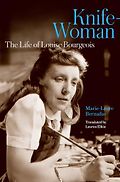
Knife-Woman: The Life of Louise Bourgeois by Marie-Laure Bernadac (translated by Lauren Elkin)
Reading this book feels like stepping into artist Louise Bourgeois’s in/famous art salon. In fact the experience goes beyond that, like an invitation to visit the weave of her memories — the tapestry workshop of her childhood, the domestic labour of women mending torn rugs, the repetitive craft of repair. The author shows how these early experiences of weaving and restoration haunted Bourgeois’s mind and later surfaced in her sculptures and large-scale installations. It is a book about continuity — between childhood trauma and adult expression, between memory and material. The research is impeccable, rich with illustration, diaries, letters, personal photographs and previously unpublished archives. For anyone interested in this singular figure in twentieth century art, and how lived experience becomes aesthetic conviction, Knife-Woman is essential reading.
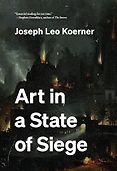
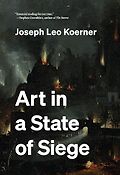
Art in a State of Siege by Joseph Leo Koerner
We’ve featured Joseph Leo Koerner on Five Books previously, one of the authoritative voices on art history and the Renaissance in particular. His new volume — an “art-historical epic for dangerous times” — examines three works made in moments of crisis: from the visionary pre-modern imagery of Hieronymus Bosch to the anguished modernism of Max Beckmann, to the resistant drawings of William Kentridge under apartheid. Through these, Koerner asks: what does art look like when the rule of law fails? This is a book for the deranged days of 2025. It insists that in “states of siege” — literal or metaphorical — art becomes not an afterthought but a last bulwark: a language of resistance. Especially in a year like this, given societal upheaval the world over, this reads more like manifesto than academic volume.
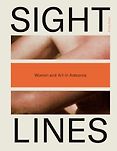
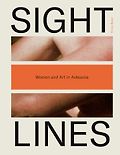
Sight Lines: Women and Art in Aotearoa by Kirsty Baker
Sight Lines is a re-imagining of what art history can be, grounded in the land, cultures, languages and gendered experiences of Aotearoa, the indigenous name for New Zealand. The book is eclectic, ranging from weaving and textile art, to painting, photography, performance, installation, and community-based practice. It is told through the voices of women, tangata whenua and tangata tiriti artists, activists, makers. And it is a beautifully made volume, winner of the PANZ Book Design Awards 2025. Traditional categories — painter, sculptor, “fine art” — give way to something more fluid: what it means to make, belong, remember. More than an art book, Sight Lines reads like a map of cultural survival, plurality, and becoming. As Western museums wrestle with restitution, as monuments topple or get remade, this book not only interprets colonial legacies but expands our sense of what art history can be.
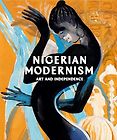
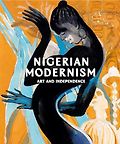
Nigerian Modernism: Art and Independence edited by Osei Bonsu
A touchstone exhibition of 2025 which this author was lucky enough to visit was the ravishing Nigerian Modernism at the Tate. This richly illustrated exhibition-catalogue (and history) of modern art in Nigeria — tracks the emergence of a visual culture at the intersection of indigenous traditions, colonial history, Pan-Africanist aspirations, and global modernism. Covering roughly 1945–1995 and more than 50 artists, the book presents painting, sculpture, ceramics, graphic arts — from early colonial-era works to the bold explorations of independence and post-independence Nigeria. Far from being a purely European export, Modernism was re-interpreted, adapted, challenged and transformed from Lagos to London and beyond. What emerges clearly is how Nigerian visual modernism was a major node in global art history that parallels and enriches the Modernist narrative we are so familiar with.
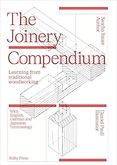
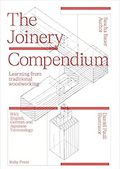
The Joinery Compendium: Learning from Traditional Woodworking by Sascha Bauer & Daniel Pauli
Is there anything quite so seductive as a well-conceived technical manual or instruction booklet? This winner of the DAM Architectural Book Award 2025 demonstrates how deeply meaningful — and modern — traditional woodworking can be, and it does so with diagrams that are the epitome of effective communication. The book systematically documents more than 400 traditional wood-joints from across the world, with explanations of wood properties and technical terminology in English, German, Japanese. This is no nostalgic throwback. Precision and clarity of presentation make it obvious that these joinery techniques could once again become relevant, in an era of sustainable building, repairability, and respect for materials. Encyclopedic, elegant, inviting – for anyone who believes in longevity — of buildings, furniture, books — The Joinery Compendium is a reference that reads like a user’s manual for sustainable living.
The Palm Springs School: Desert Modernism 1934-1975 by Alan Hess
In an era of architectural monumentality, celebrity designs and urban gigantism, the Palm Springs School feels like a quiet manifesto in favor of scale, humanity, context. This volume offers a fresh look at the mid-century architectural experiment in California. Sometimes architecture’s power is in subtlety: in the way a flat roof reaches toward sky, or a window frames nothing but light. The deceptively relaxed houses, the interplay of indoor/outdoor, light and shadow, the vernacular modernism that speaks of desert realities and post-war optimism, all of these feel like a laboratory for a life lived well.
Silent Monoliths: The Coaling Tower Project by Jeff Brouws
And the most anticipated book of early 2026? For me, it would be Silent Monoliths that feels like a book that will demand a place on my reference shelf. Brouws photographs the vestiges of North America’s steam age: the coaling towers that once powered locomotives, now abandoned, silent, overgrown — ghostly monuments to a bygone era, but somehow commentators on the energy politics of our own age. Don’t mistake this for ‘ruin porn’ or a romanticizing of decay. Instead this book sees these structures as vestiges of an industrial past that shaped landscapes, economies, and human movement. It brings to mind Islands of Abandonment by our very own Cal Flyn, and invites reflection on what we build, what we discard, and how memory lingers in the physical world.
—————————————————
DESIGN & FASHION BOOKS
I Love It! What Is It? The Power of Instinct in Design and Branding by Turner Duckworth and Gyles Lingwood
Design is often treated as surface — packaging, advertising, logos. But this book argues for instinct: the gut-feeling, the immediate emotional effect which good design triggers before we can rationalize it. In exploring branding, logos, spatial design, and more, I Love It! What Is It? reframes design not as decoration, but as communication at its most essential. Every object we grasp, every label we read, every storefront or web-page we scroll through — these use visual intelligence to speak to us, to shape desire, identity, belonging. And of course, coming from publishing house Phaidon, it is a beautiful example of well executed design. In a world saturated by sensory stimuli, this book asks us to pay attention by asking why a design works, what it signals, and what it asks of us.
Rick Owens: Temple of Love by Alexandre Samson, Miren Arzalluz, and Rick Owens
Published to coincide with the 2025 exhibition at Palais Galliera in Paris, this retrospective catalog of fashion provocateur Rick Owens is a meditation on identity, body, transformation and desire. For three decades Rick Owens and muse Michéle Lamy have been ringleaders of a fashion freak show that vividly illustrates how design — clothing, materiality, presentation — becomes a means of self-definition, of conceptual provocation. Flowing, diaphanous fabrics sit alongside structured, sharp silhouettes. There is an obsession with form, movement, texture and the unexpected. This is fashion as contemporary art, design as an existential argument, a bold and beautiful statement of living life adventurously.
Books remain an analog bulwark against the visual slop of artificially generated imagery. Even, or especially, the ‘lowbrow’ category of comics can bring us greater delight than any number of algorithms. Illustration is alive and well. Perhaps the most surprising entry on this list — and the one that reaffirms my faith in graphic novels as a serious artform, is Drome. This is not idle entertainment. The novel’s visuals and narrative combine into a meditation on alienation, memory, identity. And they do so in the most innovative way. The page layouts are astonishing in this epic retelling of human creation myths, with effects that linger in the imagination for its refusal to arrive at any today narrative resolution.
Frankenstein, or the Modern Prometheus by Mary Shelley, illustrated edition by MinaLima
Finally, a book that reminds us of the power of illustration to re-animate old texts. MinaLima’s edition of Frankenstein adds to the gothic horror of the novel a visual, even tactile richness: hand-lettered pages, design flourishes, and a feeling that every turn of the page is a revelation. In 2025, when many of us read on screens, this volume is a reminder that books continue to matter as physical, carefully designed objects.
Which books of 2025 stayed with you for their artistic, visual or design appeal?
Five Books aims to keep its book recommendations and interviews up to date. If you are the interviewee and would like to update your choice of books (or even just what you say about them) please email us at [email protected]