Thank you for agreeing to talk to me about this year’s NBCC autobiography shortlist. It’s a collection of deeply reflective books; grief figures highly. What were you looking for, would you say, when you were looking for the best new works of memoir?
I was looking for diversity of approach to the category of memoir and autobiography. I loved the idea of building a shortlist that brought together different way sof thinking about how to write about one’s life, and how the writer’s expertise and way of being in the world could come to bear on a text.
For some of the finalists, it was their first foray into autobiography or memoir, but previously they’ve written screenplays, journalism, fiction. That was fascinating—it wasn’t by design, but when I looked at it later I realised that a lot of these folks are experienced and accomplished writers, but this is their first time in this particular form.
I loved having Beth Macy, the journalist, on there. Arundhati Roy’s Mother Mary Comes to Me feels very novelistic. Hanif Kureishi’s book Shattered has an immediacy which comes from dispatches written after his accident, that were later revised and developed. Miriam Toews book looks so different—letters from long ago, meditations, all these bits. Then, with Geraldine Brooks, it maps all over the place: Tasmania, Martha’s Vineyard, Washington DC. I loved how their approaches showed what is possible within the genre.
We like to cover NBCC shortlists, because we have the sense that the judges—the critics—must be the best-read people when it comes to the genre as a whole. Would you say you’ve noticed any trends in autobiography and memoir over the last few years?
Speculative memoir. That’s exciting to me, although I can’t say it’s reflective of this year’s shortlist. But I read very widely in this category and I love to see innovations and new approaches. I’m thinking of a book called Clam Down by Anelise Chen. It’s fascinating. Told from the perspective of a mollusc. Like, what?
Though it didn’t make the list, it’s exciting to me to see people innovating and thinking about what we can do that’s new. What sounds like you, that’s unlike anybody else? Dor some people, that means speculating, or thinking really different about form.
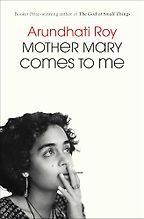
That’s so interesting. I’ll look out for them. But let’s turn our attention to Arundhati Roy’s winning book, Mother Mary Comes to Me. Would you introduce our readers to the book, and explain why the judges sought to reward it?
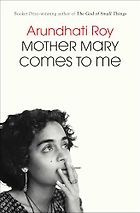
Yes. It’s a complicated relationship that the narrator is examining: the relationship with her mother. She calls her mother Mrs Roy, first of all. To quote from the book, she says she has “lost her most enthralling subject.” Already that makes me feel compelled to read the book.
As I said, it’s novelistic. We follow the writer from her time as a child, then as a student, and onto becoming a writer. She mentions the different, very important, works that she has written, her life as an activist, but it is her mother, Mrs Roy, that is like the sun that she keeps revolving around. I think this makes a beautiful companion piece to her novel The God of Small Things. To read them both together, I think, would be amazing.
Roy calls her mother an enthralling subject, but the book itself is enthralling. We are immersed in this narrator’s life, in a different time and place. We really loved reading about the journey of this writer, her personal and political upheavals—the history of India as lived through one family in one particular time period.
There’s a lot about transformation in here. The consequences of what happens when you lose someone as important as your mother, as complicated as that relationship might be, and how afterwards one reconfigures one’s life. It felt like an entertaining, enjoyable and monumental work.
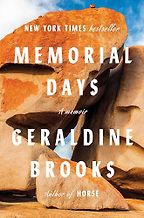
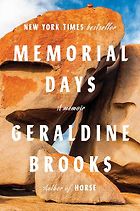
Thank you. Let’s step through each of the finalists in turn. Could we start with Geraldine Brooks’s Memorial Days next? It recently appeared on our site as one of the best memoir audiobooks of 2025.
One of the themes of our shortlist, you’re right, is death and grief. Mother Mary Comes to Me is about grief for a mother, and Memorial Days’ reason for being, the centre point, is the sudden loss of the author’s husband, Tony Horwitz.
He was on his own, on a book tour. And what a loss. This was a long marriage of two writers, such an important relationship. There wasn’t an illness, so there was no preparation. They were going about in the prime of their lives, and then this sudden loss.
I think readers responded to the suddenness of that. It reminds me of Joan Didion’s book… not Blue Nights…
The Year of Magical Thinking?
Yes. With Brooks, suddenly there is this loss, and we move through the initial shock of those days. How do you tell your children? How do you physically move and do all the things that one has to do, all the errands and chores of loss. And I was interested in how this memoir maps grief over time and place, from the writer’s home in Martha’s Vineyard, then to a remote island off the coast of Tasmania. She takes us with her on a journey, moving to all these different places as she deals with this huge, sudden absence.
Then, also, from interviewing people or from looking at accounts, she puts together what happened on that street in those final moments where her husband was alive, then her husband collapsed and was not alive any more. It’s incredibly moving and intimate to take us along on that journey with her through grief.
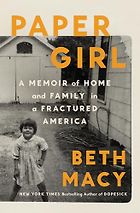
Absolutely. Earlier you mentioned Beth Macy’s Paper Girl and her journalistic approach. Would you tell us more about that book?
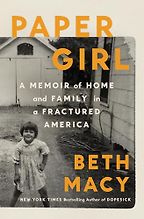
Yes. It’s a really different approach. This is a person well-versed in writing about other people and communities and systems. It was exciting to have her bring that accomplished reporter’s eye to a place she loves, which is her hometown of Urbana, Ohio.
I feel lucky to have read it because she brings that skillset to an American town in crisis, and to her relationship to this town and to the people and her family. It all comes together. That’s why I really appreciated this book: that you can have a memoir that is also deeply researched, meticulously reported, and has a big way of thinking about how systems interact.
Macy tells her own story about how she had opportunity through a Pell Grant. There were all these things that she could access. She was a paper girl who delivered newspapers, then eventually she wrote for newspapers, and so she took on this economic mobility. Decades later, that’s not what young people are facing. In fact, there’s so much against them. It’s a tragedy.
She ends the book writing about an ex-boyfriend that she had, someone she cared about deeply, who ended up a spokesman of anti-immigrant rhetoric. Anti-Haitian in particular. In that area, there was that notion they were eating dogs and cats—he was part of that. He has since passed away. She asks: How does that happen? What are the stories that we tell ourselves that make us believe such horrible lies about each other.
Previously she’s written nonfiction, reported books like Dopesick. But this is different, from a very personal perspective.
Absolutely. A kind of insider’s perspective, even if she has gone away and come back.
Yes. And this book starts with a death too. Because it was after her mother’s death that she came back to this town and set off on this journey.
At the end of the book, there is a call to action. Like: let’s not lose hope, let’s do things. What can we do to change the story? I saw her last night, actually, and she is running for Congress.
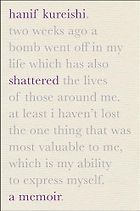
Good for her. I’ll look out for her campaign. Let me turn your attention to Hanif Kureishi’s Shattered, written after a life-changing injury to his spinal chord.
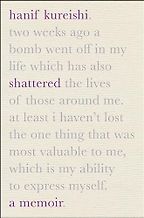
This is an astonishing book. It’s so moving. I think one cannot read this book without an emotional reaction.
One Boxing Day, he has an accident and he wakes utterly changed. He cannot move his limbs, his torso. It’s terrifying.
But it is hopeful and it’s also hilarious. He makes jokes, has a sense of humour throughout. It’s funny, and that was very appealing to me. But it’s also incredibly moving and candid. It’s the narrator’s search to find himself and his identity as a writer. He says he had become divorced from himself; that he was altered and unrecognisable to himself, and yet he still wanted to keep writing and telling stories, and so he found a way to do that.
This book is a singular, incredible achievement. I wouldn’t say it is enjoyable, but it is important. And there’s an immersiveness—you go deep into his voice and his perspective.
So this is a book about loss too: the loss of one’s body. Yet he still has writing, and I know that as long as I can still have writing, my words, there will be some comfort. If I could still have that part of me, then I still have something.
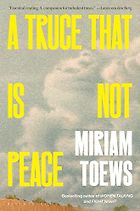
That brings us to the final book, which is Miriam Toews’ A Truce That is Not Peace.
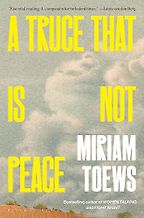
It’s so different. It’s fragmentary, told not in chapters but in a way that’s unexpected. We jump all over time and place. We’re in different forms. We’re in letters, in emails, we’re taking walks with the narrator as she meets up with people.
It opens with a question that the author is asked, and which she asks herself throughout the book, which is: Why do I write? I guess for people who are writers, that’s why it’s so appealing. We people on the NBCC board are interested in the same question.
But it is also about loss. The writer is meditating on the loss of her father and sister to suicide.
I was deeply engaged in what this writer was doing on the page—how she took fragments and put them together. Because it didn’t feel like a fragmentary reading experience, it felt very cohesive. It came back to the question again and again: Why do I write? Why does anybody write? Why should one right?
There is humour, but there’s all kinds of thinking and revealing and considering of what it means to write memoir, and what it means to write about memory and experience. I loved it.
I mean, I loved them all. Any one of the books on the shortlist could have won, and I would have been 100% behind it.
Interview by Cal Flyn, Deputy Editor
April 7, 2026
Five Books aims to keep its book recommendations and interviews up to date. If you are the interviewee and would like to update your choice of books (or even just what you say about them) please email us at [email protected]
Five Books interviews are expensive to produce. If you've enjoyed this interview, please support us by donating a small amount.