Before speaking today, I know you spent some time thinking about what constitutes a mythical creature – why don’t we start there?
Yes, I had to think about it a little bit, because a mythical creature can be an enormous range of things. What about vampires, demons, werewolves…? Does a mythical creature have to come from folklore, or can it be a modern construct? Does a ‘creature’ have to be animal-esque, like a quadruped or a bird, or can it be like a person? What about cryptids? Can it be a monster?
I gave myself a few ground rules, so I wouldn’t just explode across the known universe of books looking for my favourites. I decided “mythical creature” meant ‘animal’, or with animalistic traits – a sexy demon with two legs and abs wouldn’t have made my list. I also decided to not repeat a creature, which helped me broaden what I was looking at. I could do a whole ten-book list of dragon books, as could many people I’m sure, but I didn’t want to repeat.
I also tried to look at books that are a little bit older and a little bit newer, so it wasn’t just my old favourites from childhood or just the books I loved recently. I was trying to balance it out because mythical creatures is a very large brief!
It is. Although I think maybe I want to do a sexy-demon-with-abs list now…
I think that would do well!
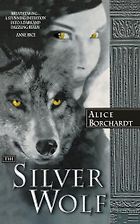
But let’s stay with mythical creatures, and talk about your first choice: please tell us about The Silver Wolf by Alice Borchardt.
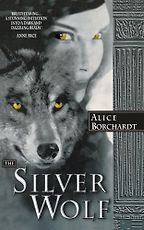
This was the book I loved when I was a teenager. Alice Borchardt passed at a fairly young age. She was Anne Rice’s sister, the lady who wrote The Vampire Chronicles, and she wrote historical fantasy in her own right. Her books never got as much traction as her sister’s did, but they’re fantastic, especially this series.
It’s set in decaying Rome after the Roman Empire. It’s chaotic and full of this wonderful aura of decay and former glory. It’s the first in a three-book series about werewolves set in this environment, about this young woman who was born a werewolf. It’s inherited, and she’s under the thumb of her controlling uncle and cousin who tried to hide what she is, and marry her off to this mysterious suitor. It’s all very dramatic. There are horrible, gruesome ghosts that she can see, and a beautiful-yet-tired courtesan who plays a huge role…
It’s a very luscious piece of writing. And it’s very sensual – not erotic, but very sensual, and just a wonderful werewolf book. And unlike in some, there’s nothing about her getting bitten and transformed – no, she was born that way.
It’s a book that I had a huge thing for. I read it multiple times when I was in my teens, and I think it’d be great if somebody would pick it up again.
It’s fun that we’re starting with a shapeshifter. Is her mind very different as a wolf?
Yes, she’s different as a wolf. And it’s interesting, because there are multiple points of view in the book, so you get her point of view as a wolf, but also people’s point of view about her as a wolf, plus her own human point of view. The point of view shifts quite a bit, it’s very fluid – her mysterious suitor has a POV, and the courtesan, and other characters too. There’s a really funny street-rat girl, who was the daughter of an enslaved Gallic chieftain, and she’s super fiery and doesn’t take anything from anyone. It’s just wonderfully fun to read, and interesting, with luscious prose.
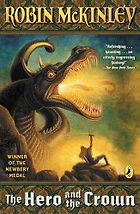
Great. Let’s talk about your next choice: please introduce Robin McKinley’s The Hero and the Crown.
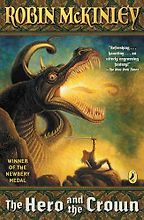
This was another younger childhood favourite. I was into it when I was in my early teens, and it was very formative for me. It was my first dragon book, and it was also my first book where the heroine had a sword. It was written in the late ’80s, and at that time, the boys had the swords and the adventures and the girls got rescued. Robin McKinley was one of the early authors to break that paradigm and say, “The girl is tall, the girl has a sword, she learns to use it, and she saves the kingdom with her sword.” That was something that was shocking and wonderful to me, aged twelve or thirteen. It’s a wonderful, classic old-school fantasy novel. It won a Newbury award in the US in the 1980s, and it broadened my paradigm about what kinds of books girls could be heroes of, and what kinds of books I enjoyed.
There’s a dragon. And there’s a wonderfully written, very desperate, very how’s-it-going-to-turn-out fight between the heroine and the dragon. The dragon is an evil dragon – it’s not spoilers to say that – but it’s a wonderfully written dragon who is a real presence.
Dragons in fantasy are very varied… Could you tell us more about the nature of dragons in this world?
So it’s interesting, the lore of this world is that the dragons of the book’s present day are kind of nuisances. They’re very small, they breathe a little bit of fire, they cause trouble. They’re like black bears that breathe fire: they’re annoying to deal with, but not the worst thing ever.
The heroine is discouraged by her family from taking up her sword, and the only thing they’ll let her do is go out and kill these little dragons, because it’s a menial task. And she does it because she wants to use her sword. She also does an endless amount of research recreating this old recipe for an ointment that makes you fireproof. I like to research, too, so her research scenes were very satisfying to me. And then she exterminates dragons.
But there are legends of bigger dragons that used to walk the earth – big, terrifying, city-levelling dragons. And of course, one of that kind wakes up later in the novel, and she’s the only one who has the knowledge to fight it. Like I said, it’s a very classic setup, but it’s wonderfully executed and endearing. The heroine’s got a wonderful horse that she’s best friends with, who fights the dragon with her. I have such fond memories of reading and loving that book when I was younger.
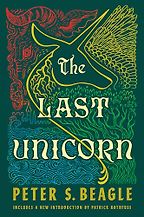
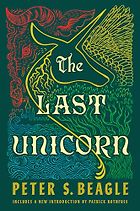
Let’s stay with classic texts, and talk about your third choice… Please tell us about The Last Unicorn, by Peter S. Beagle.
It’s funny, unicorns are obviously very prominent creatures in the magical pantheon, but there aren’t a ton of books that feature them. There are children’s books, but fewer books for adults. Peter S Beagle is at the pinnacle, the classic of them all.
It’s a book written like a fairy tale, but it’s very quirky. It’s got almost a modernness to it. It’s a book about love and loss and humanity, and you discover all these things through the eyes of a unicorn. It’s a wonderful novel, from the opening sentence it’s enchanting, and it’s again a book I first read as a teenager. It was impossible to forget that book. And of course, there was a wonderful animated film as well that I think many people my age loved when they were younger, too.
It’s interesting, unicorns are a classic mythical creature, but they’re quite a blank slate in terms of personality or powers…
Their association with all the virtues makes them a little bit passive – blank slates, like you said. Their big characteristics are that they’re drawn to maidens, and clean water, and they can heal wounds. In some tellings, they’re the epitome of Christian virtue. Dragons are easier to make a story out of because you can slay them or ride them,
I recently wrote an introduction to a new edition of the 1926 fantasy novel, The King of Elfland’s Daughter by Lord Dunsany, which is definitely an old-school classic. In that book, unicorns have to go between the Elfland and lands of men, to graze in both places. And the son of the King of Elfland’s daughter, who’s the hero of the latter part of the novel, breeds dogs to hunt unicorns. There’s a big action-packed sequence of unicorn hunting, which is strangely placed in the rest of the book, but coursing animals is obviously something that Lord Dunsany has done; it’s very lively and interesting and well-written. So that’s another unicorn incident in a novel, but it’s not a character; it’s an animal.
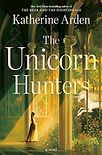
You have a unicorn book coming out soon – The Unicorn Hunters. Could you tell us a bit about it?
The Unicorn Hunters is set in the late 15th century in Brittany, France. The main character is the historical figure Anne of Brittany, who was the last Duchess of Brittany while it was still an independent polity. She inherited the throne when she was eleven, very young, when her father’s duchy had already lost the war with France. When she was fifteen, she was made to marry King Charles VIII of France, and Brittany was annexed. Charles ended up dying really young – he hit his head on a lintel, apparently, and just keeled over – so Anne was then made to marry his heir, Louis the 12th, which sealed France’s claim on Brittany.
Obviously, Brittany is now a part of France. But you can tell historically that this wasn’t what Anne herself wanted. She wanted Brittany to stay independent, and she worked tirelessly for that outcome. I always wondered what would have happened if she had more options. And being a fantasy writer, I thought, what if some of her options were magical? So I wrote an old history of the fifteenth century. There are unicorns, and there are also Breton fairies, and jousting and hunting… It was a wonderful jaunt for me, this medieval, early Renaissance world.
In the Winternight books, not everyone can see the spirits, and now there’s a unicorn living deep in the woods… I love that your books are in the real world, but with magical creatures half-believed in and hidden.
I love the idea of a world where the magic is there, but just out of sight. It feels more believable to me – I like subtlety in stories. I like that ethereal feel: is it there, or Is it not?
Especially for a unicorn – they are subtle creatures. They’re not like a dragon, which is a very obvious, big, loud kind of mythical creature. I think a unicorn has a quietness. They also have an association with virtue and royal authority, so they make for an interesting addition to a story about a ruling Duchess in my case.
Yes, it’s a really interesting pairing with the setting – and a fascinating setting.
I love history. I think historical fiction is the earliest fantasy, because you’re imagining a different world. Even if it’s the same globe as your world, it’s so different – the fifteenth century is nothing like the world we live in today. So historical fiction and fantasy have always been cousins, especially since if you go back far enough, there’s a merging of history and myth – our legends are somewhat historically based, but obviously they’ve been embellished over many years with absolutely fictional elements.
My other big inspiration was the Lady and the Unicorn tapestries in Paris, in the Cluny Museum. There are six tapestries hanging there, all of a woman and a unicorn. They’re pretty famous. Five of them represent the five senses – there’s a sight tapestry and a hearing tapestry and a touch tapestry – but the sixth tapestry is a mysterious one. It says ‘By my will alone’, embroidered over the woman and unicorn in this tent. And of course, the fantasy author in me thinks the sixth sense is magic. It has to be magic. So I wanted to build a magic system that was rooted in the five senses, which could be a semi-believable addition to the existing tapestries – especially since they were contemporary with Anne of Brittany, made about that time.
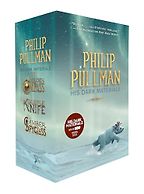
This sounds incredible. Ok, let’s talk about your fourth choice: The Golden Compass, by Philip Pullman.
I wanted to have a made-up creature amongst our group. And I thought about Philip Pullman’s daemons, which are a wonderful invention, and such a part of making that world come alive. When I read the series I was younger, and like many people, I fell in love with that world, with Lyra and with the life in it; and with the idea that you could be born with an animal companion that is you, but also is not you. You could talk to yourself, but yourself isn’t yourself… It always fascinated me.
My friends and I would debate, who would your daemon be? “I’d have a baby dragon”, “No, you wouldn’t”… “What if yours was a camel, that would be annoying” – it’s such a wonderful nostalgia thing for me. They’re unforgettable creatures that play a huge role in the plot, and in characterisation and the symbolism of the story too.
Sadly, I know mine’s a housecat. I’ve tried to believe it wouldn’t be, but I’m sure…
That’s a good one. What if yours was very large? That would be a problem. And I think Pullman avoided having huge daemons, actually, for that reason. But a house cat’s a great one, very cuddly. What if it were a fly or a mosquito?
Yes, sailors are the only people in the world who really get inconvenient animals. There’s a whole list of animals that are never used.
No one is a sea urchin. Or an oyster.
You’d have to stay by a rock and you’d have learned that your soul is deeply uninspiring… I was so pleased to see this one on the list, because I think one function of mythic creatures is something to bond with – you get that with dragons a fair bit – and this is the ultimate example.
Yes, magical bonded creatures could be another whole list – the white horses in The Heralds of Valdemar, and all the bonded dragons out there. Then the daemons who are a part of you, but also bonded creatures. There are so many directions you can take magic creatures.
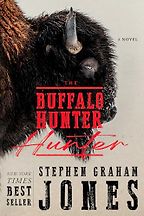
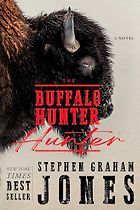
But alas, we only have space for one more example. Please tell us about The Buffalo Hunter Hunter, by Stephen Graham Jones.
This book I read recently, and I loved it. It’s a fantastic novel. Stephen Graham Jones is one of my favourite writers. I thought about this a while, because I had made my rule that I was going to stick to quadrupeds, and this is vampires. But one of the brilliant parts of Stephen Graham Jones’s conception of a vampire is that whatever the vampire is drinking, they become – so if you drink a lot of gophers, you’re going to become a gopher, if you drink a lot of cats, you are going to become a cat, and so on. And that idea is played with in a lot of different ways in the novel.
The premise is that a Native American warrior in the 19th century is bitten and turned into a vampire, becomes undead, and lives the solitary life while hunting the invaders who have come to hunt the buffalo. Hence the title of Buffalo Hunter Hunter. It’s a nesting series of narratives where a present-day narrator reads an old manuscript that was dictated to a priest by this hunter, whose name is Good Stab.
The vampires definitely count as creatures. The original vampire is called the cat man in this telling. It’s a horror novel, it’s bloody, it’s fantastical, it’s vengeful. It’s wonderfully written. It’s very complex, and very heartfelt. It’s animalistic, with an intensity, and pure feelings… It’s a book, again, that I think needs to be read.
When I interviewed Grady Hendrix about vampire books, he talked about many metaphorical roles they’ve played – they’ve been pandemic and exploitation and abuse and addiction and more. Is there a clear symbolic role for vampires in this novel?
Here the vampire is the time traveller, the voice from the past – a past that refuses to die, a culture that refuses to stay buried. So the vampire becomes a symbol for a whole people and a whole way of life that just won’t stay in the ground. It’s unique, right? The book is so compelling – with the vampire as symbol for a past that is alive and ferocious and bloody, and won’t let go.
Five Books aims to keep its book recommendations and interviews up to date. If you are the interviewee and would like to update your choice of books (or even just what you say about them) please email us at [email protected]
Five Books interviews are expensive to produce. If you've enjoyed this interview, please support us by donating a small amount.