Sci fi writers have busy, flexible minds and give us a lot to enjoy beyond their famous novels, says our fantasy and sci fi editor Sylvia Bishop. Here, she recommends five of her favourite lesser-known works by big names: from novels to short form, and from the wonders of science to glorious nonsense.
There’s a range of forms on your list today, and two non-fiction choices. Are all sci fi writers this diverse?
I think it’s a genre for busy, flexible minds. A lot of sci fi writers, it seems to me, are primarily fascinated by the possibilities of humans, and happen to have found novels a good medium to explore that – sometimes. Other times they write other things. It’s well worth looking up what else the sci fi greats have been up to. The result is a sort of pot-luck of speculation and what-iffery.
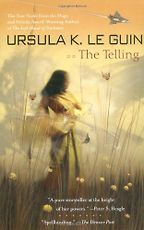
Your first choice is a novel, although the author also wrote short stories and essays. Tell us about Ursula K. Le Guin’s The Telling. This is part of the Hainish Cycle, right?
Yes – most of Le Guin’s sci fi is part of this universe. But it’s a universe, not a world, so it encompasses very varied settings. The most famous ones are Left Hand of Darkness and The Dispossessed, which are wonderful – particularly The Dispossessed, which is maybe the best exploration of political systems I’ve ever seen in a sci fi novel. But there are a handful of other Hainish novels, as well as short stories, that you hear less about.
I’ve chosen The Telling because it’s so utterly unique. It’s the last novel she wrote in the cycle – it came out in 2000, when Le Guin was 70. It’s a sci fi novel that reads like a philosophical discourse, and also like a rebuttal of much of the ideology you might find in other sci fi.
Our hero Sutty has been sent to observe the planet Aka for the Ekumen – the Ekumen is a league of planets that sends envoys to other worlds as anthropologists-cum-diplomats. Le Guin’s own parents were anthropologists, and it shows: her worlds are nuanced, real, and hard to pin down. In Aka, a scientistic bureaucracy has taken charge and is cracking down on old ways of life, including the religious tradition (a non-theistic tradition – Aka has no concept of God, or the soul). For Sutty, who left our own planet when religious fundamentalism took over, it is an adjustment to realise that the zealots here are the rationalists.
Ah – hence the almost anti-sci-fi feeling?
Anti a certain strain of sci fi, for sure, although the genre has been shaped now by writers like her. Le Guin’s stories are always about humility and caution, not gung-ho advancement and adventure. But here her critique applies equally to much of religion, and to any system that makes people too certain. Sutty tells a state official that he is her enemy because he is “the true believer. The righteous man with the righteous mission. The one that jails people for reading and burns the books. “
She becomes deeply sympathetic to the old way of life, and its core institution, the Telling – the passing on of a vast medley of stories with no hierarchy or central theme. This puzzles her at first – “The jungle was endless, and it was not one jungle but endless jungles, all burning with bright tigers of meaning, endless tigers” – but she comes to appreciate its purpose. I won’t try and summarise its purpose, because it’s too multi-faceted for that.
Really, this novel is not about the story – there isn’t much of one. You stay to learn more about Aka and the Telling, and because Le Guin is an astute philosopher. Here’s an example, where a character speaks, and we might be reading an existentialist novel: “Animals have no language. They have their nature. You see? They know the way, they know where to go and how to go, following their nature. But we’re animals with no nature. Eh? Animals with no nature. That’s strange. We’re so strange. We have to talk about how to go and what to do, think about it, study it, learn it. Eh? We’re born to be reasonable, so we’re born ignorant.”
Some writers could make a novel like this amazingly boring. I’ve always hated Huxley’s The Island, where characters just drone on about the political and social arrangements of their world and how great it is. But Le Guin’s worlds are too complex and rich to be boring. It’s not didactic. It’s an exploration.
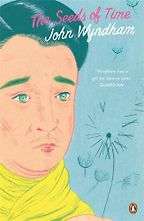
Let’s talk about your next choice, a short story collection – John Wyndham’s Seeds of Time.
If you don’t think you know John Wyndham, you need only hear his most famous titles: The Day of the Triffids and The Midwich Cuckoos, which besides the recent TV series was previously dramatized as the film The Village of the Damned. But he wrote many other wonderful books, including two short story collections.
Seeds of Time captivated me as a teen, and I was prompted to re-read it when I interviewed Wyndham’s biographer, Amy Binns. Images from the stories had lived on so strongly in my mind that when I re-read it I kept feeling, “Ah – that’s where that’s from.” The stories are really simple, but haunting, cut off at infuriatingly well-chosen moments – what choice will the itinerant tinker make? Does the gun-wielding mother really do what Wyndham implies? What was next for time-travelling Tavia?
They’re also interesting as a whole collection, because while the themes are all very Wyndham, the story types are very varied. Wyndham writes in his forward that the combination of sci fi with the “adventure-narrative form of story is primarily an accident of commercial exploitation,” and that when editorial tastes broadened post-war, he was able to write more widely: “the ten stories I have chosen here are (or were) virtually experiments, made at intervals during fifteen years, in adapting the science-fiction motif to various styles of short story.”
You mention that the themes are very Wyndham – what do you mean by that?
He’s interested in the small human stories that will be created by big technological changes. Here, time travel causes a tangled love story, as do parallel universes; time travel also creates embarrassment and outrage for a small town who are being snooped on. Space travel causes humans to grapple with loneliness and to lose their humanity. The sci fi thought experiment is always merely a premise for a tight tale looking at how we do, or might, or mustn’t behave.
He’s also a hopeless romantic, reflecting his own lifelong partnership, so there are a lot of love stories. And there’s his ambivalent presentation of women. This was published in 1956 and written over the preceding decade, so brace yourself for the gender norms, but often while the men are busy underestimating the women, the women are outsmarting them. It was fascinating hearing from Binns about this – Wyndham thought that marriage and motherhood enslaved and stupefied women, so he was both quite feminist in his ideas about the lives women should ideally lead, and not very positive about women as he in fact found them.
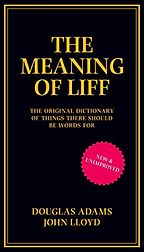
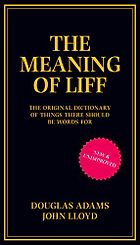
Your next choice is even more short-form than short stories. Could you start by explaining the concept of Douglas Adams and John Lloyd’s The Meaning of Liff?
Yes. As they explain in their foreword, there are a lot of daily experiences without words, and a lot of words that do nothing other than “loafing about on signposts pointing at places.” So they match place names – ranging from villages to countries – to new definitions, so that these useless words can “make a more positive contribution to society.”
Douglas Adams is known for The Hitchhiker’s Guide to the Galaxy, the definitive comedic sci fi – equally-beloved in radio, book and TV form. Here he works with John Lloyd, who co-wrote some of the radio episodes with him, and is also the producer behind shows like Not the Nine O’Clock News, Spitting Image and Blackadder. It’s exactly as funny as you’d expect.
So the whole thing is in dictionary format?
Yes, and it’s amazing how much variety they get out of that. Many are of the “that’s painfully familiar” school – “Samalaman n. One who fills in the gaps in conversations by beaming genially at people and saying, ‘Well, well, well, here we all are then’, a lot”, or “Deventer n. A decision that’s very hard to take because so little depends on it – like which way to walk round a park.” But some are pure whimsy – here’s one at length that is a small world in itself:
“Grimsby n. A lump of something gristly and foul-tasting concealed in a mouthful of stew or pie. Grimsbies are sometimes merely the result of careless cookery, but more often they are placed there deliberately by Freemasons. Grimsbies can be purchased in bulk from any respectable Masonic butcher on giving him the secret Masonic handbag. One is then placed in a guest’s food to see if he knows the correct Masonic method of dealing with it. This is as follows: remove the grimsby carefully with the silver tongs provided. Cross the room to your host, hopping on one leg, and ram the grimsby firmly up his nose, chanting, ‘Take that, you smug Masonic bastard.’”
Then you have the definitions referring to each other in a serial running gag – an “araglin” is a medieval practical joke which results in all sorts of follow-up archaic words for its consequences; the successive running gag – “Corriearklet” through to “Corrievorrie” all define the various stages of noticing-and-then-pretending-not-to-notice someone at the other end of a long corridor; and the almost onomatopoeic – “Caarnduncan n. The high-pitched and insistent cry of the young male human urging one of its peer group to do something dangerous on a cliff-edge or piece of toxic waste ground”. Some of the definitions are given charming usage ‘examples,’ as in “‘She went all gallipoli in his arms’ – Noel Coward”.
And after all these, they still catch you off guard with the occasional subversion of form you haven’t seen yet. I laughed out loud at “Parrog n. God knows. Could be some sort of bird, I suppose.”
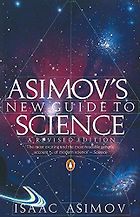
Wonderful. Next up on your list is a non-fiction book: Asimov’s New Guide to Science, by Isaac Asimov.
Yes. This was a tip-off from an interview for this site with Alec Nevala-Lee. He pitched it so well that I was immediately sold: “It essentially covers all of science.” He wasn’t kidding. The contents page is amazing: a series of headings like “The Particles,” “The Waves,” “The Atmosphere,” “The Microorganisms,” “The Machine”…
Now, it was written in 1984, so it is of course not up to date. But it begins from the beginning, so that’s still a lot of human curiosity and ingenuity to cover. This is my favourite thing about it – he walks you through each topic in order of discovery, explaining what the question or problem or prevailing belief was, and how the breakthroughs came about. I was struck immediately by the opening of his first chapter, “The Universe,” in which he points out that the sky doesn’t look all that far away, and walks you through early theories about the firmament in a way that makes you realise how utterly reasonable they were. It’s a great book for awakening your scientific curiosity, and your appreciation for what an incredible edifice of knowledge we’ve built, from a world that reveals so few of its secrets intuitively or to the naked eye.
He was a popular science communicator in his day, wasn’t he?
Oh, absolutely. It’s up there with his novel writing. And you can see why. I’m not saying you’ll be able to charge through all 800-odd pages in one sitting, but it is clear and fascinating, and picking out a chapter for a train ride or a leisurely morning is well worth your time. And if you want to then go and read about the developments since 1984, you’ll have a really solid foundation – not just what we already knew where Asimov leaves off, but how we knew it, and what questions we were still grappling with. You become part of the quest.
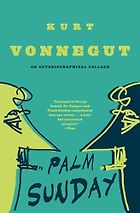
It’s time for your final choice, which is another non-fiction book, this time a collection of essays: Palm Sunday, by Kurt Vonnegut.
First, a word on classification. Vonnegut himself wrote, “I have been a soreheaded occupant of a file drawer labelled ‘science fiction’ … and I would like out, particularly since so many serious critics regularly mistake the drawer for a urinal.” He has never quite been taken out, though: it’s hard to avoid if you’re going to write about time travel and aliens. But yes, you’ll find a blend of genres within his books. And here, he turns essayist, and speechwriter, and occasional playwright – it’s a collage of his thoughts over the years in any form, put together thoughtfully with original material.
Again, I first read this as a teen, and I had absolutely never read anything like it. I now realise that many of his tenets stuck with me. Love or loathe him, Vonnegut writes with a clarity and force that allows you to love or loathe him – he distils his meaning into such clear, forceful pages that you can reckon with him directly. He has something to say. And that matters to him, as becomes evident from accumulated comments in this volume. In “Self-Interview” he says, “I think it can be tremendously refreshing if a creator of literature has something on his mind other than the history of literature so far. Literature should not disappear up its own asshole, so to speak.” And in the chapter “How to write with style” he warns that style alone is useless: “The most damning revelation you can make about yourself is that you do not know what is interesting and what is not… Find a subject you care about and which you in your heart feel others should care about.”
A good book for writing advice, then?
It’s a great book for writers, both for demonstration and explanation of a certain approach. It’s a great book for fans of his work, revealing the experiences behind them, and commentaries such as his own grading system (an A+ for Cat’s Cradle, a D for Slapstick). And it’s a great book for some bracing, scattergun thoughts on how to live. He thinks “we are all experiments in enthusiasms”; he thinks we are all dogged by the “existential hum” of “embarrassment. I have somehow disgraced myself”; he thinks the best thing to be doing with our lives would be to “create stable communities in which the terrible disease of loneliness can be cured”, and lacking religion (a theme he explores at length), we also need urgently to “expound theories about life in which sane human beings… can believe”. It’s direct and opinionated, and even when you don’t like it, it’s galvanizing.
And it’s more nuanced than it seems at first, too; taken as a whole, he’s doing something more subtle than any one sentence suggests.
He’s getting at the same things good sci fi does, I think. You can feel his deep interest in how society shapes humans, and how society justifies itself in peculiar ways, and how insanely we can all behave. If you want to get back to why we should care about imagining humans in different societies, with different technologies, but still full of all their humanness – read Kurt Vonnegut.
You say it’s a mash-up of essays, speeches, scripts…?
And letters, and a funeral address (which made me tear up), and columns… Plus original material he wrote to hold it all together. Not everything’s a winner. It’s a shame the tedious chapter on Genealogy comes up second – skip it – and I didn’t get anything much from his dramatized Jekyll and Hyde. But overall, there’s remarkably little fluff.
Only in his parting essays do you suddenly see a real vulnerability, a sadness. He doesn’t preach as someone who feels he’s cracked living himself, by any means. There’s much that’s personal in this, but no overall just-so story of his life to be drawn from it – perhaps following his own writing advice: “All you can do is tell what happened. You will get thrown out of this course if you are arrogant enough to imagine that you can tell me why it happened. You do not know. You cannot know.”
February 28, 2026
Five Books aims to keep its book recommendations and interviews up to date. If you are the interviewee and would like to update your choice of books (or even just what you say about them) please email us at [email protected]