The best historical fiction should transport the reader directly into the past, yet offer insight that reflects upon the present, argues Emily Howes, whose new novel Mrs. Dickens will be released later this year. Here, she recommends five of her favourite historical novels that, like her own books, are drawn from true stories.
Thank you for recommending these five historical novels based on true stories. Perhaps you could start us off by telling us a little about how you have taken inspiration from past events and real people in your own work?
My two novels, The Painter’s Daughters and Mrs. Dickens are both inspired by the lives of women in the households of famous creative men. Some people love to write the stories of women who are exceptional in some way – those who defy the odds to make history. As a writer, I have been very interested in the experience of the woman who is not exceptionally talented or brave; who, rather than defying the odds, lives them out, and wrestles painfully with the ways we are all both held and trapped by the world into which we have been born.
My books both have female protagonists, but they explore more broadly what it is to love and be loved, what home means, and how we find a purpose within the limitations of the human experience. The questions I’m interested in are the same as any writer, probably, but history gives me the most wonderful framework, and I’ve found myself fascinated by the way these stories press on some of the wounds we still carry today, by the way they can draw out questions about powerlessness and power, gender and expectation, and about how I become who I am. Some of the things I am interested in – gender, motherhood, the duties of care, how I can find my freedom – show up more starkly, in more intensely concentrated ways, in the stories of the past. This is so rich for me as a writer, and, of course, the past is all of our direct inheritance, so looking at it, and being curious about what it holds, is deeply revealing.
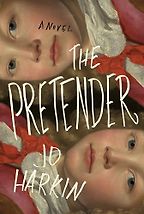
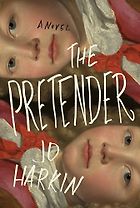
The first book you’ve recommended Jo Harkin’s The Pretender. It’s a fictionalized account of an episode from 15th-century England, in which a young boy was claimed to be heir to the throne. Would you tell us more? Why do you recommend it?
This book is a masterclass – it encapsulates everything I love about historical fiction. It’s witty and immersive, full of atmosphere, and full of character. You’ll be transported to the 15th century in a way that feels effortless and easy and absolutely real, and find yourself on the streets and in the courts of Europe without the breadth of the research ever feeling heavy or imposed. But the reason I think it’s truly brilliant, and shout about it to anyone who will listen, is because Harkin takes the idea of a ‘pretender’ to the throne, and gives us a jaw-droppingly good exploration of identity that is profoundly contemporary. The world of the small boy at its heart is constantly turned on its head, all his roots lost, his relationships ruptured, as the men around him move him like a pawn from peasant to king and back again on the tide of political whim. It’s tender, heartbreaking, thought-provoking, and brilliantly modern.
I’ve read a lot about the later Tudors in historical fiction—Henry VIII, Mary, Elizabeth—thanks to all the drama, scandal and head-chopping that went on, I suppose. It’s great to gossip about. But I know less about Henry VII. Shakespeare skipped him.
Absolutely. I know so little about that period, and didn’t even hugely feel the call to it before I picked up the book, but it’s so deftly done that you can’t help but find a joy in the bawdiness, bloodiness and stink of the era. It left me feeling moved by the ruthlessness of the period, and rather miraculously manages to explore something super tricky – how it might be to live in a world which is significantly different from ours – while compromising neither on how different it was nor on our ability to connect with it. Not easy to do.
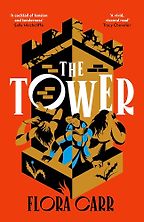
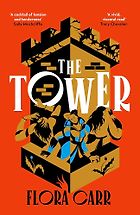
Let’s slip forwards a century to past Five Books interviewee Flora Carr’s The Tower, a dramatisation of the imprisonment of Mary, Queen of Scots, in Lochleven Castle. I loved this book! Can you talk our readers through it, and why you admired it?
I think Flora Carr is a smashing writer, with a particular talent for bringing characters to life and allowing them to really breathe on the page. From the opening lines, in which Mary stops to relieve herself on grass, we know we are being taken with a new intimacy into this woman’s life, whatever we think we already know about it – it’s very atmospheric. It’s also a brilliant idea – a Tudor prison break – so it’s tense, thrilling and compulsive from the start. But there’s a melancholy to the tale that Carr plays with perfectly – we all know what is going to happen to Mary, and that any heroic escape will be short-lived. She has this brilliant way of foreshadowing the fates of the characters, slipping into their futures, then bringing us back into their immediate struggles, which makes use of the reader’s position as knowing more than the people whose stories they are following. The overall effect makes for a fantastic and thought-provoking read.
Like Henry VIII and his many wives, Mary, Queen of Scots, has become an iconic historical figure. Why do you suppose that is?
We really do seem to love a beheading – perhaps it’s something in the unique tension of that experience, the ritual of it, and the way its victims have to offer themselves to their death with compliance. It reminds me of the painting of Jane Grey’s execution at the National Gallery – the contrast in the youth and the darkness, the beauty and the horror. I think there’s also something of being killed simply for who you were that resonates with us. When and how death arrives for each of us is unpredictable, random and sometimes unjust – perhaps something the chill of this knowledge is present in our fascination.
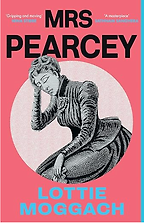
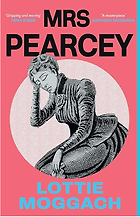
Your next book recommendation jumps ahead to the 1890s. Could you tell us about Mrs Pearcey by Lottie Moggach? It’s a very new book, just released.
I was sent Mrs Pearcey as a proof, and at the moment I am so busy, I can hardly ever seem to find a moment to read – for a book to get read, it has to grab me fast and hard, or I accidentally put it down and never pick it up again. I read Mrs Pearcey in only a couple of days, and was seduced by the freshness of the style. It feels so brilliantly of its period, yet somehow modern and hugely engaging. It also manages to be true crime, while exploring what true crime means, which is just the sort of clever, thoughtful historical writing that I love. Moggach is such a thoughtful writer, and there’s a real elegance to how she handles this true story and her personal links to it. It’s never obvious, never sensationalist, and always beautifully subtle, even while wrangling with the horrors of Victorian crime.
It’s interesting to compare and contrast books like this—a fictional reimagining—with a book like Kate Summerscale‘s historical detective story The Suspicions of Mr Whicher. Where do you think the border falls between deeply-researched historical fiction and what has been called the ‘nonfiction novel’?
To my shame, I haven’t read The Suspicions of Mr Whicher. I don’t know enough about the difference between these two genres to be able to speak with much authority. All I would say from my own experience is that for me the best historical novels lift history into something beyond itself, into thoughtful explorations of the human condition, into something that both transports us into the past but also shows us ourselves in relation to not just its facts but its feeling. A novel, for me, draws meaning out explicitly, and shows it to me, and everything that is included in it is deliberately chosen by the writer to show me something more than just the facts themselves – so that I am left asking questions of myself, rather than simply informed or educated. It’s a three-way symbiosis between reader, writer and the past.
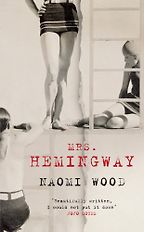
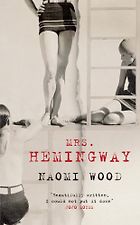
I love the concept of your next book recommendation, Mrs. Hemingway by Naomi Wood, for the titular character is, in fact, played by four successive women. It portrays the series of real-life love triangles that blew apart each of Ernest Hemingway’s marriages. Again, this is deeply researched, and draws from real life letters and correspondence. Can you tell us more?
Naomi Wood writes so cleanly but so vividly, and you can feel Hemingway himself in her style in these stories of each of his four wives. There’s no waste, but a knife-like precision in every sentence. Sometimes her clarity almost takes your breath away. She evokes the spirit of each of the marriages so beautifully, taking us from Key West to the ruins of post-liberation Paris, allowing love to wilt into deception, and showing us delicately how each wife battles with letting Hemingway go. Every marriage, as his third wife observes, has to end with a three-card trick.
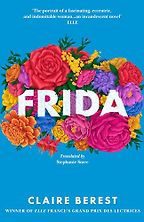
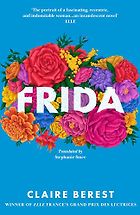
And finally you’ve chosen Claire Berest’s Frida, a novel about the life of Mexican artist Frida Kahlo. This brings us right up to the minute, because the book will be released in April. What do readers have to look forward to?
In some ways, this novel is the opposite of Mrs Hemingway in style. It’s wildly extravagant prose, full of exuberance and translated from the French – in its original language it won the Grand prix des lectrices Elle. It’s like wandering through a painting – riotous with colour, overflowing with imagery. I had moments where I almost had to stop reading to take a breath, but it captures something of Frida herself that feels totally right. If you want to be absolutely steeped in her world, you’ll love it.
Perhaps another way that a novel differs from a narrative non-fiction – it can embody something of its world in its totality, and make us feel a certain way from its rhythm, its style, almost as if it stretches the story so that we feel its qualities through the experience of reading it.
When you are writing, when do you know when to stop researching? Or does it never end?
It never ends! I’ve had to have friends telling me to stand down. Put the Dickens book back on the shelf, Emily… But I do think in those early stages there comes a point where if you don’t start putting actual words on paper you might get a bit constipated. The voice has to start coming. I think you have to collect the sparks that research gives you (a painting, a certain kind of fireplace, a fact about 18th century dentists), and when you’ve got enough sparks you can make a start. I’m just balancing that now as I look at book three, the first chapter of which is set in 1948. I’m going to have to brave that first sentence soon.
Five Books aims to keep its book recommendations and interviews up to date. If you are the interviewee and would like to update your choice of books (or even just what you say about them) please email us at [email protected]
Five Books interviews are expensive to produce. If you've enjoyed this interview, please support us by donating a small amount.
Emily Howes
Emily’s debut novel The Painter's Daughters won the Mslexia Novel Prize judged by Dame Hilary Mantel, was selected for the BBC Radio 2 Book Club, and was one of the Sunday Times’ 'ten best historical novels of 2024.' Her second, Mrs Dickens, will be published in June 2026.
Emily’s debut novel The Painter's Daughters won the Mslexia Novel Prize judged by Dame Hilary Mantel, was selected for the BBC Radio 2 Book Club, and was one of the Sunday Times’ 'ten best historical novels of 2024.' Her second, Mrs Dickens, will be published in June 2026.