What is prophecy, and how does it differ from a prediction?
When I use ‘prophecy,’ the title I gave to my recent book, it draws attention to the long history of a far-reaching kind of prediction. I use it to put distance between assertions about the future, which hasn’t been written and doesn’t yet exist, and facts which are about what has already happened. In a more colloquial way, prophecies tend to be grand predictions. We wouldn’t naturally call a weather forecast a prophecy, but if I say that in 15 years, no white or blue-collar jobs will exist, that sounds much more like a prophecy.
I don’t make a hard distinction between prophecy and prediction, partly because I want to draw attention to the fact that even quite scientific predictions are not facts. Facts belong to the past. Predictions can be many things; they can be a warning, they can be an estimate, they can be a desire, they can be a power play. But they are not facts.
When you analyse, philosophically, what a claim about the future is, you realise that it’s a speech act, in the sense that J.L. Austin used that term. It’s language that doesn’t describe the world – it does more than that. Predictions are particularly misleading because they sound like descriptions of the world, but in fact, they’re closer to veiled commands. They implicitly tell us what to do. If I claim that tomorrow, there won’t be any jobs for computer scientists, I’m implicitly telling you not to study computer science. Or if I tell you that tomorrow, we will use a particular technology everywhere, I’m basically encouraging you to buy that technology as soon as you can. I’m trying to make you feel that you’re missing out if you don’t buy it, you’ll be behind the curve.
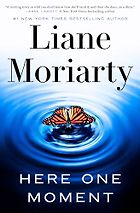
Let’s turn to your first book, Here One Moment by Liane Moriarty.
I chose it because it’s a great example of contemporary fiction related to prophecy. It’s about a psychic who gets on a delayed flight, and goes into a trance, and starts telling everyone on the flight their fate. When they land, she doesn’t remember anything about this, but a few days later, some of the things that she had foreseen start to occur and that unnerves the people whose future she had predicted. I like the book because it’s contemporary, it’s well written, it’s funny. It raises a lot of questions about first, the industry of psychics and how popular that still is – it’s worth millions and millions of dollars every year. Secondly, it shows how, even when you don’t believe a psychic, when somebody tells us what our future is going to be, we’re so susceptible to being influenced, and so superstitious that even when we ourselves don’t believe in psychics, it can affect how we experience life subsequently, how we view ourselves and our destiny. It raises questions about whether we can defy the odds, whether we can change what seems to be inevitable.
You mentioned that it’s also funny…
Comedy is a great way of being irreverent towards the powers that be, and Fate is the ultimate power, in a way. Another reason why I value comedy so much is that it strikes me that comedians are just philosophers with a good sense of humour, and philosophers are just comedians without one.
You’ve chosen another novel for your second book, The Bluest Eye by Toni Morrison.
Toni Morrison is one of my favourite novelists. There are few writers who write so well, who are as insightful and as careful with words as she is, and as creative with words too. Even though the book doesn’t deal directly with prophecies, without giving too much away, it reminds us that there are many ways to fulfil our desire or to make a prediction come true.
It has this very insightful quote that reads: “His business was dread. People came to him in dread, whispered in dread, wept and pleaded in dread. And dread was what he counselled.”
Those words are about a seer. It points out and draws attention to the fact that when we go to a psychic or a seer or a prophet or even an expert and ask them about the future, we often come from a place of fear and anxiety about uncertainty.
How does that affect our relationship with the person foreseeing our future?
Essentially, we’re telling them, ‘Please tell me what to do because I don’t know, and I’m anxious.’ That makes us incredibly vulnerable. It puts us in a position of submission. It gives a lot of power to the other person. If you go around asking people what you should do, somebody’s going to take you up on it. And it might not be that they have your best interests at heart; it might be that they have their own agenda. This point about how the whole industry of prophecy is based on dread and fear is very important.
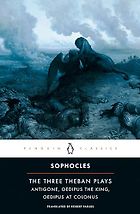
Your third book is Oedipus Rex by Sophocles.
This is as classic as they come. It’s the archetypal prophecy story and rightly considered a great work of literature. The Delphic Oracle tells Oedipus that he will sleep with his own mother and slay his father. Oedipus, desperate to avoid that happening, leaves Corinth, where the couple he thinks are his parents live, and heads for Thebes. Unbeknownst to Oedipus, his real parents, Laius and Jocasta, are the king and queen of Thebes… Spoiler alert, the prediction, despite seeming unlikely, comes true in both respects.
The play was first performed in around 430 BCE. Is it still relevant nearly two and a half thousand years later?
There are many lessons to be drawn from it. One of them is just the historical origins of our obsession with divination and the future, how we largely inherited it from the Ancient Greeks and from Ancient Rome.
But a timeless lesson that is often neglected in this tale is how prophecies are at their most powerful when we believe them. So, if Oedipus had laughed off the prophecy that he would murder his father and marry his mother—instead of completely freaking out about it—he would never have left Corinth and probably wouldn’t have made the prophecy come true. It’s a great reminder to be a little more sceptical about the prophecies made for us and not to react with fear, not to overreact to those predictions. Because when we believe that something is certainly going to happen, we can make it a lot more likely that it will.
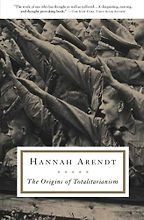
Your fourth book choice is more overtly philosophical. You’ve chosen The Origins of Totalitarianism by Hannah Arendt.
Arendt was a very insightful philosopher who lived through some of the darkest times in history and whose own life was deeply affected by her personal experience of Nazism and the Holocaust. A German-born Jew, she fled her homeland in 1933 and then France, eventually settling in the US. Though published in 1951 and focused on the rise of Nazism and Stalinism, The Origins of Totalitarianism is extremely relevant today and to some degree prophetic. She analyses very carefully how society goes from being a free society to being very much not that.
Among the many elements that are important in that transition is precisely the use of prediction and prophecies. She makes a lot of fascinating observations. One of them is how the Nazis tended to phrase what they were doing in terms of fulfilling a prophecy that was going to pan out no matter what. Another interesting remark that she makes is how, in some cases, the Nazis were willing to inflict pain and suffering on their own people and on their allies in order to make their prophecies come true, in order to be right about what they had said. Perhaps my favourite insight in that book, though, is how she shows how it makes no sense to argue with a potential murderer about whether his soon-to-be victim should be allowed to live or not. The only appropriate response is to rescue the person whose death is predicted.
And that attitude, defying a prediction, and responding to a prediction with a counteraction, is very important, especially now that we’re hearing extremely gloomy predictions about politics, but also about technology. I find it very interesting and very concerning how some tech people seem to be keen on building a dystopia for us. We’re in this bizarre historical moment in which some tech executives are saying that AI is going to be very risky, that it might even destroy humanity, that it’s leading to a modern surveillance state, and yet they keep promoting it with all their considerable force. So these warnings from people who have lived through dark times are especially relevant, important, and valuable.
See also: our interview on the best Hannah Arendt books.
And, finally, for your fifth choice, you’ve gone for a book that is overtly about prediction.
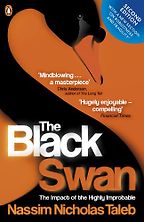
Yes. The final book is The Black Swan by Nassim Nicholas Taleb. This has become an absolute classic. Even though Taleb did not formally study philosophy at university, this is a very philosophical book. He is well-read in philosophy, and he discusses many philosophers and philosophical arguments. Taleb makes a convincing case for why some things in life are always going to be unpredictable. He uses many examples and many arguments, but perhaps one argument worth mentioning is from the work of Karl Popper. This is how, for completely logical reasons, you cannot predict where history is going. History is greatly influenced by developments in science and technology and there is no infallible way to predict where these will go next. If we could predict that, we would already know what we don’t know. And that’s impossible.
Five Books aims to keep its book recommendations and interviews up to date. If you are the interviewee and would like to update your choice of books (or even just what you say about them) please email us at [email protected]
Five Books interviews are expensive to produce. If you've enjoyed this interview, please support us by donating a small amount.