What were you and your fellow National Book Critics Circle judges looking for when you were looking for the best biographies of the year?
We were looking for books that pushed the edges of the genre, that were well researched, and which weren’t giving us the same story again and again. You know—bringing us stories we might not have heard before.
Can you say more about that?
There are more biographies being written about people who have not had biographies written about them before. You see that on our list, and many other shortlists—there has been a shift in the publishing world, which I’m grateful to see, as someone who publishes biographies about women who have been forgotten or misremembered. I mean… It’s about time.
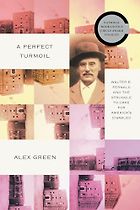
Well, let’s start with this year’s winning book. This is A Perfect Turmoil: Walter E. Fernald and the Struggle to Care for America’s Disabled by Alex Green. It profiles a doctor who directed America’s oldest public school for mentally disabled people. What did you admire about this book?
Well, the content is fascinating and important to bring into the world. It was a favourite of a lot of people on the committee, and disability rights is an important part of history to bring to attention. Dr. Walter E. Fernald transformed our understanding of disabilities in ways that continue to influence our views today
Fernald, as a figure, has really been unearthed. The biography looks at the good and the bad. This is not a hagiography, but definitely a two-sided book that brings in the stuff you might want to hide under the rug.
Fernald designed the first special education class in the United States, but I think it’s fair to say he had influence more widely.
Definitely. He had influence well beyond America. But though the way he has been lauded is important, it’s also important to note that his methods weren’t always the best. That’s an important part of this biography. He’s not a hero. Green doesn’t put him on a pedestal.
I believe this book is the result of ten years of research.
Yes, it’s extremely well researched. He had access to files that no one had had access to for a century.
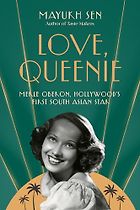
Can we talk now about the finalists? You have four further books on the 2026 biography shortlist. Let’s start with Love, Queenie: Merle Oberon, Hollywood’s First South Asian Star by Mayukh Sen.
So, Merle Oberon was the first person of South Asian descent to be nominated for an Academy Award, though no-one knew that—she was passing as white at the time. She starred in the 1939 adaptation of Wuthering Heights, which is ironic, because the actor playing Heathcliff was white and she was South Asian. So it was a really interesting turn on what Emily Brontë wrote.
What’s really beautiful about the book is the way it has been framed. In the beginning, the author sets up how meaningful she was for him in his life, what a difference she made to him, as someone who is also South Asian, to have this role model, although he didn’t know she was a role model. Once he discovered her, he realised how important it was to bring out a book on her. And it’s perfect timing, with the new Wuthering Heights coming out this year.
The subject of my last biography, Sanora Babb, was married to James Wong Howe, the first Asian American to win an Academy Award, for Best Cinematography in 1956. But not the first to be nominated; Merle Oberon was nominated in 1936. Yet that wasn’t even recognised at the time.
So it’s an important book to have out there, to see her struggle about not being ‘out’. She was very closeted about her background, which made the biography very difficult for him to research. He did an amazing job.
This was the time of the Hays Code. Interracial romance was prohibited on screen.
Yes, and this was also true off-screen. There could be no mixed-race partnerships outside, if you had a contract with Hollywood, which is so ridiculous. But it was the reality for that time period in Hollywood. There’s not enough written about it.
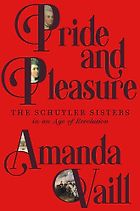
Thank you. Next we have Amanda Vaill’s Pride and Pleasure: The Schuyler Sisters in Age of Revolution. Fans of Hamilton will know Eliza as Alexander Hamilton’s wife and Angelica as her reluctant rival in love. I have always thought these sisters deserved a book of their own.
Yes. I got to listen to that soundtrack obsessively when my children were young. But whenever you encounter the story of Alexander Hamilton, you’re like: What about the women who are just a side note? Amanda Vaill does an incredible job. Talk about a biography that’s going against the grain.
First of all, how in-depth her research was. To have a biography of this size about women from that time is amazing. That’s hard to get. She disrupts the narrative a little bit—there are some pieces written in different tenses which really focuses the reader in a way they wouldn’t normally be focused. While the sisters’ lives are told in the present tense, the broader historical events are in the past. And the detail! We have what exactly they were wearing, exactly how long it would take to get from Albany to New York in that time… It isn’t just focused on the big star events of their lives, but also the minutiae of their daily lives.
She’s an incredible biographer who has been writing this for years, and it really shows her range.
It seems to me that there are more dual- and group biographies these days. Do you agree? And are they more difficult to write?
You’re right, there are more group biographies being written.
I’m writing one right now. You have to do all the research on multiple people, but you can’t get as much depth. That’s the downside. It makes you less obsessive about a single character.
When looking at this time period, I think it is really beneficial to see a group biography. There are phases in the genre, and right now we are seeing few biographies about a single white male character put on a pedestal, because our understanding of history is moving away from that.
Away from framing history around ‘great men.’
The idea that history was just done by George Washington or Alexander Hamilton is not accepted any more. And that opens it up to these larger scopes of understanding history and understanding literature. You know? Because it’s not always a single author who has written those books, it’s maybe a partnership with a wife. That’s finally coming to life and it’s beautiful to see.
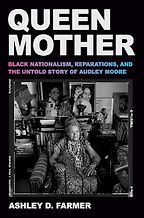
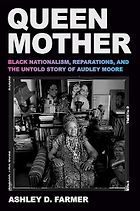
Well, your next book talks about a woman who was very influential, but whose fame has diminished. This is Queen Mother: Black Nationalism, Reparations, and the Untold Story of Audley Moore by Ashley D. Farmer.
So this is a situation where the archival material was scattered, even lost completely, because the subject was not thought to be of important.
Audley Moore was a Black woman, an incredible leader, but because archives are created—as Derrida talked about—by the people who control the story. So Moore’s archival material was scattered. She also gave things away. Things like that. So the fact that Farmer was able to reassemble all of this information is extraordinary. Such important work.
It’s also a very intimate biography. You feel very close to the subject. I think that really makes an audience feel connected, which is important because a lot of people don’t know her story. They think, well, she’s a Black nationalist. But what does that mean? This book really opens up her world.
Moore was a prominent activist whose peers and protegés included Marcus Garvey, Malcolm X and Muhammad Ahmad. But she seems to have slipped from view. Fertile ground for a biographer.
Definitely. And again, it’s wonderful to see someone approaching the form a little differently.
You mean stylistically?
Stylistically, definitely. It takes an interesting approach.
One of our books on the translation shortlist last year, Traces of Enayat by Iman Mersal, was an incredible book about the impossible process of trying to recover the story of Enayat, an amazing writer from Egypt who died in 1963, and whose story was completely eradicated. Books like Doireann Ní Ghríofa’s A Ghost in the Throat have a similar format: there’s a figure who was important at one time, and is still important, but has been erased from the culture. And so the biographer goes on the journey of finding that material, and that becomes part of the biography. So there are a lots of different ways you can push at the form as a way of bringing back stories of people who are difficult to present in traditional biographies. So it’s an exciting time.
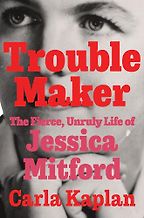
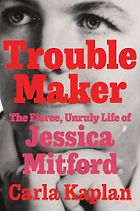
That might bring us to the final book on the shortlist, Troublemaker: The Fierce, Unruly Life of Jessica Mitford by Carla Kaplan. There were six Mitford sisters and they all had rather exciting lives. Why is it one of the best biographies of the year?
Writing about someone like Jessica Mitford is quite an undertaking. The Mitford sisters have gotten a lot of press lately in America, but the way Kaplan approached it was to show how Jessica (who went by the name ‘Decca’) was the black sheep of the family, explain why that was, but then to explain her life without it being contrasted so much against her other sisters. Here, she is actually the important person. Kaplan’s attention to detail in this comprehensive biography gives us insight into this famous Muckraker’s life whose fearless approach to journalism still reverberates today. This book was so well-researched. I know she got files directly from the family, including from Decca’s daughter Dinky.
Wonderful name. And how does it compare in literary approach to those we have just been discussing?
Kaplan doesn’t take a non-traditional approach, but she does change the way we see the Mitford sisters from the inside of her biography.
To close: I wanted to ask whether you were feeling bright about the future of biography, after reading all these new books.
Oh yes. It’s made me so optimistic. Not only because of the books we chose for the shortlist, but for the books I got to read all year round. There are so many important biographies being written right now, so many fascinating ways people are going about it. I can’t wait to read more of them next year.
Interview by Cal Flyn, Deputy Editor
March 31, 2026
Five Books aims to keep its book recommendations and interviews up to date. If you are the interviewee and would like to update your choice of books (or even just what you say about them) please email us at [email protected]
Five Books interviews are expensive to produce. If you've enjoyed this interview, please support us by donating a small amount.