Fairies are represented in many different ways. What makes something a fairy for you?
Within the Western tradition of storytelling, fairies represent the numinous and the other. We can look at them as coming out of the Celtic tradition and out of fairy tales. But we have, from the 20th century onwards, been doing lots of different things with them that are interesting. Something is a fairy if it has that numinous nature of being magical.
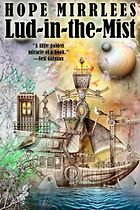
Let’s pick up in the 20th century then, specifically 1926, with the earliest book on your list: Hope Mirrlees’s Lud-in-the-Mist. What is this one about?
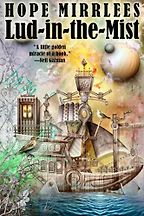
Lud-in-the-Mist is a very interesting book, because it occurred before genre-fantasy was a thing. There was not yet a genre that was fantasy. There weren’t fantasy readers. It was being read by ordinary people. Mirrlees was a friend of TS Eliot’s, and a modernist, but she wrote this very unusual novel in 1926.
There’s a very bourgeois English town, Lud-in-the-Mist, which is on the borders of Fairyland – but they don’t talk about Fairyland. They don’t go there. They trade with them, but they pretend they don’t. And this story is about a mayor of this little town, who is described as being very middle class and red cheeked. In childhood, he heard a musical note that was full of magic, and it changed his life and the way that he feels – he can always hear this magical note in the background of everything. So he’s not content and stolid, because the note is there.
The fairy fruit that comes from Fairyland is, in a way, a metaphor for drugs and intoxication and the forbidden; and in another way, it’s a metaphor for homosexuality. Mirrlees was a lesbian, and lived with a female lover for years and years. Fairy fruit is the forbidden fruit – literally. So we can see it metaphorically as all those things, but also it’s coming out of a tradition where it is the numinous and magical. That’s what Lud-in-the-Mist is about: you have a life that is mundane, and it needs the fairy fruit to make it special, to make it real. You’ve got to accept that, and you can’t lock it away and pretend that it doesn’t exist. You can’t pretend that Fairyland is the other side of a closed border when, in fact, the border is open and you are exchanging what’s there. But Fairy also needs Lud – needs the mundane, the real world and the people of the real world. It can’t manage on its own.
Fairy as a place is often a feature in these stories, but not always such a tangible place. Do we visit it?
Yes – Nathaniel, the mayor, does go into Fairy. There are all these people who are trying to have communion with Fairy, trying to connect with it in various ways, but they are not the ones who actually succeed in going there and getting the adolescent son back. Nathaniel goes there with his normality and brings the two realms together in a very interesting way.
Other early 20th-century British women writers, like D. E. Stevenson and Rumer Godden, were writing about how women can live in this changing world – a world where you can work now, but it’s hard to support yourself and there are still traditional roles. This book is like those books, except that it’s got magic, and it’s set in a magical Renaissance England. It’s interesting to compare to the mundane books that were written at the same time, and to the actual fantasy novels that were written later. And you’ll notice Lud-in-the-Mist is in print – it’s available in different editions in the US and the UK, and there’s an e-book – whereas most of the mundane books that I would compare it to are very much not in print. This is a book that was important to people who Mirrlees was not imagining as her readers: people who came along later and loved The Lord of the Rings, and wanted more things like it. Lin Carter found it and republished it in the Ballantine adult fantasy series, and it got a new lease of life after having been forgotten for thirty years. It came back then and has been back ever since.
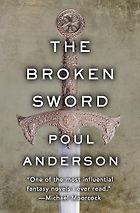
Let’s move forward those thirty years to your next choice. Please tell us about Poul Anderson’s The Broken Sword, published in 1954.
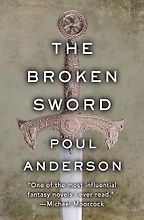
The Broken Sword was written by a science fiction writer. He takes Norse and Anglo-Saxon mythology and writes about that with a science-fictional world-building eye. Fairy is a place, a magical world at an angle to the real world where you can go; but he has elves and trolls, which are very much the denizens of Fairy, as major characters. The two major characters in this book are changelings, both halves: the boy who was stolen into Fairy and brought up there, and the changeling who was left in his place in the mortal world. It’s England in about 1000, so we’ve got Vikings and Saxons, but we’ve also got this fairy thing going on – the wild and the numinous in the background – and that is what the book is really concentrating on, and doing in this amazingly Norse way. It’s almost as if it is actually a saga that was somehow written in 1954 instead of in 1250.
It was also written before there was a publishing category of fantasy. Anderson wrote loads of very influential science fiction. He wrote just a few fantasies, which he got published by science fiction publishers because they liked what he was doing. But this was before there was really a market for it, so it was read by science fiction readers. It’s really different from Lud-in-the-Mist, but in a way, it’s the same, in that there wasn’t the space there for it to be read in the way that it is read today.
How did you come to it?
I read it when I was twelve or thirteen, and it was very influential for me. I really fell into that world, and I really admired it. When I came back to it as an adult, I was almost afraid that it would be ruined, like children’s books sometimes are when your reader experience made them better than they actually are. But when I read it, I thought, ‘No, this book really is doing this. It really is great.’
Both these books are set in the past. That’s common (although not universal) when we tell stories about fairies. Why do you think that is?
Putting fairies in the past is a thing that comes out of fairy tales, which are set in the imaginary Middle Ages. You know, where there are woods that come right up to the village, and a miller with three sons, and a king with a daughter… And it’s quite interesting that both of these books are actually not doing that. They’re taking very specific past times and putting the stories there. It’s not that Grimm-fairy-tales background that you so often find in fantasy.
I think that there is also a tendency to do it because, as Tolkien says in On Fairy Stories, the furniture gets moved into the nursery, and the stories go down to children. Similarly, we don’t walk around the streets and see changelings and fairies, but we want to tell the story, so we’re putting them into an imagined past, when we can pretend that they were real.
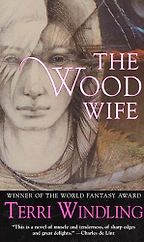
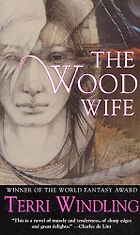
Your next choice puts fairies in the present: could you introduce Terri Windling’s The Wood Wife?
Terri Windling is a very, very important person when you’re talking about fairy, because she and Ellen Datlow edited a series of anthologies of modern fairy tales throughout the ’90s and the early 2000s that were very important. The Wood Wife is an absolutely terrific book in a genre that I normally don’t like – having fairies and magic in the modern world. This normally drives me nuts: am I supposed to be stupid? How did I not see this, if it’s there? If there are vampires secretly running the world, this invalidates the actual world. So I don’t usually like it, and I particularly don’t like it if it’s written by Americans, and I particularly particularly hate it if it’s written by Americans and set in Britain.
The Wood Wife is set in the US, in the southwest, in a very, very specific place. It’s using the European fairy tradition, but not in a culturally appropriative way – ‘Oh, we brought white people’s fairies here.’ Instead, she is also using Native American tradition, and making a whole planet of fairies, and it goes straight at cultural appropriation and settlers and coming into the land. In the Celtic stories, the Tuatha Dé Danann and Aos Sí are driven into the hills. They lose the land to the incomers. Windling takes that and uses it to talk about the settlement of that specific part of the US.
What are fairies here?
She’s writing about fairies as numinous and other, but also fairies as muses. In this novel, fairies are the thing that inspires you to create, both visual arts and fiction, whoever you are. So it’s got that metaphorical level. It’s doing all of those things, and it’s also a corking good story: an investigation of the situation as our hero arrives there and discovers the past and current secrets. It’s an incredibly readable and really good book, and I think it came out before its time. Genre fantasy did exist,and was a broad church by the time that this was written, but there wasn’t so much of this modern-day thing when she wrote The Wood Wife.
I’m forever recommending this book to people who’ve never heard of it. I really love it, and I’ve reread it frequently. I taught a history of fantasy course a couple of years ago, and it was the book that the fewest people had read ahead of time, but that everybody loved the most.
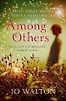
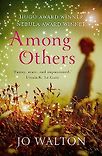
I’ve got to ask, if you hate to see fairies put into the modern day, what made you decide to write Among Others?
I’m from the South Wales Valleys, and I live in Montreal. I have a lot of Canadian friends with an incredibly romanticised idea of Wales; once I was explaining some political thing, and a friend said that they hadn’t actually thought of Wales as having politics. It’s magical, for sure, but it’s not real.
In my LiveJournal – gosh, this was a long time ago, 2008 I think, when I still had a LiveJournal! – I wrote a description of the post-industrial landscape that I grew up in as a post-apocalyptic landscape. I wrote about how, as a child, I populated it with fairies, and I gave it names out of The Lord of the Rings, but that I should have given it names out of John Wyndham. This was just a blog essay, and loads of people said, ‘You should make this into a book’ – and I thought, ‘Oh, how silly. This isn’t the kind of thing that could be a novel.’ Then Michelle Sagara, who is a Canadian writer – she also writes as Michelle West – left a comment saying that it ought to be a novel. I went into the kitchen to make dinner, and as I was chopping up vegetables, I was thinking, ‘All these other people, they don’t know anything, but you would think that Michelle would understand this could not possibly be a novel…’ And then I thought, well, unless I mythologized my life, and put actual magic in it. I could do that… And I did the whole world build for Among Others while I was chopping potatoes. Then I kind of spite-wrote it!
I realised I couldn’t write it set in South Wales; I could only write about being away from it. So I wrote it about going to boarding school. It was my ninth book, and the others sold fine, but they were not things that a lot of people read. So when I wrote Among Others, I wasn’t worried about my family reading it, or people that I’d been to school with reading it and recognising themselves… I was only published in the US, not the UK.
What do you think caught people’s imagination this time?
I put in the character reading science fiction, and growing up in specific books, the way that I have. I think the reason it was so successful isn’t actually the fairies, though people like that. It’s that it is a female intellectual coming-of-age. Mostly, when you get books that are female comings-of-age, they’re an emotional coming of age, and they’re all about love or emotional connection. There are a gazillion books about men having an intellectual coming of age, but before Among Others, there were not a whole lot of books about women having them. There have been more since, and this is great. I think that’s the chord it struck.
I had all these people saying how much they liked and identified with her, and I kept saying, ‘You didn’t like me when I was fifteen!’ The difference was that they were getting her from the inside. And I don’t deserve any benefit for the disability stuff that I put in it, because it’s all just me, just real. But also, I was mythologizing my life. There are people who read that book and they think they’re my best friend. For one thing, that was me when I was fifteen, not me now, and for another thing, I did make stuff up.
How did you get around the difficulty of modern-day fairies that we haven’t seen?
I needed it to have plausible deniability. It would have to be unfalsifiable fairy. That’s what I thought, as I was chopping vegetables: ‘I could have magic where the potato peeler, if it cuts you, gets a taste for blood, and everything is slightly alive’… Things that we use all the time, we give nicknames to and care about. In the world of Among Others, things do become imbued with magic and aliveness in the way that they do in our minds. I take it a little step further and make it real. Magic works in those connections between things.
I made it that most people can’t see them. Children can see them, but most adults can’t, because they’ve gone too far away from that. And then I had the great idea that when you pierce your ears, you can’t see fairies anymore. This made me laugh and laugh when I came up with it. I’d got the answer to, ‘Am I just stupid?’ No, I pierced my ears and now I can’t see them anymore!
In your world, we don’t really know what fairies are, although we explore the possibility of the dead a little, and whole dramatic episodes of the protagonist’s life have already happened and are never fully explained. Could we talk more about that decision to leave things unknown?
I have always been interested in what happens after the end of books. As a child, I would think a lot about the stories that happen after the end of stories, and about the kinds of books that leave it open for you to think about, and the kinds that close it all in so that it’s finished. That’s what I was deliberately doing with Among Others. You don’t need the earlier story – you’ve already read it, there are a lot of YA and children’s books that are that story. Actually, I think now I should have put in slightly more of it, which I ducked away from doing, because it is, in fact, my actual life, and it was a bit painful to do that. Anyway, I wanted it to be after the main story; I wanted it to be the scouring of the Shire. I put in precisely what I wanted to put in about the fairies, and what they are, and how much we see of them, because I wanted there to be questions there. I wanted them to be the way the fairies are in some uncomfortable kinds of stories, where they’ll help you, and they also won’t help you, and they have their own agenda. These are very alien fairies.
As for the dead… I wasn’t going to do Celtic, but when I got to the Halloween chapter, I realized that I was doing this Celtic thing of the relationship between fairies and the dead – where fairies and ghosts are different, but also there’s overlap. That is right there in Welsh folktales. I just leaned into that. But I knew I was never going to explain what the fairies were – I wasn’t going to bring them fully on the page.
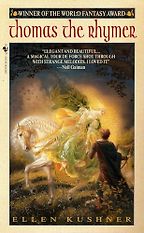
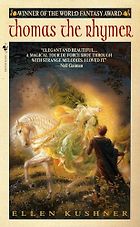
We’ve come to your fourth choice: tell us about Thomas the Rhymer, by Ellen Kushner.
Thomas the Rhymer is one of the books in the fairy tale series that Terri Windling published. By all rights, I shouldn’t like Thomas the Rhymer, but Ellen Kushner is a very, very good writer. It is a book that is set in Fairyland, and it’s taking the Ballad of Thomas the Rhymer, which is a traditional ballad, and putting it into a real moment of history. It’s a very solid, well-thought-through world. The part of it where Thomas comes back and he can only tell the truth is wonderful.
All of the characters are very real. Fairy is very much the other, the numinous, the fey – the slightly cruel side of fairy that we get in those kinds of stories. Ellen Kushner is a terrific writer. I really like all her work, and she’s one of the very few Americans who’s written something set in the Scottish Borders that feels right, and doesn’t do that thing where writers don’t understand that a hundred miles is a long way. She does – she gets it.
Her Fairy in that book is wonderful as well, really alien and effective. I talked earlier about everybody using Fairy as a metaphor for things. I think that often fairy books, particularly books that set fairies in the modern day, fall down by trying to use it as a metaphor for too many things, and not consistently. Kushner is using it as a metaphor for romantic love: for the way that you fall in love, and everything is wonderful, and then it isn’t, and the person seems to be cruel because they won’t give the thing you want back. And addiction too, very much.
It’s a very readable book. Everything is kept at the right level of reality, so that you just one hundred percent believe all of the magical things in there.
Is it faithful to the ballad? And do you need to know the ballad to enjoy it?
You don’t need to know the ballad well to enjoy the book. But it is very, very faithful to it. If anything, slightly too much! There’s a moment in the ballad where they sit under a tree, and a character says, ‘Do you see that broad, broad road? It’s the road to hell. And do you see that narrow, winding road with thorns? That’s the road to heaven. But there’s another road, which is the road to Fairyland, which you and I will go this day.’ And there’s a scene in the book where they literally sit under the tree and have that conversation, and I felt, ‘Okay, there’s being true to the Ballad, and there’s just putting the Ballad on the page.’ But for the rest of the book, I never felt that. I felt that she kept it at the right distance.
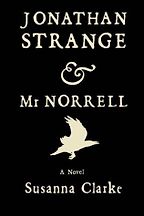
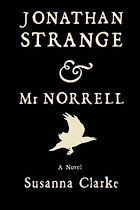
Your last choice is perhaps the best known, at least outside fantasy circles. Please tell us about Susanna Clarke’s Jonathan Strange & Mr Norrell.
This book reads as though the book that formed the fantasy tradition was Lud-in-the-Mist, and everybody had been writing in that tradition ever since. It’s at that social level, and it is using the numinous and magic in the same way. The wonderful thing about Jonathan Strange & Mr. Norrell is that it introduces strangeness, and once that has become familiar to the reader, it introduces a new level of strangeness.
It’s about magic coming back into England at the time of the Napoleonic Wars. It is about a wizard and his apprentice and the apprentice’s wife, and various other people that they know, and an enslaved person and fairies, and all these people’s interaction with the other – as over and over again, she brings us more otherness.
It starts off with Mr. Norrell going to the meeting of magicians, and he’s got real magic. And when we’ve got used to his magic, we have Jonathan Strange, who’s got different, more-magical magic. And then when we get used to Jonathan Strange, we get the man with the thistle-down hair – we get fairy, and the Raven King, and more and more magic. So whenever you get accustomed to the magic, you get a new level, and you get discomforted again – which is just wonderful and astonishing, and a marvellous thing to do. All of these books, and most books that deal with fantasy and with fairies, are trying to evoke this numinous-ness – the note that you have in Lud-in-the-Mist. Susanna Clarke hits whole chords of that note by bringing in new levels of estrangement, new levels of weird.
When I reviewed Jonathan Strange & Mr Norrell, I said that it is as if we were all on the beach making sandcastles, and Susanna Clarke raised up a great castle made out of the sea. That is the metaphor in my head for that book. And I always think of that when I think of it, the castle made out of a wave, the impossible castle that can drown all the sandcastles that we were trying to build. It is a phenomenal book.
A very strong recommendation!
I don’t love it. I admire it no end. But I don’t love it, because it doesn’t let you ever be comfortable, and you are always on edge reading it. Which is right for fairies! Fairies are an uncomfortable thing. They’re an element that puts you on edge. But it makes it less lovable than some of these other books. Clarke’s more recent book, Piranesi – which has no fairies – I just love. I love Piranesi, and I love some of her short stories; I just adore them. Whereas Jonathan Strange and Mr Norrell, I think, is a really major novel – we were correct to give it all the awards, we were correct to make it a bestseller and have everybody read it and give it all this attention, because it is really phenomenal – but it’s a little bit uncomfortable.
You’ve written on such a range of topics, not only fairies. Could I ask what you’ve got coming up next?
After a long dry spell, I have two books coming out this year, a collection of essays about science fiction and fantasy written with my friend and fellow writer Ada Palmer. That’s called Trace Elements and it’ll be out in March. And in June I have a fantasy novel called Everybody’s Perfect which is about a fantasy Venice.
Interview by Sylvia Bishop
March 11, 2026. Updated: March 27, 2026
Five Books aims to keep its book recommendations and interviews up to date. If you are the interviewee and would like to update your choice of books (or even just what you say about them) please email us at [email protected]
Five Books interviews are expensive to produce. If you've enjoyed this interview, please support us by donating a small amount.