

Interviewer
Benedict King
Interviews by Benedict King


The Best Ghostwritten Books, recommended by Joshua Lisec
More books are ghostwritten than you might imagine—and if it’s done well, you’d never know. Ghostwriter Joshua Lisec explains how it works and selects five standout examples, from Alexandre Dumas to Donald Trump.
-

1
The Sovereign Debt Investor: An Essential Guide to Returns, Defaults, and Government Bond Investing
by Lupin Rahman -
2
Banks, Borrowers, & The Establishment: A Revisionist Account Of The International Debt Crisis
by Karin Lissakers -
3
The Power of the Purse: A History of American Public Finance, 1776-1790
by E. James Ferguson -
4
In a Bad State: Responding to State and Local Budget Crises
by David Schleicher -
5
China's Great Wall of Debt: Shadow Banks, Ghost Cities, Massive Loans, and the End of the Chinese Miracle
by Dinny McMahon
The best books on Sovereign Default and Debt Restructuring, recommended by Gregory Makoff


The best books on Sovereign Default and Debt Restructuring, recommended by Gregory Makoff
Governments that default on their debts don’t simply shut down. They still have to run schools, pay public servants, and keep the state functioning, all while battling with creditors and financial markets. Sovereign default is messy, political, and hugely consequential. Here Gregory Makoff recommends the best books for understanding how it works.
-
1
The Last of the Wine
by Mary Renault -
2
The Man Jesus Loved: Homoerotic Narratives from the New Testament
by Theodore Jennings -
3
Homoeroticism in the Biblical World: A Historical Perspective
by Martti Nissinen -
4
The Garden of Priapus: Sexuality and Aggression in Roman Humor
by Amy Richlin -
5
Greek Elegiac Poetry: From the Seventh to the Fifth Centuries BC
by Douglas E. Gerber & Theognis
The best books on Same Sex Love in the Ancient World, recommended by Harry Tanner


The best books on Same Sex Love in the Ancient World, recommended by Harry Tanner
The ancient world is sometimes seen as a golden age of tolerance for same-sex love, later swept away by the rise of Christianity. The reality is more complicated, argues historian Harry Tanner, with acceptance and persecution ebbing and flowing in line with pressures on society. He recommends five books for a better understanding of same-sex love in ancient times, including the Biblical world.
-
1
The Boiling Moat: Urgent Steps to Defend Taiwan
by Matt Pottinger -
2
The Avoidable War: The Dangers of a Catastrophic Conflict Between the US and Xi Jinping’s China
by Kevin Rudd -
3
US-Taiwan Relations: Will China’s Challenge Lead to a Crisis?
by Bonnie Glaser, Richard Bush & Ryan Hass -
4
The Political Thought of Xi Jinping
by Olivia Cheung & Steve Tsang -
5
Chokepoints: American Power in the Age of Economic Warfare
by Edward Fishman
The best books on Taiwan and US-China relations, recommended by Eyck Freymann


The best books on Taiwan and US-China relations, recommended by Eyck Freymann
Taiwan is a crucial lynchpin of the high-tech global economy, but its international political position is far from stable. China has explicit ambitions to incorporate it into the Chinese state and seems intent on building the military capacity to do this by force. The US is committed to preserving its de facto independence. For the moment, there is a stand-off, but a crisis over Taiwan would be a crisis for the world, politically and economically. Eyck Freymann, a fellow at the Hoover Institution, recommends five books to help understand the dynamics of the situation and the possible outcomes.
-
1
The Magical State: Nature, Money and Modernity in Venezuela
by Fernando Coronil -
2
The Enduring Legacy: Oil, Culture, and Society in Venezuela
by Miguel Tinker Salas -
3
Hugo Chavez and the Bolivarian Revolution
by Richard Gott -
4
Who Can Stop the Drums: Urban Social Movements in Chavez’s Venezuela
by Sujatha Fernandes -
5
The Collapse of Venezuela: Scorched Earth Politics and Economic Decline 2012-2020
by Francisco Rodriguez
The best books on Venezuela, recommended by Julia Buxton


The best books on Venezuela, recommended by Julia Buxton
In early January 2026 US forces arrested the president of Venezuela, Nicolas Maduro and took him into custody in the US, charged with drug offences. Political scientist Julia Buxton chooses five books on modern Venezuelan politics and explains that this is only the latest political catastrophe to befall a country that has been plagued by its vast oil reserves. An endowment of natural resources that was expected to make the country rich when they were discovered in the early 20th century has only succeeded in making it poor and politically unstable.
-
1
Reinventing Liberalism: The Politics, Philosophy and Economics of Early Neoliberalism (1920-1947)
by Ola Innset -
2
Hayek: A Life, 1899–1950
by Bruce Caldwell & Hansjoerg Klausinger -
3
The Political Theory of Neoliberalism
by Thomas Biebricher -
4
Hayek's Bastards: Race, Gold, IQ, and the Capitalism of the Far Right
by Quinn Slobodian -
5
Hayek and the Evolution of Capitalism
by Naomi Beck
The best books on Friedrich Hayek, recommended by Philip Mirowski


The best books on Friedrich Hayek, recommended by Philip Mirowski
Friedrich Hayek was not a great formal economist, but he has been hugely influential politically and in the evolution of modern microeconomics, perhaps in spite of himself, argues Philip Mirowski, a historian and philosopher of economic thought. He talks us through books to better understand the Austrian émigré who ended up in the United States as the great convener of neo-liberalism in the mid-20th century and whose ideas are still influential in the new populism.
-
1
Improv Wisdom: Don't Prepare, Just Show Up
by Patricia Ryan Madson -
2
Made to Stick
by Chip Heath and Dan Heath -
3
Communicate with Mastery: Speak With Conviction and Write for Impact
by J D Schramm -
4
Humor, Seriously: Why Humor Is a Secret Weapon in Business and Life (And how anyone can harness it. Even you)
by Jennifer Aaker & Naomi Bagdonas -
5
Talk: The Science of Conversation and the Art of Being Ourselves
by Alison Wood Brooks
The best books on Communication, recommended by Matt Abrahams


The best books on Communication, recommended by Matt Abrahams
Communication is critical to getting on in our lives and in business, but many of us fall short in communicating what we want in the right way to the right audiences. Matt Abrahams of Stanford’s Graduate School of Business talks us through five books packed with practical advice on how to improve your communication skills—from the insights of improvisational theater to the acronym to use if you want people to remember what you’ve said.
-
1
Titanic: First Accounts
by Tim Maltin -
2
Sinking of the Titanic: The Greatest Disaster At Sea
by Logan Marshall -
3
Titanic: Triumph and Tragedy
by Charles A. Haas & John P. Eaton -
4
Every Man For Himself
by Beryl Bainbridge -
5
A Night to Remember: The Classic Account of the Final Hours of the Titanic
by Walter Lord
The best books on The Titanic, recommended by Steven Biel


The best books on The Titanic, recommended by Steven Biel
More than a century after it went down, our fascination with the Titanic shows no signs of dimming, its story told in numerous books and movies—both fact and fiction. Steven Biel, a historian at Harvard, recommends books to read about the Titanic, from early first-person accounts of the disaster to a comprehensive and lavishly illustrated reference guide.
-
1
Allies at War: The Politics of Defeating Hitler
by Tim Bouverie -
2
A Scandal in Königsberg
by Christopher Clark -
3
The Boundless Deep: Young Tennyson, Science and the Crisis of Belief
by Richard Holmes -
4
John and Paul: A Love Story in Songs
by Ian Leslie -
5
Lone Wolf: Walking the Faultlines of Europe
by Adam Weymouth
The Best Nonfiction Books: The 2026 Duff Cooper Prize, recommended by Andrew Holgate


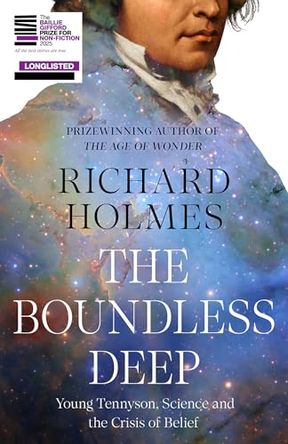


The Best Nonfiction Books: The 2026 Duff Cooper Prize, recommended by Andrew Holgate
Now in its 70th year, the Duff Cooper Prize is awarded annually for an outstanding work of nonfiction that combines originality, rigour and a strong narrative drive—the kind of book that “general readers of serious nonfiction crave,” explains Andrew Holgate, former literary editor of the Sunday Times and one of this year’s judges. He talks us through the brilliant books that made the 2026 shortlist, from a fresh and revealing take on the defeat of Hitler to the politics of wolves in contemporary Europe.
-
1
The Holy Roman Empire: A Thousand Years of Europe's History
by Peter Wilson -
2
Martin Luther: Renegade and Prophet
by Lyndal Roper -
3
The Empire's Reformations: Politics and Religion in Germany 1495-1648.
by David M. Luebke -
4
Europe's Tragedy: A New History of the Thirty Years War
by Peter H. Wilson -
5
The Astronomer and the Witch: Johannes Kepler's Fight for his Mother
by Ulinka Rublack
The best books on The Holy Roman Empire, recommended by Barbara Stollberg-Rilinger


The best books on The Holy Roman Empire, recommended by Barbara Stollberg-Rilinger
The Holy Roman Empire was a loose confederation of heterogeneous states that lasted a thousand years, from 800 to 1806. In the early modern period, it developed some common institutions, but these failed to contain the forces of disunity. Barbara Stollberg-Rilinger, a professor of history at the University of Münster, recommends books to learn more about an empire that played a key role in European history but is often absent from national narratives.
