

Interviewer
Benedict King
Interviews by Benedict King
-

1
Flour Power: The Practice and Pursuit of Baking Sourdough Bread
by Tara Jenson -
2
Watermelon and Red Birds: A Cookbook for Juneteenth and Black Celebrations
by Nicole A. Taylor -
3
Good Enough: Embracing the Joys of Imperfection and Practicing Self-Care in the Kitchen
by Leanne Brown -
4
The Complete Chinese Takeout Cookbook: Over 200 Takeout Favorites to Make at Home
by Kwoklyn Wan -
5
That Noodle Life: Soulful, Savory, Spicy, Slurpy
by Mike Le & Stephanie Le
The Best Cookbooks of 2022, recommended by Becky Krystal


The Best Cookbooks of 2022, recommended by Becky Krystal
Do you enjoy cooking up a storm in the kitchen? If so, you’ll love food writer Becky Krystal’s selection of the five best cookbooks of 2022—including a guide to sourdough bread, a fun exploration of all things noodle, and a collection of Juneteenth celebration foods.
-
1
Wonders and the Order of Nature 1150-1750
by Lorraine Daston and Katharine Park -
2
Science and the Secrets of Nature: Books of Secrets in Medieval and Early Modern Culture
by William Eamon -
3
Leviathan and the Air-Pump
by Simon Schaffer & Steven Shapin -
4
Probability and Certainty in 17th Century England. A Study of the Relationships between Natural Science, Religion, History, Law and Literature
by Barbara Shapiro -
5
The Business of Alchemy: Science and Culture in the Holy Roman Empire
by Pamela Smith
The best books on The Scientific Revolution, recommended by Vera Keller


The best books on The Scientific Revolution, recommended by Vera Keller
The scientific revolution is often seen as having transformed the way we think and ushered in the modern world, but in highlighting the work of a few key individuals, it has distorted the reality of how science advances in society and how it interacts with truth. Here, Vera Keller, Professor of History at the University of Oregon, challenges popularly held assumptions about the scientific revolution and explains how its meaning, significance and importance have been disputed and misunderstood.
-
1
The Dutch Revolt
by Geoffrey Parker -
2
The First Modern Economy: Success, Failure, and Perseverance of the Dutch Economy, 1500–1815
by Ad van der Woude & Jan de Vries -
3
The Dutch Moment: War, Trade and Settlement in the Seventeenth Century Atlantic World
by Wim Klooster -
4
Calvinists and Libertines: Confession and Community in Utrecht, 1578-1620
by Benjamin J. Kaplan -
5
Rembrandt's Universe: His Art, His Life, His World
by Gary Schwartz
The best books on The Dutch Golden Age, recommended by Maarten Prak


The best books on The Dutch Golden Age, recommended by Maarten Prak
The Netherlands witnessed a flourishing in the late 16th and first half of the 17th century, leading the world in technology, commerce and the arts, particularly painting. Historian Maarten Prak recommends five books to help you understand why the Dutch Golden Age saw the invention of stock exchanges and why it produced Rembrandt, too.
-
1
Lifespan: Why We Age and Why We Don't Have To
by David A. Sinclair -
2
Eat Like the Animals: What Nature Teaches us About the Science of Healthy Eating
by David Raubenheimer & Stephen Simpson -
3
The Human Advantage: A New Understanding of How Our Brain Became Remarkable
by Suzana Herculano-Houzel -
4
Long for this World: The Strange Science of Immortality
by Jonathan Weiner -
5
Charlatan: America’s Most Dangerous Huckster, the Man who Pursued Him, and the Age of Flimflam
by Pope Brock
The best books on Longevity, recommended by Steven Austad


The best books on Longevity, recommended by Steven Austad
The promises of potions or techniques to achieve longevity have been with us since time immemorial, the outlandishness of some claims matched only by our willingness to believe them. And, yet, today’s scientific research does give some clues on how to live longer and healthier lives. Biologist Steven Austad, Distinguished Professor and Endowed Chair in Healthy Aging Research at the University of Alabama, recommends a range of books that give insight into longevity.
-
1
The Non-Aligned Movement: Genesis Organization and Politics.
by Jurgen Dinkel -
2
Southern Constellations: The Poetics of the Non-Aligned
by Bojana Piskur -
3
The Darker Nations: A People's History of the Third World
by Vijay Prashad -
4
Race and the Yugoslav Region: Postsocialist, Post-Conflict, Postcolonial?
by Catherine Baker -
5
Worldmaking After Empire: The Rise and Fall of Self-Determination
by Adom Getachew
The best books on The Non-Aligned Movement, recommended by Paul Stubbs


The best books on The Non-Aligned Movement, recommended by Paul Stubbs
The Non-Aligned Movement was a loose alliance of more than 100 member states whose heyday was during the Cold War, though it continues to exist today. Here, sociologist Paul Stubbs chooses five books to illustrate the cultural, political and economic influence of the Non-Aligned Movement and argues the ideas that animated it are still of vital importance.
-
1
Venice: A Documentary History 1450-1630
by Brian Pullan & David Chambers -
2
The Military Organization of a Renaissance State: Venice 1400-1617
by John Rigby Hale & Michael E. Mallett -
3
Venice: A Maritime Republic
by Frederic Chapin Lane -
4
Venice: the Hinge of Europe
by William McNeill -
5
The Venetian Empire: A Sea Voyage
by Jan Morris
The best books on The Venetian Empire, recommended by Georg Christ


The best books on The Venetian Empire, recommended by Georg Christ
The Venetian Republic was one of the mightiest empires of early modern Europe, with its Terraferma dominions on land and a maritime empire, the Stato da Màr, that stretched across the Mediterranean. Its unique strength lay in long-distance trade and, as historian Georg Christ explains, in some ways, it resembled a company more than a state. Here, he recommends books to better understand the Venetian empire, what it was and how it grew.
-
1
Unequal Childhoods: Class, Race and Family Life
by Annette Lareau -
2
How Children Succeed. Grit, Curiosity and the Hidden Power of Character
by Paul Tough -
3
Intelligence and How To Get It: Why Schools and Culture Count
by Richard E. Nisbett -
4
Promises I Can Keep: Why Poor Women Put Motherhood before Marriage
by Kathryn Edin & Maria Kefalas -
5
Expecting Better: Why the Conventional Pregnancy Wisdom is Wrong and What You Really Need to Know
by Emily Oster
Parenting: A Social Science Perspective, recommended by Nate G. Hilger


Parenting: A Social Science Perspective, recommended by Nate G. Hilger
We think of parenting as a level playing field because loving your kids and doing everything you can for them comes naturally and isn’t determined by socio-economic status. The problem is that it may not be enough, says economist Nate G. Hilger. Here, he argues for a more activist approach so that kids across society have an equal opportunity to do well in life.
-
1
A History of Japanese Political Thought, 1600-1901
by Watanabe Hiroshi -
2
As We Saw Them: The First Japanese Embassy to the United States
by Masao Miyoshi -
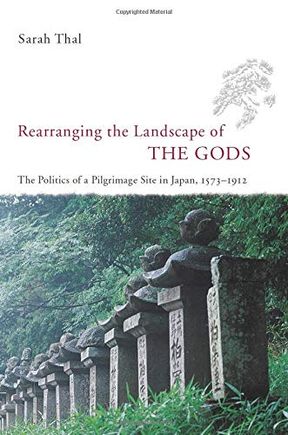
3
Rearranging the Landscape of the Gods: The Politics of a Pilgrimage Site in Japan, 1573-1912
by Sarah Thal -
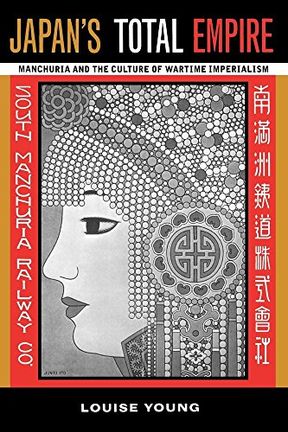
4
Japan’s Total Empire: Manchuria and the Culture of Wartime Imperialism
by Louise Young -
5
Shots in the Dark: Japan, Zen, and the West
by Shoji Yamada
The best books on Japanese History, recommended by Adam P. Bronson



The best books on Japanese History, recommended by Adam P. Bronson
From myths about Zen and spiritual fulfilment to the reality of Japan’s religious pluralism, from the impact of Confucian political philosophy to the occupation of Manchuria, historian Adam P. Bronson recommends books to get started on Japanese history.
-
1
The Great Divergence: China, Europe, and the Making of the Modern World Economy
by Kenneth Pomeranz -
2
Cotton: the Fabric that made the Modern World
by Giorgio Riello -
3
The City of Blue and White: Chinese Porcelain and the Early Modern World
by Anne Gerritsen -
4
Vermeer's Hat: The Seventeenth Century and the Dawn of the Global World
by Timothy Brook -
5
Horizons: The Global Origins of Modern Science
by James Poskett
The best books on Global History, recommended by Maxine Berg



The best books on Global History, recommended by Maxine Berg
From the Indian cottons that were traded around Asia and Africa in the Middle Ages, to the global dominance of the blue-and-white pottery of Jingdezhen, historian Maxine Berg introduces five books that transformed our understanding of the past millennium and are significant milestones in the development of the vibrant field of global history.
-
1
Kindred: Neanderthal Life, Love, Death and Art
by Rebecca Wragg Sykes -
2
Evolution's Bite: A Story of Teeth, Diet, and Human Origins
by Peter Ungar -
3
Paleofantasy: What Evolution Really Tells Us about Sex, Diet, and How We Live
by Marlene Zuk -
4
Tales Teeth Tell: Development, Evolution, Behavior
by Tanya M. Smith -
5
Our Human Story
by Chris Stringer & Louise Humphrey
The best books on Anthropology, recommended by Brenna Hassett


The best books on Anthropology, recommended by Brenna Hassett
New techniques have uncovered an enormous amount of information about how humans evolved and new human species continue to pop up on a regular basis. Biological anthropologist Brenna Hassett, author of Growing Up Human, recommends books to learn more about our ancestors and how we became the human beings we are today.
