It’s been another vintage year for biography—but we know that it can be difficult to keep track of the various awards that mark the literary year. To that end, we’ve put together a list of biographies championed by the juries of notable prizes to help you find your next favourite book.
The Pulitzer Prize for Biography
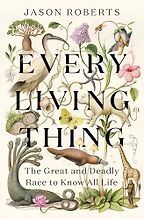
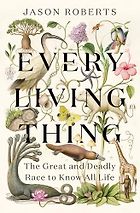
Jason Roberts’ Every Living Thing: The Great and Deadly Race to Know All Life is a dual biography of the 18th-century naturalists Carl Linnaeus and Georges-Louis de Buffon. The Pulitzer jury described it as a “beautifully written” account of these great scientists who “devoted their lives to identifying and describing nature’s secrets, and who continue to influence how we understand the world.” In an interview with El Pais, the author said that he initially planned a book about the heroes of the Enlightenment, but the more he dug into it, the more he realised those heroes were “not very Enlightened.” The Linnean taxonomical system “became this form of cultural colonialism,” he explained, “because you were able to wipe the slate clean and award a name to a species.” Buffon’s approach was ridiculed in his time, but he “was the first person to actually say that we are living in the era of humans, that humans are permanently changing the global climate… he knew quite well that the period of the time wasn’t ready for some of his ideas.”
National Book Critics Circle Award for Biography
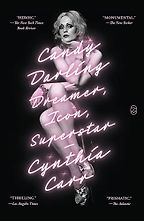
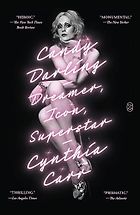
When I spoke to the critic Mary Ann Gwinn about the biography shortlist for this year’s National Book Critics Circle awards, she described Cynthia Carr’s Candy Darling: Dreamer, Icon, Superstar as “a compassionate portrait” of the Warhol ‘superstar’ who was cast by Tennessee Williams and inspired several Lou Reed lyrics. Despite her fame in the New York underground scene, the trans icon never found the mainstream acclaim she dreamed of, and she died tragically young. “I simultaneously felt so much sympathy for her and aggravation at the people who had a lot more resources than her and didn’t really help her,” explained Gwinn. Carr’s biography benefits from a series of interviews recorded by a friend of Candy Darling shortly after her death, lending “a real immediacy” to the writing. This book was also the joint winner of the Plutarch Award, see below.
Elizabeth Longford Prize for Historical Biography
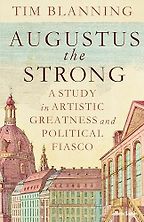
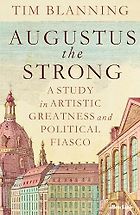
Consulting the shortlists for the annual Elizabeth Longford Prize are a great way to discover new historical biographies. This year, the winner was Tim Blanning, with Augustus the Strong: A Study in Artistic Greatness and Political Fiasco. Augustus was a somewhat hapless king of Poland and Grand Duke of Lithuania in the 18th century; his patronage of the arts, however, made Poland a major centre of Baroque culture. When I spoke to Roy Foster, the Oxford academic and prize judge, about the shortlist earlier this year, he described the Blanning as “an astonishing researcher” who asks “whether a figure can be both a reviled failure in politics and yet historically significant because of his authority in other arenas of life, which may, in the long term, be more influential.” It is also, he added, “extremely funny… It’s a witty book, as well as a profound one.”
The Plutarch Award
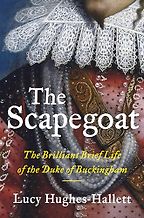
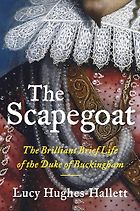
This year, two books were selected to share the Plutarch Award, an international literary prize whose winners are selected by a committee of notable professional biographers. Those books were Candy Darling (see above), which they praised for its “emotional pull and sensitive handling of its subject,” and Lucy Hughes-Hallett’s The Scapegoat: The Brilliant Brief Life of the Duke of Buckingham. The judges admired The Scapegoat‘s “innovative structure and engaging, intelligent style.” Hughes-Hallett—who previously won the Baillie Gifford Prize for The Pike—has “a novelist’s eye for the extraordinary,” they added. The Scapegoat conjures “an entire bygone world: the masques, dances, art, food, and attitudes” of Jacobean-era England; altogether it’s “stylish, vivid, and frequently surprising.”
The Pol Roger Duff Cooper Award
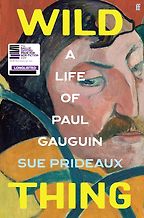
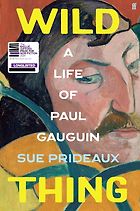
The Duff Cooper Award, a literary nonfiction prize, was awarded this year to Sue Prideaux’s highly acclaimed biography Wild Thing: A Life of Paul Gauguin. When Five Books editor Sophie Roell spoke to judge Minoo Dishaw earlier this year, he said that Prideaux “shows the comedy of his nature and character, coupled with, often, the extraordinary sadness of the reversals and sufferings that he endured.” Recently, Gauguin has been “monsterized,” he added, but Prideaux’s sympathetic account portrays his life in Tahiti as the artist having adopted “a local way of living which is very strange to modern Western secular eyes.” It’s “an extraordinarily bold and provocative case.” You may also be interested in reading our interview with Prideaux herself, in which she recommends the best biographies of artists.
Five Books aims to keep its book recommendations and interviews up to date. If you are the interviewee and would like to update your choice of books (or even just what you say about them) please email us at [email protected]
Five Books interviews are expensive to produce. If you've enjoyed this interview, please support us by donating a small amount.