What are the most highly acclaimed novels of the year? We asked Five Books deputy editor Cal Flyn to put together a summary of award-winning fiction of 2025—novels that won major literary prizes in the English-speaking world—as one answer to this impossible question.
By the time December rolls around, it can be difficult to remember the books that triumphed in early spring. That’s natural! The publishing world moves fast, and produces new titles at a frighteningly relentless pace. So we find it pays to take a moment at the end of the year to reflect on the best books of the year. Literary prizes are not the only way to measure a book’s success, but they are one useful gauge. So here we have gathered together the novels that won some of the biggest awards in the English-speaking world in 2025.
British and Irish literary awards
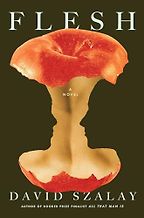
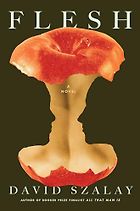
Let’s start with the Booker Prize, won this year by David Szalay’s Flesh—sparking a thousand think–pieces on the masculinity crisis apparently afflicting the publishing industry at large. (I won’t comment, except to note that seven of the last Booker Prize-winning books were written by men.) Flesh itself is the story of István, a Hungarian man, as he conducts a devastating affair with an older woman, before seeking his fortune in an unstable world. It is written in sparse, unsparing prose, and the protagonist is often monosyllabic—yet it has a compulsive quality I’ve seen likened to doomscrolling. When I spoke to Ayọ̀bámi Adébáyọ̀, one of 2025 Booker judges, about this year’s shortlist, she described it as “precise and unsentimental” yet “brutally affecting and intimate.” It should be read, she added, “as study of class, aspiration, and the quiet compromises that shape people.”
The 2025 International Booker Prize—a sister prize, reserved for translated fiction—was one this year by Heart Lamp, selected stories by Banu Mushtaq, translated by Deepa Bhashti. Judge Anton Hur, when I spoke to him about the shortlist, reserved particular praise for the translation: “so daring and textured and vitalic.”
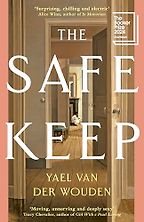
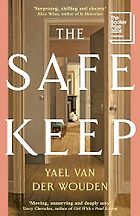
Yael van der Wouden’s The Safekeep—previously shortlisted for the Booker back in 2024—finally triumphed in June when it won the 2025 Women’s Prize for Fiction. It portrays the charged relationship between two women sharing a house with a dark backstory. Judge Kit de Waal told me she thought it would be a classic; it’s about “how history rises up unbidden and knocks your life aside.”
Ireland’s €100,000 Dublin Literary Award was won this year by Michael Crummey’s The Adversary, a novel about a dysfunctional family in 19th-century Newfoundland, which the Washington Post described as a “beautifully written, immensely powerful and subtly ingenious novel.”
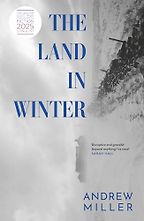
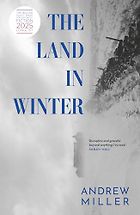
Andrew Miller won the 2025 Walter Scott Prize for Historical Fiction for The Land in Winter, in which two couples in 1960s England find their normal lives suspended by heavy snow. When I spoke to her in May, judge Katharine Grant described it as “Intense, immersive and beautifully paced.” It was also shortlisted for the Booker Prize this year.
American and Canadian book awards
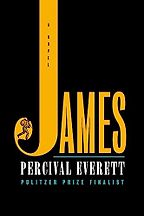
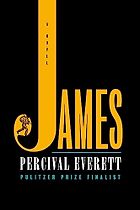
Percival Everett’s James—another fixture of award shortlists last year—took home the 2025 Pulitzer Prize for Fiction in May. In a statement, the judges praised it as “an accomplished reconsideration of Huckleberry Finn that gives agency to Jim to illustrate the absurdity of racial supremacy and provide a new take on the search for family and freedom.” (I was also pleased to see Headshot, a multi-perspective novel about teen boxers by Rita Bullwinkel among the finalists—one of my recent personal favourites.)
Rabih Alameddine made a splash with his novel The True True Story of Raja the Gullible (and His Mother), which won the 2025 National Book Award for Fiction, as well as the PEN/Faulkner Award for Fiction. In it, a high school philosophy teacher and his mother share a tiny Beirut apartment. Desperate for privacy and self-fulfilment, he is offered a fellowship in the United States—and must grapple with his resentment and love for his prying mother.
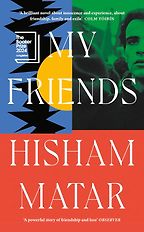
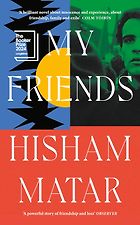
We always pay particular attention to the National Book Critics Circle shortlists, on the basis that there is probably no group that is better-read when it comes to contemporary writing. In January of this year, Hisham Matar won the NBCC Prize for Fiction for his novel My Friends, which explores the aftermaths of shootings at the Libyan embassy in London in 1984. My Friends also won the Orwell Prize for Fiction in 2024, at which time judge Simon Okotie described it as “A warm and extraordinarily clear-sighted novel…The quietness of the prose belies the event’s traumatic drama and its profound personal and political repercussions.”
In Canada, Souvankham Thammavongsa won the 2025 Giller Prize for Pick a Color, a wickedly funny novel about the immigrant experience that follows a nail salon worker over the course of a day. “I live in a world of Susans,” she writes. “I got name tags for everyone who works at this nail salon, and on every one is printed the name ‘Susan.'”
Australian and New Zealand literary prizes
In Australia, Siang Lu won the prestigious Miles Franklin Award for Ghost Cities, a surreal, multi-faceted novel told, at least in part, by a man fired by the Chinese embassy in Sydney when it was discovered he could not speak Chinese, but had been getting by using Google Translate—that The Guardian has described as “intellectually stimulating while also being utterly bonkers.”
And at the Ockham New Zealand Book Awards, Damien Wilkin won with Delirious, in which a policewoman and her librarian husband move to a retirement village only to find themselves haunted by unanswered questions from the past.
The Nobel Prize for Literature
In October, Hungarian author László Krasznahorkai was announced the winner of the 2025 Nobel Prize for Literature. Once declared by Susan Sontag to be the “master of the apocalypse,” he has produced sprawling, sometimes brutal novels including Satantango, The Melancholy of Resistance and Herscht 07769. The Nobel committee praised him as “a great epic writer in the Central European tradition that extends through Kafka to Thomas Bernhard, and is characterised by absurdism and grotesque excess.”
December 16, 2025. Updated: December 17, 2025
Five Books aims to keep its book recommendations and interviews up to date. If you are the interviewee and would like to update your choice of books (or even just what you say about them) please email us at [email protected]
Cal Flyn is a writer, journalist, and the deputy editor of Five Books. Islands of Abandonment: Life in the Post-Human Landscape, her nonfiction book about how nature rebounds in abandoned places, was shortlisted for numerous awards including the Baillie Gifford Prize, the Ondaatje Prize, and the British Academy Book Prize. She writes regular round-ups of the most notable new fiction, which can be found here. Her Five Books interviews with other authors are here.
Cal Flyn is a writer, journalist, and the deputy editor of Five Books. Islands of Abandonment: Life in the Post-Human Landscape, her nonfiction book about how nature rebounds in abandoned places, was shortlisted for numerous awards including the Baillie Gifford Prize, the Ondaatje Prize, and the British Academy Book Prize. She writes regular round-ups of the most notable new fiction, which can be found here. Her Five Books interviews with other authors are here.