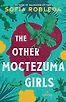
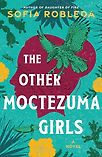
English-speaking readers are not always so familiar with the dramatic historical events of Central and South America, says Sofia Robleda—author of a new novel set during the Aztec empire, The Other Moctezuma Girls. But if you enjoy historical fiction with heart and soul, you are bound to love these five vibrant, "hugely relevant" novels set in Latin America.
You’ve found a lot of success writing historical fiction set in Latin America. What kind of stories do you gravitate towards?
Thank you! It’s really quite fascinating to me, because I never intended to write a historical fiction novel, let alone two.
It started in 2018 as a personal journey to trace my ancestry, which led me to discover that I had both Spanish and Indigenous roots. I suppose, as a Mexican person, that isn’t something to be massively surprised about – but I really was surprised about my Indigenous side. I couldn’t believe no one knew who of our ancestors had been Indigenous, or from which nation. This complete erasure from my own lineage was a catalyst to finding more about the Indigenous people of Central America.
I have always been drawn to Mayan and Aztec myths, and to stories encompassing the decades pre- and post- the Spanish conquest, before the concept of ‘Latin America’ was even thought of. But these stories have become even more meaningful to me now. There has been so much whitewashing; so many rich perspectives have been sidelined from our history books and our general understanding of our nation and ourselves – those of our women and our Indigenous peoples. It is more important than ever to understand and appreciate and bring them to the foreground.
How do you approach the research process? When do you know you’ve done enough?
This is very difficult. I think once you have a pretty good understanding of what’s going on in the period, and with the people you are investigating, you need to stop procrastinating and get writing.
It is important to do a thorough job, and to try to get as much information as you can. But at the end of the day, it is fiction, and it won’t write itself. You can always do more research if more questions arise as you write, which they undoubtedly will.
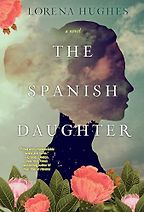
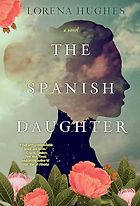
You’ve chosen to recommend The Spanish Daughter by Lorena Hughes, a family saga that opens in 1920s Ecuador. Would you tell us more?
I recommend this book because it’s got everything I love – a heroine striving against the societal constraints of her gender, unusual settings, family secrets, betrayal, mystery, and above all – chocolate. How can anyone resist?
It’s a refreshing take on an over-saturated era in historical fiction, namely the Second World War. Plus, there is a sequel for those readers out there who enjoy spending a bit more time with their favourite characters.
That’s right, The Queen of the Valley, set in a Colombian cocoa plantation. I believe they are both based on true stories.
That makes it even more interesting.
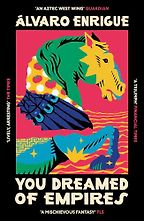
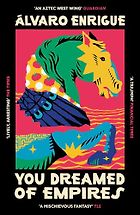
The next Latin American historical novel that you’ve chosen to recommend is You Dreamed of Empires by Alvaro Enrigue. It reimagines a key turning point in the history of the ‘New World’ – the 1519 meeting between Hernán Cortés and Emperor Moctezuma. The Guardian called it the ‘Aztec West Wing,’ which I thought was great.
It’s like reading a fever dream: it’s short and sharp but there is so much meticulous, intricate, almost psychedelic detail on every page. The entire book is set across a single day, and you are completely and totally submerged in it.
There is plenty of satire as well – a dark humour, which I think shows how much Enrigue enjoyed reimagining this moment, transforming it to something most Mexicans wish had happened. I loved this novel, and it was a massive inspiration for me when writing The Other Moctezuma Girls.
Alternate history, which this is an example of, is a fascinating concept. Recently we spoke to the novelist Harry Turtledove, who said that “alternate history, like any fiction, is not really about the world that you’re creating. It’s about the world you live in.” Would you agree?
I think the genre reflects something we long for, or something we fear, which are honest feelings. The best fiction, including stories that imagine alternative history, is based on emotional truth. When you write a story which resonates with another human being, it uncovers our shared humanity, and that is a powerful thing.
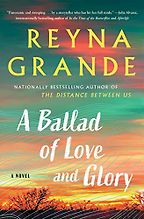
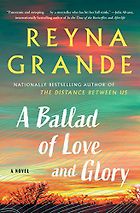
Can we talk next about A Ballad of Love and Glory by Reyna Grande, a historical novel set during the Mexican-American War of 1846–1848. Why do you recommend it?
I love that Grande brought to light two historical events which are largely ignored or unknown by today’s readers.
First, the book is set against the backdrop of the Mexican-American war, which was manufactured by the United States to uphold colonialist beliefs in their ‘Manifest Destiny’, and which ended in the catastrophic loss of nearly half of our Mexican territory. California, Utah, Arizona, Nevada, New Mexico, and Texas were all part of Mexico, and the United States annexed them alongside the Mexican and Indigenous people that had lived there for centuries, if not millennia.
“When you write a story which resonates with another human being, it uncovers our shared humanity”
Reyna explores this tragedy through two protagonists, Ximena, a fictional Mexican army nurse who falls in love with John Riley, who was a real-life Irish immigrant soldier who defected the US Army and formed the St Patrick’s Battalion under the Mexican flag. Here is another fascinating history that is not spoken about often enough: the hundreds of immigrants and enslaved Indigenous and African men who switched sides to fight for Mexico, which had abolished slavery two decades prior. Unfortunately, slavery was reinstated in the territory that was lost to the United States.
Overall, it’s a hugely relevant novel in light of the political climate in the United States today – and the way immigrants are being mistreated, scapegoated and dehumanised, when in fact we have always been there.
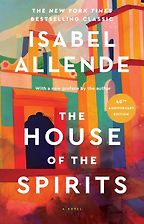
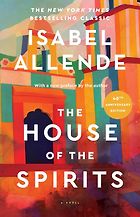
Hear, hear. The next work of historical fiction about Latin America that we should discuss is Isabel Allende’s first novel, The House of the Spirits, first published in 1982. It’s a work of magical realism, set against the backdrop of a military coup in Chile.
The House of the Spirits is a modern-day classic, and a staple of Latin American literature. Personally, I have read this novel at least three times, and it’s one of those books that I can close my eyes and picture scene by scene. I don’t think I would be the writer I am today without it. The book is seen through two points of view, Esteban who is the patriarch of the Trueba family, and his granddaughter Alba, and spans four generations through the political upheavals of Chile, which is Allende’s home country.
An intergenerational novel does feel like the perfect way to portray a country and its history. How does she intertwine reality with unreality?
I would argue that it is all reality. Magic, mysticism, myths, ghost stories, superstitions, spirituality, religion, miracles, curses, the occult… They are part and parcel of growing up in Latin America.
Magical realism is simply our reflection of the mundane, our way of dealing with ongoing extraordinary, surreal events; military coups, femicide, collapsing economies, hundreds of thousands of people killed in an endless war on drugs. Magical realism is a mirror to our daily experiences, and I think Allende leans into this facet of our world in a very natural way.
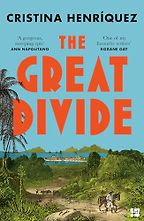
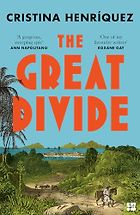
That’s a great way to explain it, thank you. I think that brings us to Cristina Henriquez’s The Great Divide, a very recent novel about the construction of the Panama Canal. Tell us more.
This is another historical fiction novel told from the various points of view of characters from all over the Americas and the Caribbean who are touched by the construction of the Panama Canal, and the destruction of the surrounding land. Henriquez highlights the everyday people who toiled to achieve this feat of engineering and were never given any recognition, even though many thousands died from the terrible working conditions and natural disasters and other diseases. Again, it’s a novel that sheds light into stories that have been silenced or erased.
Each of these books has such a fascinating setting—both in terms of history or the political backdrop, and in terms of landscape and climate. Do you sense there to be a big appetite for historical fiction set in Latin America globally? In the Anglophone world as well as the Spanish speaking world?
Absolutely – all of these novels have been quite successful in terms of sales and critical acclaim. They have been either written in English or translated to English, like The House of the Spirits, which has also been translated into twenty languages and is taught at many schools around the world.
However, representation by Latin American authors in the English publishing world is still low, and there are many barriers to Latinx authors being published, including the erroneous perception within the industry that the mainstream public will not be interested. My debut novel, Daughter of Fire, for example, was rejected dozens of times by various publishers in the United States, many of whom said that it would be ‘difficult to sell the time period’ – the 16th century, a hugely popular era if you think of how many books there are about the Tudors and the Medici.
What they really meant was that they thought it would be difficult to sell a book set in 16th-century Guatemala. Luckily I was able to prove them wrong.
Absolutely. Do you think readerships in different languages respond differently to your books?
When Daughter of Fire was translated into Spanish, I felt like there was a more organic, inherent understanding and connection with the emotional heart of the story than perhaps occurred with some of the readers in the English-speaking world, many of whom were also learning about a time period in history and a culture that they weren’t very familiar with.
However, I’ve received dozens of comments from English-language readers who have absolutely loved the novel. Some of my favourite comments are from people who read the book and are then inspired to do their own research. It always makes my day when that happens.
I think, in the end, it comes back to my previous comment about finding emotional truths, touching on our common humanity. That is the power in fiction that transcends language.
Five Books aims to keep its book recommendations and interviews up to date. If you are the interviewee and would like to update your choice of books (or even just what you say about them) please email us at [email protected]
Five Books interviews are expensive to produce. If you've enjoyed this interview, please support us by donating a small amount.
Sofia Robleda
Sofia Robleda is a Mexican author who has lived in the UK for eight years. Her debut novel Daughter of Fire was an Amazon First Reads pick and a top 100 Kindle bestseller in the United States. Sofia writes stories focused on women and the hidden aspects of early Mexican post-colonial history.
Sofia Robleda is a Mexican author who has lived in the UK for eight years. Her debut novel Daughter of Fire was an Amazon First Reads pick and a top 100 Kindle bestseller in the United States. Sofia writes stories focused on women and the hidden aspects of early Mexican post-colonial history.