Given Irish unionists are currently key to Theresa May’s Conservative government staying in power at Westminster, you’d better tell me: What is Irish unionism?
Traditionally, Irish unionism is the desire and support for the union between Great Britain and Ireland of 1800, which took effect in 1801.
Generally speaking, Irish unionism has two forms: Ulster unionism—which traditionally covered a much greater social scale—and southern Irish unionism, which tended to be closely linked to the landed gentry, as well as a group of intellectuals and businessmen.
It was the 19th century that saw Irish unionism develop into two different things, because of the industrialization of Belfast. Ulster unionism became much more socially mixed. It also had a significant hinterland, in that a lot of Scottish Presbyterian families migrated to Northern Ireland and then migrated back to Scotland. So there was a lot of exchange between the north of Ireland and the west of Scotland.
“Nobody, in 1900, would have conceived of the present Northern Ireland as a satisfactory political entity”
Irish unionism comprehended both forms, it’s just that all variants of Irish unionism other than Ulster unionism effectively—except for one or two sporadic pieces of pageantry—came to an end in the 1920s. As a result of the negotiations and truce of 1921-2 and the establishment of the Irish Free State, Irish unionism was effectively defeated. Only six of the 32 counties of Ireland remained within the Union.
So, at that point, was there a union between Britain and Northern Ireland?
There is only the Act of Union of 1800, passed by the Irish and British parliaments. It’s that Act of Union that Northern Ireland is the relic of, rather than having a special act of union of its own.
Is this an incredibly politicized topic to look at as a historian? Is it a bit like Israel-Palestine, where you can’t really say anything without stepping into a minefield?
It is difficult, because if you were to describe Northern Ireland as “the six counties” then you’re instantly a Republican. If you describe it as “Ulster” you are effectively a loyalist, a Unionist. Describing it as Northern Ireland is as neutral as you can get. That’s the name the BBC uses.
But, for example, with Londonderry or Derry—that’s still often described, by the BBC, as Londonderry. It’s now had, for a long time, a majority Catholic population. Since 1984, technically speaking, the city has been Derry, satisfying the Catholic definition of it as Derry. But the county is still called Londonderry, to satisfy the unionist tradition.
So yes, these are minefields.
So if I say “Ulster unionist” am I immediately identifying myself with the Protestant side?
No, only if you say “Ulster.” If you say “Ulster unionist,” that’s just what they want to do, they want to keep Ulster in the union. But if you say “Ulster” to describe Northern Ireland, you’re saying, implicitly, ‘I agree with the Unionist conception of it.’
That conception was always fluid, because, originally—say, after 1910—Edward Carson, the leader of Ulster unionism at the time, wanted to keep all nine counties of Ulster in the Union. Later on, Asquith suggested that only four counties remain in the Union. The Unionist Council in the North was prepared to accept six as a compromise. So eventually six is what happened.
Get the weekly Five Books newsletter
But even the six were supposed to be subject to a review. It’s just that the review didn’t actually give—as the Irish negotiators expected—some of the North back to the Free State, so we ended up with six counties, even though Michael Collins and his team might have been expecting four or five as the outcome. Ulster is a moveable feast.
But, ultimately, Ulster proper is nine counties—the six counties of present day Northern Ireland, plus Cavan, Monaghan and Donegal. These are the nine counties of the ancient Irish province of Ulster. So, to describe Northern Ireland as Ulster is to make some kind of claim that it represents the whole of the nine counties. Since three of the counties of Ulster are in the Irish Republic to call the six counties Ulster is to suggest, really, that you’re taking a Unionist perspective.
I know. This kind of thing does your head in, unless you actually study it, or belong to the community…
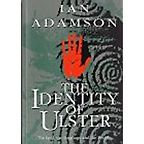
Yes, let’s maybe get into it some more as we go through the books. The first one is by Ian Adamson, and it’s called The Identity of Ulster (1982).
This book is not on the list because it’s the best book: it isn’t. But it’s an extremely influential book. Ian Adamson is a former Lord Mayor of Belfast, a retired pediatrician and a long-serving unionist politician.
In the 1970s, he developed a theory called ‘the theory of the Cruthin’ whereby Northern Ireland, or Ulster—as he would always call it—had a different ethnic makeup from the rest of Ireland. He supported some of the activity and ideas that were circulated in the 1980s that were trying to appropriate ancient Irish mythology—the Rúraíocht or Ulster cycle as it’s called—into Ulster unionist identity. So what he is trying to do is create some sort of mythological history, whereby there is an ethno-cultural basis for Ulster unionism.
“The United Kingdom included the whole of the island of Ireland until 1922.”
He then became very prominent in the development of the Ulster-Scots Language Society, and became chair of the Ulster-Scots Academy. He was at the centre of promoting the idea there was a separate language, called Ullans, which is a variant of Scots spoken in Northern Ireland and actually across the border in Donegal. That actually got a lot of UK government funding, and indeed some Irish government funding, as well.
So does the book have much basis in fact?
He’s not a historian. He’s somebody creating a political mythology, a political prehistory, to suit the current conditions and to defend, ultimately, a unionist agenda in Northern Ireland. The Irish pre-history he created—which was published by Nosmada Books in 1974 and then another small Northern Irish publisher in 1978 and so on into its revised impressions—is really a mythological history.
It has been very important in its influence on a conception of a modern and separate Ulster identity. It reinforced Ulster unionist identity at a crucial time in the 1980s and 1990s. Ian Adamson was quite a senior politician, and he became very influential in promoting this idea of Ulster separateness.
The interesting thing about books like The Identity of Ulster is that they’re at the meeting point between the way people imagine their communities—that Benedict Anderson phrase—and history. Often there is a big overlap between the way you imagine your community and what actually happened: World War I, Bannockburn, the French Revolution. In the case of The Identity of Ulster, there isn’t really very much historical overlap at all—it is a kind of instant, readymade, Unionist foundation myth.
Did it influence popular opinion?
It unquestionably influenced popular opinion—the idea that there is a separate Ulster Enlightenment, that there’s a separate Ulster identity that goes back hundreds of years.
Ulster is one of the original provinces of Ireland, but if you look at Irish unionism in the 19th century, although there was a slightly different flavour in the North, nobody was saying that Ulster had a totally separate identity, or that that was why it couldn’t be incorporated. They were trying to prevent the whole of Ireland from moving out of the Union.
This idea that Ulster has a particular ethno-cultural identity is very modern.
“A lot of what is driving Brexit is pure English nationalism, except it doesn’t say it is”
Adamson has also been chair of the Northern Ireland Community Relations Council and is currently president of the Belfast Civic Trust. He’s got a whole range of ways that he’s been able to have a really significant impact on Northern Irish society—and he’s got the books that support his interpretation. His interpretation can be found in a light or diluted way in a lot of the way that Ulster Unionism conceives Ulster identity and separateness. But, actually, it’s challenging to find the documentation to support his thesis in The Identity of the Ulster.
On his website he describes himself as “British Unionist, Irish Royalist, Ulster Loyalist.”
That’s a good choice of identities, but they all go in the same direction, I think.
What are the unionists aiming for, these days? Is it all about the relationship with the United Kingdom?
They are part of the United Kingdom and that’s their aim. But what became very visible after the Troubles started in the 1960s is that they have a very different approach from the rest of the United Kingdom.
Their politics is completely separate. That’s not very well understood. For example, just before the 2010 election, the BBC reported the Conservative Party’s formal union with the Ulster Unionist Party, the UUP. David Cameron wanted to get the UUP on board and thought that by having the Conservative Party involved in Northern Ireland—and the UUP fully identified with it as they had been up to 1970—they would get more seats and that that would help him if he was a bit short of a majority.
But the UUP were more or less massacred. The link to the Conservative Party was actually unhelpful to them. So they rescinded it in 2012, which was not widely reported. It’s very difficult for a UK political party to operate in Northern Ireland, which means that, really, it’s very difficult to see how, functionally, it’s part of the UK. But it is.
What’s going to happen now, with the DUP?
The DUP seem to be in no hurry to let the Prime Minister off the hook, in terms of supporting her administration. They want a number of things, probably financial, linked to Brexit, and maybe other things too. Greater marching rights for the Orange unionist community has already proven itself to be on the agenda.
What exactly are the DUP? Are they the equivalent of Labour? Conservative?
It’s very difficult to categorize them. The official Unionists, the UUP, were linked to two organizations, the Orange Order (and they stopped being linked to that many years ago—directly, anyway) and the Conservative Party, which they were linked to briefly in 2009/10-2012, but also up to the time of the 1970 general election.
So the UUP were associated with middle-class unionism and clearly aligned with the Tories. But, in Northern Ireland, the UUP was seen as increasingly soft on alignment with the nationalist community.
“I know it’s old history, but we are still living with it”
So the DUP was begun by Ian Paisley and his allies. They’re basically a working class, populist party. They’re seen as tougher than the UUP and have had some associations, in the past, with the seamier sides of the Northern Irish conflict. That’s not true now, obviously.
But it’s difficult to say they’re a Labour Party or a Tory party. They’re Labour in the sense that they want a lot of expenditure on Northern Ireland. They’re Tory—and more than Tory—in their attitudes to same-sex marriage, abortion, and a whole range of issues that have moved into general social legislation across Europe, but are still very much opposed by many members of the DUP.
So what goes on in Northern Ireland is a law unto itself? It’s hard to incorporate into UK politics?
It isn’t UK politics, really. Currently, the Northern Irish executive is suspended because they can’t form a government. All governments in Northern Ireland are formed on power-sharing principles, which are now, really, between the DUP and Sinn Fein.
What’s happened in Northern Ireland is that politics has gone more to the extremes—between Unionism and Republicanism. That’s now happened at the Westminster elections too. Northern Irish politics in Westminster is divided between seven Sinn Feiners who don’t take their seats and 10 DUP members who do. Sinn Fein have never taken their seats, since 1918.
“Like Gladstone, Tony Blair understood that there was a real problem in the historic relationship with Ireland that needed to be addressed—whereas quite a lot of other politicians have just seen it as some sort of issue that’s got to be resolved”
Nearly all the Sinn Fein seats are in the west of the province, and the DUP seats are in the east. Sinn Fein’s seats are in the majority Catholic areas, and they’re also in the very high majority Remain areas. That was evident in the Assembly elections as well: Sinn Fein have benefited from a Brexit polarization coming on top of the standard Northern Irish polarization.
The basic ideological issue between the two sides is still more about their relationship with England/Ireland than it is about anything else?
All Sinn Fein representatives tend to, intermittently, demand an all-Ireland poll, on the future of Ireland. They ultimately want reunion with the Republic. All DUP representatives want to stop that at any price and remain united to the Crown and Great Britain.
So, with the polarization you’re describing, are we at quite a scary juncture?
There are a lot of polarizations happening in the UK at present, and this is a very old one. Brexit has added another level to it. What you began to see in Scotland, for the first time in the last two or three years, is a similar polarization between Unionism and Nationalism, accentuated by the way in which Brexit is taking place, against the background of a Remain vote.
Among countries in the EU, of the polling I have seen (which covers 10-15 countries) support for the EU is highest in the Republic of Ireland. The difficulty is that a lot of these places that are now voting Sinn Fein—and have done in the past—voted Remain by 80:20. And they’re right on the border with the Republic.
For these people, this is a very difficult moment, because they never wanted to be in the British state anyway. Now they find they’re actually being dragged out of Europe, when their neighbours, who they want to be reunited with, are, generally speaking, passionately pro-European.
Brexit also feels like a resurgence of English nationalism.
I think that’s a very shrewd point. I think one of the reasons we keep hearing about how the United Kingdom is so united on this issue is because it clearly isn’t. A lot of what is driving Brexit is pure English nationalism, except it doesn’t say it is.
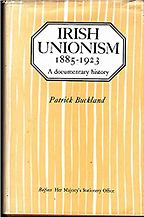
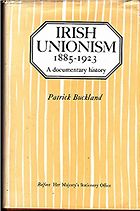
Patrick Buckland, Irish Unionism is next on your list. This is also an old one, from 1973. Why did you choose it?
This is still a very, very good history of Unionism. It’s on the list because it provides a very detailed, blow-by-blow account of the development of Irish unionism, the organizations that it tried to maintain itself through, and its eventual failure.
Buckland was writing at the time of the Troubles in Northern Ireland and it’s interesting to see the history of unionism from the point of view of having suddenly become relevant again, as it has today.
He describes the separation of Ulster and southern Unionism, as he calls it. After the 1880s, the southern Unionists were a tiny minority, because outside Northern Ireland they could only win three seats—and those were the unopposed Trinity College, Dublin seats. But, still, for a long period of time, they were getting the British government to fail to introduce Irish Home Rule. It’s an extremely good account of the politics, the details of how that happened, and the organizational way Irish unionism constructed itself, in the face of a challenge brought about by the changes in the franchise in 1884.
“When the British Army went in, during the Troubles, they didn’t get it right, because they didn’t understand that they were perceived as being on one side”
Gladstone supported the changes to the franchise—which brought nearly universal male suffrage—and understood the consequence would be that Ireland would start voting for independence, or at least a very strong form of Home Rule. That happened instantly.
The whole situation changed because politics was no longer controlled by a landed elite in Ireland. There were a huge number of Irish nationalist members to deal with—86 out of the 105 seats in Ireland—straightaway after the December 1885 General Election. That’s why Gladstone introduced the first Home Rule Bill.
Is this book an impartial account?
All historians have their sympathies, but I would say it is, yes. I chose two books which I didn’t think were impartial accounts, one of them is the Adamson and the other is the one by Ruth Dudley Edwards. Actually it is quite difficult to get impartial accounts. A lot of the way you understand an issue depends where you come at it from. Even if you think you’re being neutral, it’s very difficult to get it right.
One of the things that the British government did, for example, was protect Orange marches in the marching season. For that, they were perceived as supporting the Orange marches by the nationalist community. Then, when they tried to ban the Orange marches—because it irritated the nationalist community so much—the Orange community claimed that the British government was siding with the IRA.
When the British Army went in, during the Troubles, they didn’t get it right, because they didn’t understand that they were perceived as being on one side. They didn’t work hard enough to alter that perception, because many of them didn’t understand they were being perceived as being on that side, but they were.
So this book, Irish Unionism, starts when and goes up to when?
It’s in two parts. It goes right up to the era of the Troubles, but the meat of it starts in the 1880s when Irish unionism had to start to organize to survive. It’s not until you get that large proportion of enfranchised Irishmen (women don’t get the vote until 1918) that you get a situation where Irish unionism has got to organize because, before, it could rely on its elites to control the political process.
Why was unionism always stronger in Ulster?
It didn’t appear that it was always stronger in Ulster. In days gone by, when people thought that the nobility counted for much more than ordinary people, Irish unionism was regarded as very strong in the South, because there were a lot of aristocrats with big estates.
But, once you get to the era where people actually have the vote, the reason that Northern unionism is perceived as stronger is because they form a majority of the population within the six counties of Northern Ireland. That is why there are six counties of Northern Ireland. Northern Ireland was an exercise in protecting the unionists within that area of Ireland, in which, alone, they were in a majority.
And they’re Protestant. They’re defined by their religion?
Yes, and that was also a difference with Irish unionism in the South. By origin, they are Scots Presbyterians, by and large, rather than English Anglicans. Particularly among wealthy or elite Catholic families, there was a tradition of Catholic Unionism in the south. But, in the North, Catholic unionism never seems appreciably to have existed. It was always very strongly down the religious divide.
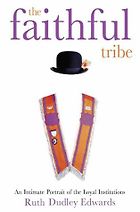
Let’s talk about your next book, The Faithful Tribe (2000).
What Ruth Dudley Edwards is doing, in this book, is getting inside the Orange Order. She’s not a person of belief herself, but she’s a Catholic by background. She writes about it broadly sympathetically, because it’s an embedded report, she’s writing from within the Orange Order, and naturally, her views are quite sympathetic.
It goes up to the Drumcree controversies of the mid-1990s and the issues over policing and Army protection of marches. It’s very contemporary in the way that it understands the Orange Order and the marching season.
“If you’re from a unionist community, as far as I’m aware, you’re just as likely to vote for the DUP if you’re 20 as if you’re 70”
It’s also important in the way it describes the Order as an international order. She points out that there are African, Canadian and New Zealand branches and so on—as well as its very strong support in Scotland and Northern Ireland. And of course there are still a few Orangemen in the Irish Republic, mostly in the border counties.
Can you explain what the Orange Order is?
The Orange Order is generally thought to have grown out of the conflicts in Ireland, north and south, in the 1790s, which were associated with the developments that led to the rising of 1798. It was a defensive order, primarily to defend the interests of northern Protestants, but also to express their loyalty to King William of Orange and celebrate the victories that have defined their identity—particularly the successful resistance to King James’s forces at Derry in 1689—the apprentice boys shutting the gate—and the victory at the Boyne in 1690.
It’s rather like the Freemasons—and there was quite a lot of overlap between the two. It’s set up in lodges, and there are worshipful masters, grand masters and so on. The Orange Order is not a secret society, but it’s a social club that reinforces Presbyterian Protestant and unionist values. And that’s really how it’s remained up to the present day.
“One of the reasons why the marches are so controversial is not just that they go through nationalist areas—because they do—but also because they are about possessing history”
It’s not a paramilitary organization, which is not to say that none of its members have ever had any links with paramilitaries. It’s not, in itself, an organization that seeks to operate outside the law, at all. It is largely peaceful, but intensely tribal.
Why is marching so important to them today?
They’re marching to reinscribe important sites in the history of Northern Ireland—their history of Northern Ireland. One of the reasons why the marches are so controversial is not just that they go through nationalist areas—because they do—but also because they are about possessing history.
They are about possessing the history of a place, by commemorating the victory of one side over the other. Although Orange marches annoy people, and sometimes people object to them in other towns and cities, in Northern Ireland, they have a special quality. They are reenacting a history of overlordship. That no longer exists, but that’s what they commemorate.
Is there any sign that these historical animosities are fading? You mention William of Orange, not exactly a recent historical figure. Is there going to be a generation for whom all this is going to go back to just being history?
It doesn’t look like it. I haven’t got the figures for the annual Boyne reenactment, but the Orange Order—both in Northern Ireland and slightly more surprisingly, in Scotland—though declining, isn’t declining as fast as you’d expect.
The signs, such as they are, are that there isn’t a big generational shift in Northern Ireland that would lead to different forms of voting behaviour. If you look at the Scottish independence referendum, you’re much more likely to vote for the Union if you’re old than if you’re young; if you look at Brexit, you’re much more likely to vote to leave if you’re old than if you’re young. But if you’re from a unionist community, as far as I’m aware, you’re just as likely to vote for the DUP if you’re 20 as if you’re 70.
So, basically, an interesting book to read?
Very interesting. She’s a very interesting writer and she’s been very courageous in getting into the heart of Orangeism.
I suppose the only thing is that it is very much one side of the story. It’s like histories of the IRA that are written by people who interview a load of IRA men and nobody else—there is a risk you get a bit too sympathetic. Similarly, she gets into the heart of the Orange Order—she’s met a lot of them and naturally she likes them and gets on with some of them. She does enjoy their trust, and that means she’s got to be sympathetic to them.
So you do have to put it in perspective and say there was a group of other people out there with very different views. But it’s a very important book.
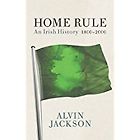
Book number four is, Home Rule: An Irish History 1800-2000 by Alvin Jackson. This is from 2003.
This is a book that is not just about unionism. I chose it because it deals with unionism a great deal, and, also, because you can’t understand unionism properly without having the full context.
Just as Buckland is very good on the politics, Jackson is very good on the constitution. He’s very good on what Gladstone was prepared to concede in 1886, what was in the Second Home Rule Bill, what was in the fight over who controlled customs and excise and the idea of federalism as a potential solution in World War I—as against the independence of the Free State that eventually occurred.
Also, interestingly, the Scottish devolution settlement of 1998 was based on Gladstone’s 1885-6 sketches for Irish Home Rule, and the first Irish Home Rule Bill of 1886. A lot of the thinking that Alvin Jackson goes through—what’s the future relationship between Ireland and the rest of the United Kingdom?—is the same kind of language and debate that’s been going on in the Scottish context for 20/30/40 years. It’s very similar to the way the Irish debate unfolded except that the exact environment and political situation are different.
So, from this book, you get a really good sense of the constitutional problems that politicians were trying to address. He goes right up to the modern period, but he’s particularly good on the early period and why those constitutional problems proved so intractable. It was urgent they were addressed because there was a threat of violence, but, at the same time, they couldn’t be properly or consistently addressed because the threat of violence was always there. That was the paradox.
Both sides ultimately resorted to violence. Jackson, like other writers before him, is very clear that one of the worrying things about the time before World War I is the way a lot of British parliamentary politicians turned a blind eye to gunrunning that supported unionism. That helped to feed the idea that the political process was ineradicably one-sided, and to feed gunrunning for nationalism. You possibly ended up in a violent situation because of the inability to tackle Home Rule in a constitutional way before World War I.
I know it’s old history, but we are still living with it.
In what way?
Because Northern Ireland itself was the only way the British government thought it could satisfy unionist demands and avoid civil conflict. Nobody, in 1900, would have conceived of the present Northern Ireland as a satisfactory political entity. The unionists would have wanted a whole Ireland, or, failing that, the whole 9 counties of Ulster, and the nationalists would have wanted the whole 32 counties of Ireland, North and South.
The British government produced what was, basically, a compromise, in order to minimize conflict on the island and to protect elements of the unionist community. And that’s what we’ve got. A compromise. All the political problems and the Troubles of Northern Ireland stem from that compromise—which is not to say that there was any other solution.
Just over a century ago, Northern Ireland is a place that nobody conceived of as existing, in its current form.
What exactly was Home Rule?
Home Rule is a slippery concept. It effectively meant near-independence. When they finally got it in 1922, the Free State presented it as independence. It was actually closer, formally speaking, to dominion status.
The Home Rule bills ranged from a situation which was actually rather like the current devolved settlement of Scotland, to a settlement where there would be no Irish MPs sent to Westminster, so a quasi-independent settlement. There were also federal solutions proposed.
The settlement that eventually occurred, as a result of the Anglo-Irish War and the negotiations that followed it, was a settlement that was quite akin—in shape and form—to the settlement of the Canadian or New Zealand government.
But, the spirit behind it was totally different. Hardly anybody in the Irish Dáil thought of themselves as Irish and British. They thought of themselves as enemies of the British state—at least all the nationalists did, and that was nearly everybody. So it was very different in terms of the ethos behind it.
And then Ireland actually became independent when?
It became independent in 1922, but what it formally had was dominion status, because it had a Governor-General and was under the Crown. The Governor-General wasn’t got rid of until the end of 1936, and Ireland didn’t become a Republic until 1949.
One of the reasons there was a civil war in Ireland, following the grant of Free State status in 1922 was that hard-line Republicans didn’t think that was enough. The argument of Michael Collins—who had negotiated the treaty—that the Free State gave us the freedom to achieve freedom (i.e. the Republic would come from the Free State) wasn’t accepted and there was a civil war.
Eventually the Republic did come from the Free State.
What changed after World War II?
Ireland became an independent Republic, and left the Commonwealth. Basically, the British government knew there wasn’t a great deal of support for it in Ireland. Ireland wasn’t very friendly or helpful. It was neutral in World War II—and none of the other dominions were neutral. It did pass information to Great Britain under the counter, but it was a very small country that had clearly not acted like Australia or Canada. It didn’t see the UK as the mother country: it saw the UK as an opponent. Now, of course, relations are much better. But it did require full independence for that to happen.
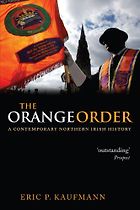
Shall we go on to the last book you’ve chosen? This is The Orange Order (2007) by Eric Kaufman.
I’ve chosen this because the Orange Order and Orangeism is just so important to Northern Irish identity. This book goes in depth into the connections between the Orange Order and the unionist movement, and the way Orangeism as a socio-political organization has huge influence on politics.
It also provides a useful balance, because it’s a relatively objective history, to an overly optimistic view of the Orange Order.
Just as in any study of Irish Republicanism, the Irish Republican Brotherhood is very important because it was not a political party, but had huge political impact, so this book demonstrates how the Orange Order has had a huge political impact. The book also analyzes the social background and the social profile of the Orange Order—the kind of people who support it and who is involved in it.
“Northern Ireland is already the most heavily subsidized part of the UK”
It looks at Orange engagement in Northern Ireland since 1969/7. It provides very much a contemporary view of the role of the Orange Order and Orangeism in community tensions and the community politics of Northern Ireland since then.
The author is a professor of politics at Birkbeck University, London, and teaches a course on Nationalism, Ethnicity and Religious Conflict. Does he put unionism in a wider context?
He does talk about ‘identity choices.’ In Northern Ireland, the term ‘identity choices’ does seem a bit weak. You might call them that but they make a big impact compared to other identity choices… But mostly it is quite light in terms of nationalism theory.
It’s more of a contemporary history and the social science methodology comes in the make-up of the order and the kind of people who are involved in it, and the Order’s attitudes to, for example, the Royal Ulster Constabulary and ‘mixed marriages,’ as they’re called. If you’re a member of the Orange Order, you were traditionally not supposed to marry a Catholic. That’s very old-fashioned now, and people do. But, traditionally, that was the Order’s attitude. It is really quite a peculiar organization to have major political and social impact in the 21st century.
So, to sum up, to understand the issue of Irish unionism fully, you need to understand Irish history, and for that one should go to the Alvin Jackson to get a sense of the broader context.
Absolutely. It also has a lot of contemporary relevance because anyone reading it will say, “Gosh, I can see these debates in the Scottish context.” But it provides the wider historical perspective, yes.
And given time is short and the DUP are getting into power now (maybe), if you were going to read only one of these books, which would it be?
Probably Kaufman’s The Orange Order because although it is a detailed, quite academic book, it’s just so amazing to see how a political process is inflected by a group that isn’t a political party.
As a historian, what are your thoughts about the DUP having so much power now, over the United Kingdom?
What’s interesting is what they’ll play for, and if they will, indeed, play for anything. I suspect—this is very contemporary, it could be outdated tomorrow—that the perception of weakness surrounding Theresa May is such that one of the reasons the DUP are not actually hammering out even a basic confidence and supply deal is that they are waiting to see what happens in the Conservative Party. They don’t want to be associated with a Conservative prime minister who is not going to last more than a month or two.
They want to extract maximum advantage, financially, for Northern Ireland in terms of their own position. They’re not really interested in imposing their policies on the rest of the UK. You can disagree or dislike the DUP because of their attitude to same-sex marriage, but they’re not interested in getting the Conservative Party to adopt it.
“Ireland got forgotten—because to include it would be too complicated. It would suggest that Britain, in some sense, no longer existed in the way it had existed in 1900—and continuity is really important to national memory.”
Their interests are about showing that they can deliver for Northern Ireland, and that it’s a waste of time backing any other Unionist party but them. They want to show they can increase public expenditure—because Northern Ireland is already the most heavily subsidized part of the UK. The other thing they’ll want is a soft border with Ireland, because Irish business also sustains the Northern Irish economy.
One of the ironies of Northern Ireland is that it’s virtually unsustainable without UK government support and without Irish government trade. They supported Brexit, but they want to have a soft border with the Irish Republic, which probably means at least staying in the Customs Union.
In your experience, does the average English person have a good understanding of Ireland and its history—given that, right now, they find themselves in the hands of the Irish unionists, politically speaking?
The answer to that is no. Ireland has been written out of Britain’s history. If you look at the way British history was written in the 19th century, there are a lot of Irish people in it, and there’s a lot about Ireland in it. The United Kingdom included the whole of the island of Ireland until 1922.
Then, when the Free State happened and Ireland became more or less independent in 1922, people’s consciousness of Britain changed. Suddenly, you had to deal with the fact it wasn’t part of the UK. People had to ‘remember’ a British history that excluded Ireland, and it became very difficult to include the six counties of Northern Ireland, not least because of the intensely sectarian character of the politics.
So Ireland got forgotten—because to include it would be too complicated. It would suggest that Britain, in some sense, no longer existed in the way it had existed in 1900—and continuity is really important to national memory. So the end of the Union, which was a huge disruption, potentially, in 1922, was coped with by pretending that Ireland was never involved anyway.
That was in spite of the hugely significant that Irish men and women played for the UK in, for example, World War I. Lord Kitchener was an Irishman. Garnet Wolseley, who was chief of staff for the British Army between 1885 and 1900 was an Irishman. The 1st Duke of Wellington was born in Ireland. Once you start scratching the surface, there are a lot of Irish people in British history, it’s just that their Irishness has been forgotten.
As a historian, what was your impression of the British politicians who shaped the Good Friday Agreement. Was there enough knowledge of the politics and history?
British politicians were better informed than the public, but they still acted in a way that didn’t always create optimal outcomes. I’d have to say here that among Northern Irish secretaries, Mo Mowlam was unusually sensitive and effective, as was Tony Blair among Prime Ministers.
Like Gladstone, Tony Blair understood that there was a real problem in the historic relationship with Ireland that needed to be addressed—whereas quite a lot of other politicians have just seen it as some sort of issue that’s got to be resolved.
But actually it’s so deep-seated, it’s so long-term and underlying, that you have to have a lot of conversations and a lot of understanding to get to the heart of the sensitivities.
And, for many people, the sensitivities appear completely ridiculous. One of the oddest things about understanding Northern Ireland as British—in the sense that many people in Northern Ireland intensely feel themselves to be British—is that the way the society operates, their politics, their passionate view of history, are completely alien to modern British identity.
Interview by Sophie Roell, Editor
June 23, 2017. Updated: March 12, 2019
Five Books aims to keep its book recommendations and interviews up to date. If you are the interviewee and would like to update your choice of books (or even just what you say about them) please email us at [email protected]
Five Books interviews are expensive to produce. If you've enjoyed this interview, please support us by donating a small amount.