It’s clear from the history you tell in The Urge that a lot of ink has been spilt writing about addiction, and a lot of it is contradictory. What criteria guided your list today?
That’s a great question. I found the list-making extremely challenging. I could have written five different lists: the academic list, the literature list, and so…
I wanted to be mindful of the different constituencies that might be reading about addiction, the people who might look at the list. I wanted to make sure that there was something for everyone. I love all of these books, and they encapsulate major themes of what is fundamentally a multifaceted phenomenon. That’s an important argument and message from my work, and from the work of a lot of people that I admire: that we have a dangerous tendency to oversimplify the phenomenon of addiction, whether it’s at an individual level or a policy level. A lot of good can be done, I believe, simply by stepping back and considering the many different facets and angles – not claiming that one is superior or that there’s a hierarchy. To fully comprehend the challenges of addiction, we need a more multi-systemic, multidisciplinary approach.
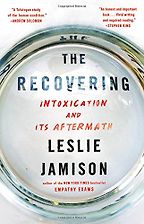
Great. I’m excited to talk about the list. Could you tell us about your first choice – The Recovering: Intoxication and Its Aftermath, by Leslie Jamison?
I just love this book. It came out as I was working on The Urge, and when I picked it up, I had the immediate thought, ‘Oh shit…’ Here is a writer I so deeply respect, who has the academic chops – the book is based in no small part on some of Leslie’s own work in studying literature at Yale – looking at addiction from a historical, multi-systemic, broadly interdisciplinary but also personal perspective. I was eventually gratified to find there were enough differences that I could still justify to myself writing my own book.
It’s a personal addiction narrative and recovery memoir, but it also includes a literary history of addiction, as well as reporting. There’s reportage with people who suffer from addiction, and treatment centres and related stories. So it’s an extremely rich, extremely wide-ranging, fascinating book.
Leslie is one of our best living nonfiction writers. The pace and the interest make it unputdownable. Most people I know who try it, even if they don’t have a personal reason to be interested in addiction, find it fascinating and say something like, ‘I wasn’t expecting to like it as much as I did – it was just so fun and interesting.’
I’m also a doctor, so I’m always looking for the pragmatism. What is the argument, and what does the book do? What is the change it is looking to make in the person? One of Leslie’s main arguments, as I understand it, is very important: she takes on the ways we mythologize addiction. One of the key messages of her book is that there’s a mythos of the tortured genius, or some sort of Faustian bargain, where when people give themselves over to addiction, they get something back – access to a higher plane of consciousness. As a brilliant writer who is in recovery from addiction, she is a really strong spokesperson to say that that’s false: that addiction is generally harmful, just like many other writers have said. William Burroughs said something very similar. This trope of a tortured genius is really misguided. Yet there’s still something fascinating and possibly universal about addiction, so it deserves a deep and searching narrative about it.
It sounds like a hugely rich book.
Yes, and one more thing about it, which concerns twelve-step fellowships, like Alcoholics Anonymous. I want to say that there are people out there whose lives have been saved by twelve-step fellowship and there are people who feel they’ve been terribly harmed by twelve step or that it’s misguided or misleading for them. I am a big proponent of the notion that there are many pathways to recovery. This is not my idea; this is a major, important, relatively recently developed idea from addiction clinical care and recovery science. Leslie does an excellent job of talking about her own experiences in twelve-step fellowship, while also shining a light on the ways that may not necessarily work for everyone, and cases where it has worked and it hasn’t worked.
We’ll come back to the question of twelve-step fellowship with some of these other books, too. Anybody who’s confronting the topic of addiction is facing the cultural legacy of ideas that have come from twelve step.
Could we say a little about that legacy? What do twelve-step programs say about the nature of addiction?
There’s a very long and complicated legacy regarding what people say about the nature of addiction. But there’s some very clear writing and speaking from the founders of AA that says, ‘the nature of addiction is not our business.’ The precise doctrinal definition and competing theories about addiction are ‘outside issues.’ Of course, there are some experiential touch points of people who are in the program, and that’s represented in the ‘Big Book,’ and the actual living tradition of twelve-step fellowship. But on specific debates that readers might be familiar with – is it a disease or not a disease? What does disease mean? Is it lifelong? Is it something that can be cured through psychotherapy? – AA doesn’t take a specific position on that.
What it does do is enable and protect a living tradition of people who are looking for help with a problem they consider common, namely feeling powerless over a substance or behaviour. That’s what it comes down to. The nature of that powerlessness, the boundaries of it, its causes, its conditions… they don’t take a position.
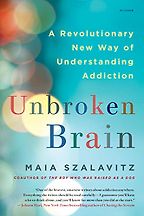
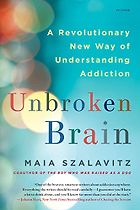
Your next book choice certainly does take a position. Can you tell us about Unbroken Brain, by Maia Szalavitz?
This was an easy choice. As you say, Maia takes a very strong, clear, argumentative position, which is right there in the title: that societally, we’ve become over-invested in the notion of addiction as some sort of fundamental, ‘broken brain’ pathology. Instead, she argues that addiction is best understood as a learning disorder. From that point, she explores a vast amount of terrain.
I picked this book because it’s so practical and straightforward. It speaks very directly to the questions people might have when they’re struggling with themselves or wondering how to approach a loved one. So, for example, she talks about punishment and shame quite a bit, and why they don’t work; and some of the problems with the more stereotypical and harsh views of addiction that have been inculcated in our criminal legal system, but perversely have also found their way into treatment systems.
Maia also has another great book called Undoing Drugs, which is about harm reduction. Unbroken Brain also talks about harm reduction, and it gives very clear and straightforward descriptions of methadone, buprenorphine, and needle exchanges, both at the individual level and the policy level.
There is personal experience in this book too, right?
Yes, there’s also an element of memoir; she talks about her own experience struggling with heroin when she was an undergrad at Columbia and subsequently. She’s another example of someone who talks about twelve-step experiences very effectively, but very differently from Leslie. She doesn’t have some terrible animus against it, but it just wasn’t for her, so she found recovery through another pathway. I think that’s extremely important, to have the lived experience of people who have experienced those other pathways.
In your work, I was really interested in the two questions of the disease model – is it true, and is it useful for people’s recovery? It sounds like this book looks at both those questions.
Yes, I would say so. My own position is that it’s an ill-posed question to ask, ‘Is it a disease?’ The word disease has a lot of different meanings in different contexts. You could talk about disease in a very general descriptive sense – some people call it the jurisdictional sense – where if it’s something that the medical profession helps with, then you could reasonably call it a disease. Okay, fine, but that’s very different from a much more narrow and specific meaning that is often behind ‘disease,’ which says things that Maia’s central thesis pushes against: that the brain is the best way to understand the problem, and it’s necessarily a permanent condition.
I’ve talked with Maia, and we’ve been on panels together; I think there’s a lot of overlap for us here. I think she would agree when I say that framing addiction as a disease is a double-edged sword. It can perhaps be helpful, in certain contexts, but sometimes at a broader socio-polico-rhetorical level, it can have significant harms. We should be careful about the language we use.
Even people with no mental health or science background get complex notions about addiction. Many people have a lived experience of addiction, at least through their extended family or someone that they know, even if it’s not extremely intimate. So the cartoonish portrayals of someone being hijacked as if they were a zombie and totally taken over, choiceless – they know that’s not true. It’s useful to inject a little more nuance.
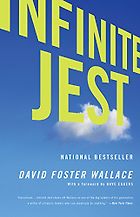
Let’s go on to your third choice. It was fun to see some fiction on your list. Could you tell us about Infinite Jest by David Foster Wallace, and why you’ve included it here?
This is the only fiction on my list, and I wanted to make sure that people had enough, so hopefully it’s long enough for the fiction fiends… People are probably familiar with Infinite Jest by reputation. I chose it, first off, because the writing of the experience of addiction is so visceral and beautiful and heart-rending and true. He has a character who is entering recovery, and goes to a halfway house called Ennet House; there are scenes of somebody going to AA, with all of the varied personalities; and there’s the inner experience of somebody’s craving and ambivalence and inner conflict.
There are other great fictional representations out there. The Patrick Melrose novels also came to mind, and have really great illustrations of some of those elements. But I just thought this was so well done, as a portrayal of someone’s inner life when they struggle with various forms of addiction – different characters struggling in different ways.
Aside from the fact that I just love it, and it’s funny, and it’s a pageturner, and it doesn’t feel as long as it is – the broader theme of entertainment and consumption related to addiction is brilliant, and so prescient. He basically predicted video calls and filters – there’s a passage where people put electronic masks over their faces so they don’t have to see each other. The little details make you jump up and say, ‘My God, this guy was so brilliant to imagine this.’ And then there are the deeper arguments about the ways that not just substances can be addictive: that addiction is a process in all of us, and we can have addictive engagements with entertainment, consumption, political radicalism, power, sex… He does that very, very well.
If the root of addiction is not necessarily some sort of brain disease in each and every case, he talks very beautifully about some of the psychological roots. Not that addiction is just a superficial manifestation of a deeper problem, which I think is a harmful and stigmatized notion, but rather that things like loneliness and alienation can be related to addiction. There can be a rich internal texture of suffering that’s related to the way people struggle with control.
You wrote of addiction as “just one manifestation of the central human task of working with suffering.” I thought of that when I saw this on your list.
Yes. Again, without denigrating addiction as such… Freud famously said that addiction is a misplaced desire for masturbation compulsion, and that led to decades and decades of psychoanalysts who said, ‘You need to stop the addiction, and then I can give you a proper analysis.’ I even have characters in my own book who suffered greatly because of this. Nowadays, there are very intelligent and holistic, multidimensional psychoanalysts who work very well with addiction.
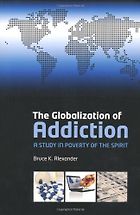
These themes bring us very nicely to your next non-fiction choice. Could you tell us about The Globalization of Addiction by Bruce Alexander?
This is the most academic book on the list. Bruce Alexander is a Canadian psychologist – I’ll tell you a little bit about his own history just to set the stage. So he became well known for a series of studies called Rat Park, which I love so much that I named my Substack after it. The studies are very complicated, and they haven’t replicated perfectly, which I’ve written a little about – so I don’t want to give the impression that it’s an unalloyed and clear message that comes from this. But before Bruce’s studies, there was a long behaviourist tradition of putting rats in cages, and then you could very easily addict a rat to morphine by letting them press a lever. They would use it compulsively, in the sense that it crowded out other rewards, even food. But Bruce said, ‘That’s a little artificial. Rats don’t live in cages. Rats live out in the wild. So what if I built an enormous cage that had lots of toys, opportunities to socialize, opportunities to mate?’ He even painted little pine trees on the walls and put nice wood chips on the ground. And he found that rats in Rat Park consumed dramatically less morphine and didn’t show the compulsive use you’d see in caged animals.
So, in part because of this, he became more interested in the things outside the behaviourist and neurobiological variables in addiction. What about the social environment, relational environment, and especially the socio-political environment? And he talks very directly about globalization and historical arguments.
Ultimately, he argues that mass addiction is produced by dislocation. When people are suffering, not just from concrete and obvious harms – although those can be relevant, like poverty and oppression and racism – but also dislocation in the sense of anomie, being divorced from traditional sources of meaning and purpose and connection, then that is a major driver of addiction.
Then he uses that in an effective way to talk about addiction beyond substances. He gives clear and useful descriptions of how different definitions of addiction might apply to things like gambling (which is a huge problem right now – I wrote an op ed recently in the New York Times about the epidemic of mobile gambling), but also to consumption and environmental degradation.
Even though it’s academic, I think people who are interested in the socio-political dimensions of addiction would find it useful.
Mass addiction might be a new concept to some readers. You write about major historical addiction epidemics in The Urge. Could we talk a little about that?
I was led to write about addiction because, despite these great works existing, even after I read them, I still had big questions about myself and how I got to the position I was in. I was warned in rehab against over-intellectualizing, and I take that seriously; I think there is a way that getting distracted by deep academic debates can detract from the most immediate, pragmatic lessons one needs to learn. But I really wanted to drill down into the social and historical perspective: what do we actually mean by addiction? And how could the history and philosophy help me understand it? So that’s why I started from the very beginning, and I looked at the many epidemics that have happened in history.
That was one of the biggest surprises in the book. I was writing from the midst of the current opioid crisis, which is still going on, despite the fact that it’s getting less attention nowadays. But I was really surprised to see that there were people describing drug epidemics going back more than 500 years. Wave after wave after wave of drug epidemic, and many different social and medical responses to those problems, sometimes with different flavours or different angles… But when I zoomed out and I looked at the overall picture, there was a real sense of repetitiveness behind it. It seemed like societies were reaching after the same limited set of responses to drug problems.
By reading Bruce and other great scholars—sociologists, anthropologists, and historians who look at these broader systemic issues—I came to realize that addiction is an intractable problem, that is, intractable in the technical sociological sense, meaning it’s so big and complex that no one social domain can successfully gain ownership of it and respond to it. But because people in positions of power have limited bandwidth and limited interest in addiction, and there are limited resources, we usually latch on to just one small piece of the puzzle. So it leads to the sense of a recurring cycle: here we go again… We tried prohibition, and now we’re doing clinical care. People get frustrated with care, so they go back to prohibition. People see that prohibition doesn’t work, and so they go back to care…
I found it interesting in your conclusion that while there is this top-level repetitiveness, at the individual level, you were very hopeful.
Yes. I don’t think that addiction is a problem to solve, and what I mean by that is addiction is not a binary condition. It’s not something that you just catch and then you’re broken. It exists to some extent in all of us; it’s a reflection of natural human tendencies and vulnerabilities. That means that the task of working with addiction is just the task of working with our suffering and our ambivalence and our difficulties with control, which is not intractable. That’s something that people have been working with very effectively in various forms throughout much of human history.
The hope comes because there’s a lot of wisdom out there. There are a lot of traditions, from formal addiction mutual help or otherwise. There are a lot of ways that people have tried to address this problem, and usually we don’t perceive the full spectrum, because there’s so much stigma and so much shame, and that leads to an incomplete treatment.
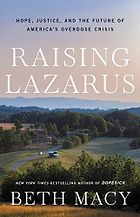
Great, thank you. We’ve come to your last choice, and we’ve already touched on the topic… Let’s discuss the opioid crisis and Beth Macy’s Raising Lazarus.
Another beautiful, brilliant writer. Beth is a really excellent prose stylist. She has a more recent memoir called Paper Girl, about returning to her Ohio hometown and what’s happened to small-town America. Many people may know her book Dopesick, which was turned into a television show, and explained in part how the opioid crisis was manufactured by pharma.
I wanted to pick her follow-up, Raising Lazarus, because it focuses on harm reduction, and more broadly, the question of ‘what do we do now?’ Having looked at the diagnosis, what are the ways people have been trying to help? This connects to the last topic you and I were just talking about, regarding hope. She follows specific people and gives very clear, tangible portrayals of how people can help, whether or not they’re in a well-resourced community, and whether or not the people around them are receptive to compassionate treatment for addiction. She profiles harm reduction workers and people running mobile clinics for buprenorphine (which is a medication for opioid use disorder), and people running syringe programs.
Are these divisive proposals?
Policy responses to addiction are so politicized, at least on the surface. I think it’s helpful to see these very personal stories. She includes people who were extremely sceptical, and had a zero-tolerance, tough-on-drugs mentality, and then were faced with a crisis of addiction in their community, and out of desperation said, ‘There must be something we can do.’ Then they came to learn about these sorts of measures, and found that, for example, syringe service programs don’t enable or promote addiction, and don’t cause people to use more drugs.
A lot like Paper Girl—which is also an excellent book—she talks about the present political climate in the United States. As my friend Ryan Hampton, who’s an addiction policy advocate, likes to say, addiction is one of these issues that genuinely crosses party lines. It is not right or left, it is not conservative or liberal. It’s often politicized, but it can be rooted in a very pragmatic question: how do I help this person and this community? What is actually helpful? What are the costs and benefits?
When you look at the stories of real people, and you tally up costs and benefits, and you look at the accumulated wisdom of what people have done to help their communities, then sometimes it’s not that complicated. Sometimes there really are straightforward, compassionate, common-sense ways that you can respond to a crisis like this.
A rallying cry for anyone concerned with addiction!
And I think that has a lot to say about how we respond to mental health crises overall, not just addiction – how do we make sense of a complicated, nebulous social phenomenon that’s harming mental health? I don’t think Beth makes these analogies directly, but we can make parallels to things like screens, social media, and the attention crisis.
Thank you. This is an incredible list.
All the authors here are wonderful. I’ve done interviews with Leslie, Bruce and Beth, if people would like to hear more from them.
Five Books aims to keep its book recommendations and interviews up to date. If you are the interviewee and would like to update your choice of books (or even just what you say about them) please email us at [email protected]
Five Books interviews are expensive to produce. If you've enjoyed this interview, please support us by donating a small amount.