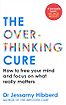
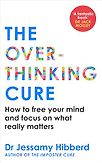
Overthinking might present as rumination about the past or worry about the future, and it comes in many different guises. But, as Dr Jessamy Hibberd explains, it’s dangerous in any form – inhibiting our problem-solving, trapping our mood, and causing mental and physical health problems. She talks us through five books for overthinkers, from classic research to books on compassion, mindfulness and acceptance.
What is overthinking, and why should we want to cure it?
There’s a fine line between what’s helpful and what’s unhelpful. Obviously, thinking is important – reflecting on your life, considering what’s happening, and processing how it went or how you felt about it. I wouldn’t work as a clinical psychologist if I thought otherwise. But overthinking is when you get stuck, and generally it’s triggered by, or a cause of, low mood. Whilst it can feel like it might give you a better understanding of what’s going on or help you feel more prepared, it does the opposite. All the research shows that it lowers your mood, amplifies the problem, and makes you less good at problem-solving.
So, overthinking is when you’re stuck, and repetitively thinking about something in a way that is problematic, and also generally more abstract. Rather than thinking about something concrete that you could do something about, like something that went wrong at work, before you know it, you’re thinking about every time something went wrong at work – and then you’re thinking about how totally useless you are. It goes from a specific incident that you might be able to think more about in a helpful way, to ‘Why?’ and ‘What’s wrong with me?’ and ‘What if?’ – questions that don’t really have an answer.
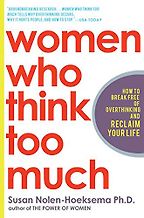
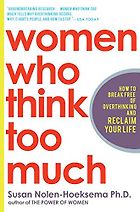
Let’s talk about your first choice – please tell us about Susan Nolen-Hoeksema’s Women Who Think Too Much.
This one is a classic. It was written back in 2003, but it’s still relevant today. Nolen-Hoeksema is the top researcher in the field of rumination, and the book outlines all the research that she’s done in an easy-to-digest format. She specializes in thinking about women, and she’s an expert in the study of women and emotion. She’s done award-winning research. This book is evidence-based, with rigorous psychological research informing it, but she also includes real-life stories and gives practical strategies as well.
I quote her in my book: she describes rumination as the secret to unhappiness. She leaves you in no doubt about how problematic rumination is. She explains that it is habitual, and what you can do to break free.
You mention the problematic nature of overthinking – I know a lot of Nolen-Hoeksema’s research has focused on the causal link between overthinking and mental health problems. Could you say a little about that?
That’s a really good point to make. In her research, she shows how overthinking is not just an offshoot of problems like anxiety and depression; it’s also a precursor to them. Her research shows how it’s linked to anxiety, depression, and eating disorders, and to physical health problems too – because you’re not just thinking about things in your head, your whole body’s set off in reaction to those thoughts with an anxious response. So you can get stomach ulcers, and it’s linked to heart disease and chronic pain.
She also highlights how it amplifies the problem and leaves your mood much lower, trapping you in cycles of thinking. You’re worse at problem-solving. It also leaves you demotivated, so you’re much less likely to take action, even if you do know what to do. In one example she gives, there are two groups: one group has been overthinking, the other one hasn’t. And when they were given a list of things they could do, each group said, ‘Yes, I could do some of these things.’ But when asked whether they are likely to do it, the people who’ve been overthinking say they didn’t think they would.
Another thing that’s really interesting about the research is her idea of eight minutes: it takes just eight minutes to shift your focus.
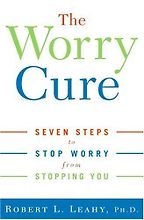
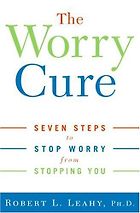
Let’s move on to your second choice: The Worry Cure, by Robert L. Leahy.
This is a CBT approach to managing chronic anxiety. When I talk about overthinking in my book, I’m talking about both rumination, which is generally past-focused, and worry, which is future-focused. This is a really good book for worry.
I first came across it when I was training, which was back in about 2006. It’s really clear, really practical. Leahy talks about differentiating between productive and unproductive worry—when it’s helpful and when it’s not helpful—and concrete and abstract thinking. He also looks at accepting uncertainty and at stopping safety behaviours like rituals and reassurance seeking.
Again, it’s written by an expert who’s got a huge amount of experience. It tackles something that comes up a lot in my clinic, which is this idea that worry can be helpful: that if you’re not worrying about it, then you’re not taking it seriously. People also have the idea that if you think to yourself, ‘This is going to go well,’ then maybe you’re jinxing it. The idea that if something good is happening, it actually might not be good at all, and might mean something bad’s on its way… Leahy breaks down a lot of those ideas and starts to unpack them. He shows that they just don’t add up – it’s not the reality of how life works, or of the impact we can have on what happens. So he exposes the idea of worry being helpful as a myth, along with the idea that we can be in total control.
I think of that idea as magical thinking. It feels safe. It feels like then, if you get everything right, life can go well. But actually, it keeps you stuck and stops you from enjoying life.
That’s interesting. In your practice, you find it hard to persuade people that worry isn’t helpful?
I think that it can feel risky to let go of it, and once people start to understand what’s really going on, it gets easier to see it. But generally, when people come in, they’re not seeing it as all bad – that’s what’s so tricky about it. And it becomes habitual. You’re initially thinking about these things when you’re not feeling good, and then your brain says, ‘She always thinks in these ways when she’s not feeling good’ – so it automatically starts without you even being consciously aware of it. People will say to me, ‘Maybe I’m just that kind of person,’ or ‘Maybe that’s just how I think things through.’ We have to start to bring in the idea that you can have choice over what you think about, and look at what is helpful and unhelpful. Seeing it gives people space to recognise the problems that come with overthinking, and how awful it is. It can be really horrendous for some people.
I’d love to go back to that distinction you made between worry and rumination – you give a typology of seven main overthinkers in your book, and it was striking how different they are on the surface. It was a real ‘Aha!’ moment for me to think of them as the same fundamental problem…
Yes. I get the feedback, ‘Oh, I didn’t realize it was overthinking that I was doing’ – and some people look at the seven types and say, ‘Do you know what? I do all seven.’
Although it’s the same problem in action, it can present really differently. That’s what I’ve been struck by. I did a talk for Action For Happiness, and they got people to write an answer to ‘What do you overthink?’ There was such a massive range. The more you start to have that awareness – whether it’s using the seven thinking types in the book to recognise your patterns, or writing things down and noticing what triggers you, and what your go-to problems are – the more you can see what’s actually going on, and decide whether you want to continue down that route again. It’s the idea that your thoughts and feelings aren’t facts. It lets you step back from them and externalise them.
Even writing the book, I noticed some new patterns that I was totally unaware I had. For example, I’d wake up and think, ‘I’m really tired’ – and then I looked at one of the measures, and it was ‘Thinking you’re more tired than you used to be.’ So I thought about it, and I realised I actually get a lot more sleep than I did in my twenties, and I don’t really drink now, and my kids sleep through the night… I go out for bike rides, I go for runs, I do all the things I want to do. Of course I’m a bit tired in the morning – sometimes life’s busy. But I’m not more tired than I used to be, not at a level that’s problematic. And when you see overthinking for what it is, it gives room to laugh at it or question it or challenge it. That’s what’s so important about identifying how you operate and understanding yourself better.
I found the list very humanising. They’re so recognisable – and it’s also nice to see the ones you don’t do.
Yes, exactly. In a funny way, when you start to see the different types, it gives you a bit more leeway with the ones you do. You can see what you don’t even worry about, and think, how do I manage that? It’s often that you just accept it, or that you’re doing those things all the time, so you’re already doing step five – action.
Step one is to notice the thoughts and bring awareness to them. When we start to see what’s in our spotlight of attention, that allows us to take step two, which is to choose our response – because so often when we’re overthinking, it’s just automatically happening. I think of it as like walking down the same pathway all the time, whereas when you choose your response, you can choose a different direction.
I outline three different ways to do step two. Actually, before that, if it’s something straightforward or not too emotive, then just telling yourself to stop – deciding ‘I don’t want to think about this’ – is the first thing to try. But if that doesn’t work, you can use mindfulness, or the mind-body link – when our body feels good, it has a positive knock-on effect on our minds and mood. The third way is to do something neutral or that you enjoy – a distraction, or phoning a friend, or doing a hobby.
The reason for doing any of these three things is to boost your mood, because when we’re in a negative mood, it narrows our spotlight of attention. It means we’re less likely to consider other perspectives or to be as good at problem-solving. When you boost your mood, it’s like moving to higher ground: you can see things more clearly. You’re more creative, and you’re more likely to ask for help. So it puts you in the best position to then go on step three, which is to challenge your thoughts. The core of step three is that your thoughts and feelings aren’t facts. By using the different challenges in the book, you can loosen up those thoughts and see multiple perspectives—and remember that you’re not your thoughts, you’re the awareness of them. The same with your feelings.
Step four is to accept the reality of life. I noticed, both personally and professionally, that at the root of a lot of overthinking are fundamental beliefs about how the world should work and how we should be – whether that’s perfectionism, or wanting to have certainty, or feeling like things should be under your control. We have to look at the beliefs that are driving our thoughts and feelings. When we start to have a fairer view of life, and we don’t set these expectations of how we should be doing, it lets us be in life and enjoy what it is. Whereas, often, these expectations mean that we feel like we’re falling short, or life’s not matching up to what we expect, and that’s a big trigger for overthinking.
Step five is to take action and to face your fears. Thinking isn’t a blanket response for everything we do. The quickest way to know how something is going to go is to do it. We so often have these anxious predictions that aren’t really the truth of what’s going on. We know that we’ve evolved to learn from our experiences, and that’s key to emotional development, so it’s important to get back out there and do the things that you’ve been avoiding, and make your world bigger. Then you have evidence for how the world actually is, rather than what the anxious thoughts say. It’s a chance to update those anxious predictions with what actually happened, but also to learn more about yourself – to see if it doesn’t go perfectly to plan, it’s still fine. Then you can focus on living your life in the way you want to, and the things that are important to you.
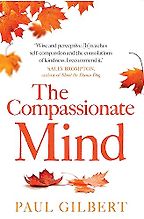
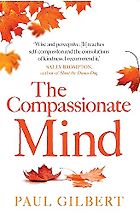
Let’s turn to your third choice: The Compassionate Mind by Paul Gilbert. Why is this one on your list?
Overthinking is often accompanied by lots of shame. When I work with people, they’ll often say to me, “… and then I thought, ‘God, why was I even worrying about that?’” In the heat of it, it’s difficult to see things in a different way, but then afterwards can come shame and recognition that actually the situation wasn’t what they thought it was, or that other people were right about what they said. Often, when you’re overthinking, you also become very self-critical and harsh. So one of the key things for helping with overthinking is compassion – it’s a really good antidote.
Paul Gilbert is amazing when it comes to this work. He’s done so much research, he’s so thoughtful about it. Two key ideas of the book are, one, that you don’t choose the life you’re born into; and two, that there are ways of coping and managing.
He divides the brain into three different parts. Those three systems are threat detection, the drive system and the soothing system. Generally, modern life activates the first two. We’re programmed to notice threat, so we respond quickly to the things that are problematic, whether they’re real or something we’re thinking about. We’re also very much in the drive system: being busy, working hard, being productive. Being in that system can make you feel good as you achieve or do better, or feel a sense of self-worth through productivity. But we’re missing out on the third part, the soothing system, and that’s where compassion comes in.
Gilbert talks about compassion as a skill and introduces what it means. It’s a great way to help manage your emotions better. Often, when I work with people, they hate the idea of compassion. It’s a bit like Marmite: some people are totally on board with it, but most people just don’t really like the idea of it. Gilbert talks about how compassion isn’t just letting yourself off the hook or saying, ‘Oh, well, it doesn’t matter.’ It’s coming from a place of wisdom. You’re still looking at the things you’re finding difficult, but from a standpoint that’s encouraging and looks at your strengths. It shows you where you can improve, and how to move forward without the blame and shame that can come from overthinking.
You quote his seven components of self-compassion in your book, and I thought that made it helpfully concrete – not just ‘be nice.’
I agree, that’s the bit people don’t like the idea of – ‘Oh, I shouldn’t be too nice to myself, because I’m going to slide down into not caring and not doing anything.’ But again, his research shows the opposite: you do much better with compassion.
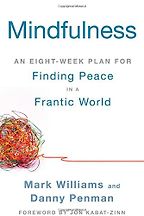
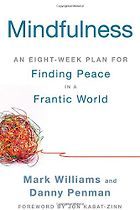
Overthinking takes you away from the present moment. If you’re really struggling with overthinking, this might not be the book to start with, because when your mind’s incredibly busy, or you’re feeling very anxious or low, mindfulness can be difficult to engage with. But as a practice, it’s such a useful one, because it draws you back into the moment and back into where you are. It gets you out of your head, back into the world.
This is a really nice book, because it is easy to read and relatable, with case studies and different ideas that will match up to what people experience themselves. It’s about breaking that cycle of stress, anxiety, unhappiness and exhaustion. It’s about that struggle to meet the demands of the modern world. Again, it shows how when we start to see our thoughts as just thoughts, or our feelings as just feelings, rather than as how we are at that moment in time or as saying something about us, we have the ability to step back from them. We can be aware of which pathways we follow and where we want to go, and tune into the here and now.
This is helpful for starting to notice and recognise your thoughts, which is the first step in my book. But it’s also important for step two, choosing your response, as it’s a way to bring you back to the present. Even if you can do it for just eight minutes, it makes a big difference to how you’re feeling, and disrupts the overthinking spirals that you can get into.
With mindfulness gaining popularity as a concept, is there anything particular that makes this book stand out?
It’s a good introduction. I like this one because it’s a course that you can follow, and also because the author is an expert in the field. Professor Mark Williams is the lead on mindfulness-based cognitive therapy, so it’s written by an expert. I think that’s important – it’s evidence-based, and something you can follow that’s proven to work.
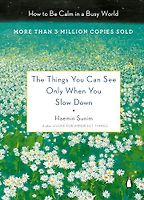
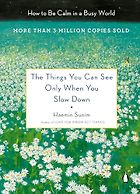
This is a beautiful book – it’s pretty inside as well, with lovely illustrations. I saw it in the bookshop, and I hadn’t heard about it, even though it’s sold over three million copies. It’s written by a monk, and he has so much experience. It’s a really gentle book, and it brings together a lot of ideas, including acceptance— accepting the reality of life—and also spiritual advice on everything from setbacks to love and relationships.
This book inspired me to come up with the idea of the spotlight of attention: that what we’re focusing on becomes our reality of life. That led me to see what is going on when we’re overthinking… If our mind is a stage with a spotlight, then when you’re overthinking, the spotlight’s got stuck on one small detail of your life, and it casts the rest of your life into darkness. With the people I work with, they can’t see things differently at the time. If it were as simple as saying, ‘Don’t worry, it’s okay,’ nobody would overthink. It’s so real, and it’s so difficult to access another view at that point – again, because when we’re in a negative mood, we narrow our focus of attention (this part isn’t in this book, it’s in my book). You’re on a different track in your brain, so you don’t have access to the same thoughts, memories and feelings. In fact, your brain matches you up with all the other times you felt that bad, and all the other times things weren’t going well. When you can broaden that spotlight of attention and boost your mood, then you’re back on the good tracks again, with the good memories that match – so it’s a positive knock-on effect.
For his analogy, Sunim talks beautifully about the night sky and how you see it. It’s right at the beginning of the book. It reminded me what’s so difficult when you’re overthinking: what you see at that moment feels like the whole truth of your life, and your brain only pays attention to stuff that fits, and it discards anything else – as though all of that is in darkness.
It’s interesting to see mindfulness books from two different traditions side by side – are they bringing different things?
Yes, I think so. Mark Williams recommends this book too, so he’s obviously signed up to it as well. There’s less to sign up to in this book—it’s a gentle way in to opening up your ways of thinking. Often when we’re thinking about life, we’re so on autopilot that we don’t stop to look up and think about things differently. That’s what’s nice about this book. It prompts you to do that in a gentle way, but in a way that’s also helpful and clever.
Great. Before we close, I know you also considered recommending Oliver Burkeman’s 4,000 Weeks, but saw it was already heavily recommended on our site. I love this one – shall we give it a quick shout-out?
I think it’s another great one for acceptance. Burkeman talks so cleverly about accepting our limitations, focusing on what matters, letting go of productivity and efficiency, not living in the future, and defining our limits. I like his idea that you can’t do everything, so you need to choose. That busyness—whether it’s a busy mind or a busy life—takes you away from actually being in life, and doing the things that matter to you.
So often, people’s self-worth is tied to their productivity. He breaks down that idea really nicely. Overthinking comes into that as well – the idea that you should be doing more or that you’re not doing enough, you’re not making the most of things, you’re not reaching your potential. He cleverly challenges those ideas.
Well, perhaps none of us should expect ourselves to read all six books then – we must know our limits. But they all sound wonderful. Thanks so much for talking us through them.
Five Books aims to keep its book recommendations and interviews up to date. If you are the interviewee and would like to update your choice of books (or even just what you say about them) please email us at [email protected]
Jessamy Hibberd (DClinPsy) is a Chartered Clinical Psychologist with over 20 years in clinical practice. She is a member of the British Psychological Society and the British Association for Behavioural and Cognitive Psychotherapies and the bestselling author of ten books.
Jessamy Hibberd (DClinPsy) is a Chartered Clinical Psychologist with over 20 years in clinical practice. She is a member of the British Psychological Society and the British Association for Behavioural and Cognitive Psychotherapies and the bestselling author of ten books.