


Books by Olivia Cheung
Olivia Cheung is Research Fellow of the China Institute at SOAS University of London. She was educated at Oxford where she was a Swire Scholar and a Rhodes Scholar. She previously taught at the University of Warwick, where she was Course Director for the MA in International Politics and East Asia. She is the author of Factional-ideological Conflicts in Chinese Politics: To the Left or to the Right?


“China after Mao Zedong, even under Deng Xiaoping, was really a situation of factional power-sharing, of factional power balances and contestation of power. No single leader could monopolise all powers in their own hands. In my book, I went through some very major policy reforms in China under Deng Xiaoping and argued how uncertain it all was—how, quite often, those reforms nearly didn’t make it. When they did make it, there were a lot of political struggles, a lot of compromises, a lot of give and take, and a lot of concessions. All this showed that Deng Xiaoping really wasn’t that powerful: there were major political factions that he needed to respect, that he needed to consult, and that he needed to trade advantages with, in order to push through an agenda. Another important aspect is that the Chinese Communist Party isn’t just an organ of interests…it’s also an organ of political ideas. This is something that we almost forget when we think about China because of how rich it has become, and how it seems like everyone is so focused on making money and making their lives better. Deng Xiaoping embodied that image…What my solo book shows is that even within the party there are different ideologies, different political values, and they are all very much alive. Powerful party leaders use those values to debate with each other, to shape different policies, to try to undermine existing policies or existing narratives, to push through their own visions, and so on. There’s lively political debate, and that’s because there are many different ideas rather than because there are no ideas. That’s an important point to make.” Read more...
“This is an absolutely extraordinary book, which is just a model of contemporary Sinology done well. The authors are based at SOAS. Essentially, they close-read the entire canon of material that Xi Jinping has put his name to since taking power, which is voluminous because ‘Xi Jinping thought’ has opinions about a whole lot of things, from ethnic harmony and ethnic minorities to the environment to the rule of law to foreign policy. They read through and across this body of sources to paint a picture of his political worldview, where he wants China to go, his vision for the governance of China and his ideas about the place of China in the world.” Read more...
The best books on Taiwan and US-China relations
Eyck Freymann, Historian
Interviews with Olivia Cheung
-

1
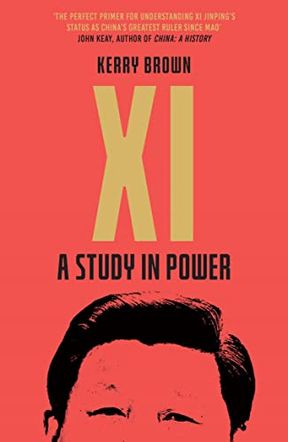
Xi: A Study in Power
by Kerry Brown -
2
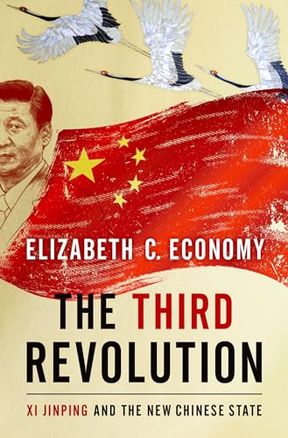
The Third Revolution: Xi Jinping and the New Chinese State
by Elizabeth Economy -
3
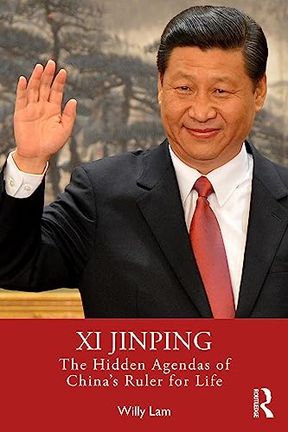
Xi Jinping: The Hidden Agendas of China’s Ruler for Life
by Willy Lam -
4
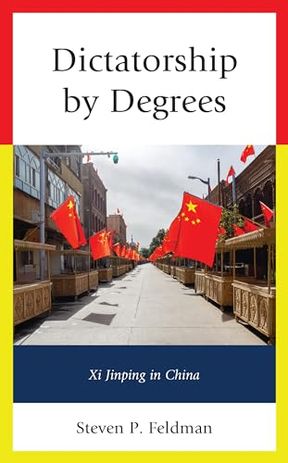
Dictatorship by Degrees: Xi Jinping in China
by Steven Feldman -
5
The Politics of the Core Leader in China: Culture, Institution, Legitimacy, and Power
by Xuezhi Guo
The best books on Xi Jinping, recommended by Olivia Cheung

The best books on Xi Jinping, recommended by Olivia Cheung
Despite his own and his family’s suffering under Maoism, China’s president, Xi Jinping, has turned his back on some of the reforms of the past four decades, dismantling safeguards designed to ensure that some of the disasters of that era never happen again. Olivia Cheung, a research fellow at SOAS and co-author of The Political Thought of Xi Jinping, recommends books to better understand China’s leader and his quest to build a new world order—led by China and admired by all.
Interviews where books by Olivia Cheung were recommended
-
1
The Boiling Moat: Urgent Steps to Defend Taiwan
by Matt Pottinger -
2
The Avoidable War: The Dangers of a Catastrophic Conflict Between the US and Xi Jinping’s China
by Kevin Rudd -
3
US-Taiwan Relations: Will China’s Challenge Lead to a Crisis?
by Bonnie Glaser, Richard Bush & Ryan Hass -
4
The Political Thought of Xi Jinping
by Olivia Cheung & Steve Tsang -
5
Chokepoints: American Power in the Age of Economic Warfare
by Edward Fishman
The best books on Taiwan and US-China relations, recommended by Eyck Freymann


The best books on Taiwan and US-China relations, recommended by Eyck Freymann
Taiwan is a crucial lynchpin of the high-tech global economy, but its international political position is far from stable. China has explicit ambitions to incorporate it into the Chinese state and seems intent on building the military capacity to do this by force. The US is committed to preserving its de facto independence. For the moment, there is a stand-off, but a crisis over Taiwan would be a crisis for the world, politically and economically. Eyck Freymann, a fellow at the Hoover Institution, recommends five books to help understand the dynamics of the situation and the possible outcomes.
-
1
Xi: A Study in Power
by Kerry Brown -
2
The Third Revolution: Xi Jinping and the New Chinese State
by Elizabeth Economy -
3
Xi Jinping: The Hidden Agendas of China’s Ruler for Life
by Willy Lam -
4
Dictatorship by Degrees: Xi Jinping in China
by Steven Feldman -
5
The Politics of the Core Leader in China: Culture, Institution, Legitimacy, and Power
by Xuezhi Guo
The best books on Xi Jinping, recommended by Olivia Cheung
The best books on Xi Jinping, recommended by Olivia Cheung
Despite his own and his family’s suffering under Maoism, China’s president, Xi Jinping, has turned his back on some of the reforms of the past four decades, dismantling safeguards designed to ensure that some of the disasters of that era never happen again. Olivia Cheung, a research fellow at SOAS and co-author of The Political Thought of Xi Jinping, recommends books to better understand China’s leader and his quest to build a new world order—led by China and admired by all.
