Our topic is fatherhood. Before we get to the books you’ve chosen, how central are fathers to childhood development?
It depends on whom you ask. If you ask the child they would say, absolutely essential. You ask a mother, she’ll say, if he does it the right way he’s really important. If you ask the father he’s likely to say, I’m not sure but I think probably pretty important. If you ask the experts, the answer will depend on how much they know about families and child development. I don’t mean to be elusive in my answer.
It is a pretty well-accepted fact that we have not supported paternal engagement to the extent that would be helpful to our children. We’re getting better at it now. We’ve come to understand that fathers don’t mother and mothers don’t father. Fathers can’t really be replaced, in full, especially by somebody who doesn’t feel like a father. We’re beginning to understand that to the extent that dads are positively involved, the children’s and the mothers’ lives are better.
When you say mothers don’t “father,” what does fathering mean to you?
I can still feel the ruler on my knuckles from my sixth grade teacher, who would say: It’s a noun not a verb!
When I used the word as a verb I was talking about a pattern of nurturing behavior rooted in the role of the father in our society. There are a couple of things that we notice fathers do much more than mothers when given the opportunity. It’s a fairly short list that includes roughhousing and other physical activity; an interest in having children encounter the world outside of the mother’s enclosure, not in spite of it but in addition to it; the use of play as a form of teaching as well as entertainment; and a willingness to allow frustration to build a little bit more than a lot of mothers are comfortable with, in order to teach some life lessons. Those are just trends that depend on your culture. But if I have to use the verb, that’s what distinguishes fathering from mothering.
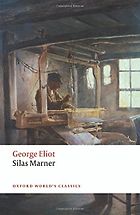
Why did you choose George Eliot’s Silas Marner as the first of your books about fathers?
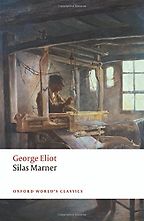
Eliot’s description of what happens to Silas Marner’s soul and heart is not an overly romanticised view of what happens to a lot of men when they fall in love with a child – although generally the child they fall in love with is their own. Marner is accused of a crime that he does not commit and he’s ostracised from a community. He saves a little bit of money from his job so that he can keep a life going, but he’s pretty constricted. I think that’s the way a lot of women feel about their men.
“When men become fathers, they live longer…It’s not just the children who are changed by fathering. Fathers are changed as well.”
Through a series of Edwardian twists and turns, he winds up taking in a child he finds wandering in the woods whose mother has died. He takes the child in because it’s winter and it’s the human thing to do. The child begins to affect him and really humanise him. There are a lot of other twists and turns, but those aren’t the parts of the book that interest me. I think it’s an interesting message. A child can evoke nurturing behaviour from men to whom they are not biologically related as long as the needs of the child are valued by the man.
George Eliot is a hell of a writer and I’m a big fan of the way liberal arts help us sharpen our philosophies. I assign Silas Mariner to my psychology students at Yale and other places. They wrinkle up their noses until they read it. Then they come back and say, “Oh, I get it.” Fiction can often tell more truths than nonfiction.
The title page contains a quote from Wordsworth: “A child more than all other gifts that earth can offer to a declining man brings hope with it and forward looking thoughts.” Does research back up Wordsworth’s assertion about the impact of kids on fathers?
Yes. When men become fathers, a lot of things about them change. First of all, they live longer. I joke with men when I tell them that. It won’t feel like that when you’re doing it because being a father is pretty tough, but longevity goes up and suicide rates go down. Job changes slow and women will often report an increase in the man’s emotional availability. ‘My child really softened him up’ is something you often hear. So it’s not just the children who are changed by fathering. Fathers are changed as well. I think Wordsworth said it nicely.
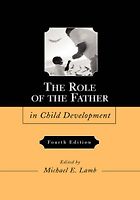
Next up is a book more obviously about fathers. This is The Role of the Father in Child Development by psychology professor Michael Lamb. Tell us about the book.
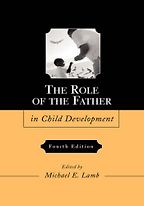
Michael Lamb has edited six volumes of this particular series. Whenever Michael would release a new edition people would say, ‘this is what we know as of now,’ because they trusted Michael’s view of the literature and the people whom he asked to write chapters for this book. It’s the Wikipedia of the field, only it’s real science, not fake science like a lot of Wikipedia. It is so trusted by so many people that you give it to graduate students who are interested in fatherhood, and have them read it cover to cover to see if their ideas still hold. Only after they’ve read the book can they decide whether they’ve got something to study.
It helps people think about what the developmentalists have to say about paternal engagement. It’s not just about father’s rights or competition with mothering. I’ve always shared with Michael the belief that the bottom line about paternal engagement is not how the father feels about it, but how well the child does as a result of it.
Michael is one of the most productive and helpful pioneers in understanding the effect that men have on child development. He has almost single-handedly elevated the field to an evidence-based science. Without him, this would be a much messier and far more incoherent field. He stuck with this work long after his own children grew up and he moved to another country. We all use The Role of the Father in Child Development as a Rosetta Stone.
You’re both pioneers in the field of fatherhood studies. Can you sketch for us the story of this field of study and what it has helped bring to light?
It’s kind of messy. You have father’s rights people and feminists writing about it, you have nurses, anthropologists, psychiatrists and early childhood educators writing about it. It takes perspectives from a bunch of different disciplines. The literature on fathering is actually much broader in its perspective than that on mothering. There’s a hundred times as much mothering literature, but it tends to come from the same scientific silos. In the literature on fathering, we have had everybody from Margaret Mead to Bill Cosby helping us try to identify what the fathering experience is about. I put those of us who have a lot of degrees from fancy universities after our names in the middle of that spectrum. That’s why it’s a big messy field.
Get the weekly Five Books newsletter
Some of the less discussed pioneers, the people who really brought the father into the family dynamic, are family therapists and theorists like Salvador Minuchin. I didn’t select one of his books because he doesn’t write specifically about fathering, but he was one of the first to insist on paternal presence and engagement in treatment, because he knew that what fathers were bringing to the table, both in terms of repair and damage, was quite different to what mothers were bringing. He really was wise in saying: We’re willing to give the mother all the credit because we’re also willing to give her all the blame. Why are we leaving the father out? From the child’s perspective, the father belongs in the discussion.
I got into this field by watching men bring their children in for visits in the early 1980s and late 1970s, when so many women were going back to work and men were picking up some of the childcare whether they wanted to or not. Some pediatricians and nurses wouldn’t talk to the father. They’d ask for the mother’s number. This invisible parent syndrome was the reason why I got interested in fatherhood, as well as my personal experience as a father. I had to get written permission from the head of OB-GYN to be present at the birth of my first child, who is now 41, at the very hospital where I had been delivering babies six months before. That was a jaw dropper for me.
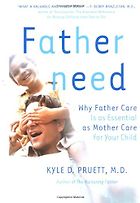
That’s an experience you write about in your book, Fatherneed, a how-to guide for postpartum paternity. What are the main points about fathers you tried to get across in the book?
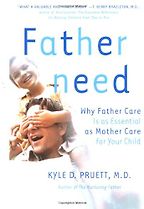
The title often raises an eyebrow. What do you mean? Do children really need fathering? The answer is yes. By the age of six weeks, infants already respond differently to their fathers than they do to their mothers. There’s a predisposition to engage differently with men. Whether you’re Darwinian or Lamarckian, you have to ask the question: What’s that information doing in the child if it doesn’t matter? Why has it been preserved over 400,000 years? Then you watch what happens to children who don’t have fathers or fathering and you see the hunger that they feel.
James Herzog, an analyst in Cambridge, Massachusetts, wrote a wonderful book called Father Hunger. Jim articulated, I think beautifully, the inherent hunger that children have for the fathering experience. If children don’t have a biological father available, they look for fathering from the men in their lives, and often make a very strong bid towards someone that the mother will allow in their lives to get some fathering – that roughhousing and exposure to real world frustrations that they seem to be able to use in their lives.
“It is a pretty well-accepted fact that we have not supported paternal engagement to the extent that would be helpful to our children. We’re getting better at it now”
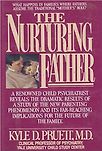
Fatherneed was about waking up to that need in children and in families. It was about following up with families where the father was the primary caregiver over the first critical years, families I wrote about in The Nurturing Father. What happened to those children? What happened to those marriages? The fact that those children are doing so well and that there have been relatively few divorces raises interesting questions.
I have no question in my mind that the so-called “fathering revolution” is a secondary phenomenon to the feminist revolution of the 1970s. Men have had to adapt to change in the workplace and at home. Many of them are awakening to the idea that they would like to father much more actively than they were fathered. They would like to do it more consciously and with more support. It turns out that most women think that’s a pretty neat thing. I’m interested in where this next generation is going to go.
Do fathers have a different impact depending on the gender of the child?
Not as much as you might think. The nature of the relationship and the sensitivity the father has towards the child matters a lot more than whether the child is of the same or a different gender.
What does your research show about the impact of a father’s state of mind on the development of the child?
I suffer from knowing too much about states of mind to treat it as a simple construct. But fathers who, for example, are suffering from postpartum depression – and they do to a much larger extent than most people are aware – feel useless and have a hard time engaging with the child or responding to the child’s bids for nurturing. Fathers’ rates of postpartum depression are about half of what women’s are, which is more than what most people would guess. Women have rates of postpartum depression of around 8% in most international studies, and it turns out that men have rates of about 4%. Any risk factor that the father carries – psychological risks such as substance abuse or mood disorders – are also going to affect the job he is able to do.
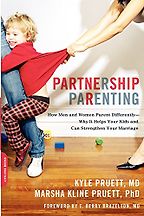
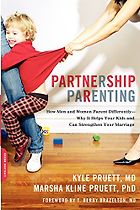
You wrote a guide to this new distribution of responsibilities with fellow psychology professor, and your wife, Dr Marsha Klein Pruett. Please tell us about Partnership Parenting and how it fits into your list of books about fathers.
Partnership Parenting is about the next iteration of paternal involvement. There are the exceptions, single parents, but let’s stick with the majority of families where there is a father, a mother, and biological or not they are trying to do this together. We call it co-parenting but we are not supporting each other very well. That’s what Partnership Parenting is about – getting practical about what this mean to a couple. How do you support it? How do you get it going? How do you keep it going during the difficult times? What does the research have to say?
“The literature on fathering is actually much broader in its perspective than that on mothering”
It was fun for Marsha and me to do this together as husband and wife. We love talking about the work. Her perspective is different from mine, it’s a really interesting and long-term conversation. We just recently had something interesting happen. The Chinese bought the rights to the book, although there’s not a paragraph in it targeted towards families in Asia. We asked the Chinese agent why they were interested. He said, ‘Our middle class families are under a lot of pressure to change very rapidly economically, and that means they’re also changing culturally. They’re a little lost about how to do this as partners and we think your book goes a long way to helping them.’ It was an example to us of how little we know about the potential usefulness of partnership parenting.
Opponents of gay marriage have used your work to argue that children of same sex parents suffer, because they don’t have the benefit of both mothering and fathering which your research shows is beneficial.
I don’t agree. I don’t think these differences are rooted in chromosomes, I think they’re rooted in culture. There are many same sex couples that divide up tasks in the way that heterosexual couples do. You have good cops and bad cops. You have people who are playful and people who are serious. One parent wants to protect the child from frustration, while the other wants to help you learn from your failures. So a dimorphism tends to develop in couples when two people are trying to raise a child. We don’t have any really good science yet to tell us whether children who are raised in same sex marriages have any particular vulnerabilities, because most of them are not controlled studies. How can you control a study like that? It’s impossible. The work of Charlotte Patterson and others has said we don’t need to be especially worried about these children. They’re doing fine. So let’s pay attention to the children we know we have to worry about, the children of the poor or vulnerable single parent.
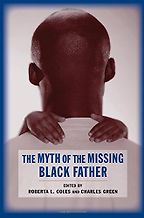
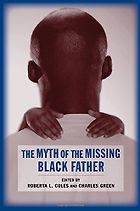
Let’s turn to The Myth of the Missing Black Father. Please tell us about this collection of essays edited by Roberta Cole. What we can learn from the book and what about it is applicable to all fathers?
I put this on my list because there is a huge shadow over the African American population that says black men don’t stick around to raise their children. Sociologists looking at this issue in the 1960s vastly overstated it. Anybody who works with the black inner-city population of kids will hear them say, ‘I know who my dad is. My mother hates him, he’s in and out of jail but he slips me $20 if he has it and he keeps me from getting my ass kicked, so I know who he is.’ The census bureau and society may not count him as a father. He’s not residential but he’s not missing. That is a critical distinction for an awful lot of kids, who feel connected to their dads even though they don’t live with them. So to keep this myth going simply perpetuates the inefficacy of black fathers and gives women another reason to have yet another generation of fatherless families.
Five Books interviews are expensive to produce. If you're enjoying this interview, please support us by donating a small amount.
The way that we as a society have bought into the myth of the black father is highly destructive to children, to women and to men. We need to fix it in this generation, because there are an awful lot of fathers who with a little help could find their way back into their children’s lives in constructive ways. We know, for example, that when men in prison participate in fathering programs they all say, ‘The only reason for me to change my ways is because I’m a father, and I don’t want my kid to wind up across the cell block from me.’ But the fathering support stops when he gets out of prison, can’t get a job, his housing sucks and he’s back in trouble in six weeks. If we were able to seriously support the transition from prison and help these men reconnect with their kids, we could have very different outcomes.
Cole notes that in 2004 over 50 per cent of African American children lived in mother-only households. A recent New York Times article pointed out, based on census data, that more than half of births to women under 30 now occur outside of marriage regardless of race. If more and more mothers decide to parent without fathers, what will they be forgoing?
Help, and the potential for a really useful lifelong partnership. Children grow up, just like puppies. Their needs change profoundly. Children have a hunger in them. If you choose to raise a child without the father in their life, some day that child is going to come to you for an explanation and you better be prepared for it. The absence of the paternal figure is going to be a powerful psychological entity in the life of that child. It could turn out to be a time bomb, or it could turn out to be a little firecracker.
Women can’t be all things to all children. It’s not that women can’t do a wonderful job, be incredibly loving, willing to make all the sacrifices necessary and have kids who turn out fine. They can. Women come to me and say: I want to have this child and I’ve never had a man in my life that I trusted, what do I do? Although I don’t give advice on how people ought to live their lives, I can say that if you want to avoid the negative outcomes of unrequited father hunger, including the idealisation of the guy whose sperm you have used, then get men in your life that you do value close to the child, keep them there, and let the child understand what the fathering experience feels like from people you trust. But it’s a myth that one person can do it all. You can’t.
This interview was published in July, 2012.
Interview by Eve Gerber
July 9, 2012. Updated: June 21, 2020
Five Books aims to keep its book recommendations and interviews up to date. If you are the interviewee and would like to update your choice of books (or even just what you say about them) please email us at [email protected]