A good writer must always aim to write the truth – a more complex narrative than one of heroes and villains. But to find the truth, sometimes you've got to get up and go there yourself, says Will Storr, journalist and author of Selfie. Here he selects five books that have inspired his own immersive approach to nonfiction.
You’ve chosen to talk to us about ‘immersive nonfiction.’ How to describe that? Nonfiction, written by writers who put a focus on experiencing what they are writing about?
For me, it’s that feeling of just opening your front door, stepping out into the world and thinking, right: I’ve got a question here that I care about, I’m going to find out what the answer is, and I’m going to take you – the reader – on that journey.
For work I have to read a lot of science books, and I often find them quite dreary to read. They feel too much like homework to me. Everyone tells me that I must read Sapiens and I haven’t, mostly because it feels like school, and I hated school. Instead I love narrative nonfiction where people are kind of out there in the world – and of course that’s very much what I try to do in my own work. That said, I think Selfie, my latest book, is the least adventurous kind of book that I’ve done. But it still took me some interesting places.
Your earlier book The Heretics, published in the US as The Unpersuadables, brought you to meet some fascinatingly perverse fringe characters – creationists, Holocaust deniers, and others whose beliefs are demonstrably false.
The Heretics was about the psychology of belief. It begins with me in the ‘deep north’ of Australia, which is a bit like the deep south of Mississippi, with a bunch of creationists who believe the world is six thousand years old. It’s six thousand, I believe, because you add up all the ages of the people in the Bible, and it comes to six thousand.
I turned up there expecting the story to be simply, ‘This guy’s an idiot.’ It was going to be a funny, knockabout piece with someone silly. But actually this guy was really not idiotic. He was smart. And that led me to want to answer the question, how is it that otherwise clever people end up believing crazy things? The usual sceptical take is, oh, they’re just stupid. But I don’t think that’s good enough. I wanted to answer the more interesting question. Finding out why people believe crazy things meant finding out why anybody believes anything. So it became a psychological investigation.
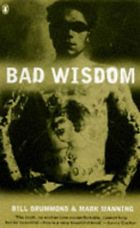
Maybe we should have a look at the first book on your list, Bad Wisdom by Bill Drummond and Mark Manning. Earlier, you said that this is the book that made you want to be a nonfiction writer in the first place.
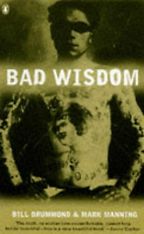
I picked up Bad Wisdom because, as a teenager, I was a fan of the band Zodiac Mindwarp and the Love Reaction – a cartoon rock band who were just hilarious. And I found out that this guy wrote this book with Bill Drummond of the KLF, a very different kind of band. So I just bought this book because I was a fan of theirs. And it blew my mind.
I went through the whole school system, at a very bad comprehensive, and just hadn’t fallen in love with reading at all. I found it all so boring, my teachers were uninspiring and the books we were given to study, by people like Samuel Butler, were dreary and alienating. This was the first time I’d had the experience of reading a book that felt like it was for me. The first line in it is: “I am shit scared. Shit scared of almost everything.”
Then they go on this insane journey. They hired a Ford Escort with the intention of driving to the North Pole, to leave an icon of Elvis Presley at the North Pole, in order to save the planet. That was their mission. The book’s got a really interesting structure. They go through the journey chronologically, as you’d expect, but Bill takes a paragraph, then Manning takes a paragraph. It alternates. So you get Bill Drummond’s very maudlin Scottish Presbyterian worldview – that first line is his– then you get Mark Manning, who goes in a completely opposite direction. Drummond reminds me a little of Knausgaard. He’s such a thoughtful, interesting individual. A lot of detail, very much focussed on the beauty of the everyday. But with Manning, it’s just this wild, psychedelic stuff.
Get the weekly Five Books newsletter
There’s this idea running through the book of Elvis being kind of a replacement God; that religion might be diminishing as a cultural force, but we still have this deep need for these gods to follow. So, Bad Wisdom is a really interesting journey that works on lots of different levels. It’s funny, it’s very thoughtful, it’s chaotic. It’s like Three Men in a Boat, but with psychopaths. It’s quite shocking as well. It’s really violent, and really, really offensive. I’m sure that Penguin wouldn’t publish it these days. But it really is an extraordinary thing, and I’m glad it exists.
When I got my first job as a writer, I thought I would mark it by marking my skin, because Mark Manning has this huge crucifix tattooed on his chest, a massive thing. And I’ve got kind of a replica on my shoulder. So it was a very powerful book for me. You can definitely still see the influence of Bad Wisdom in my writing.
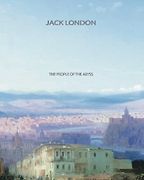
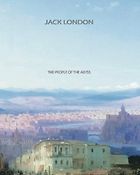
The next book on your list is Jack London’s The People of the Abyss, a first-hand account of the extreme poverty in the east end of London at the turn of the 20th century. London posed as a penniless American sailor stranded in England during his research. Isn’t Jack London an incredibly romantic figure? He seems to have lived the lives of 50 men.
It is a really extraordinary book. It precedes George Orwell’s Down and Out in Paris and London by decades. It’s 1902, and he treats the east end of London as if it is, in his antiquated phrase, the ‘darkest Africa.’ As if it’s this exotic and dangerous realm that he’s adventuring into.
There’s this great comic bit at the beginning where he goes into Cook’s, a map shop in Covent Garden which was the place where all the adventurers would go before embarking on these great international voyages and he says: ‘I’m going to take this journey into the east end of London.’ They pale and say: ‘We can’t help you with that, sir. We’ve got no maps of that place.’ It really was a ‘here be monsters’ situation, and it was only an hour away on foot.
It’s fantastic to read. London’s got such a mastery of language. It’s slightly purple, kind of overwritten, but I guess it suits the subject matter, the way he paints these gothic pictures. There’s an extraordinary anger to it as well. When I first got into writing, everyone talked about the idea of ‘the new journalism’ – people like Gay Talese, Hunter S Thompson, Tom Wolfe, and the rest, as being the originators of the form. But it’s just not true. The People of the Abyss is a much, much earlier example of the kind of writing that would sit very happily in that genre.
One of the most shocking aspects is the time it was written. This was the British Empire at its height and yet, in the back garden, the east end had the most shocking conditions Jack London had ever seen in his life. This is a man who has spent time in prison, has been a vagrant… he was not someone who was easily shocked.
Yes, it is shocking, the things that he sees, and the sense of danger that leaps from the page as you’re reading it. I haven’t been down to the east end since without thinking of The People of the Abyss. It’s one of those books that once you’ve read it, it doesn’t leave you.
There’s also a very interesting chapter where he goes with others out to Kent to do hop picking. There’s all this promise of work, but he ends up somewhere around Maidstone – which is a dreary, built-up area these days, but it wasn’t then – and there’s been a great hailstorm, which has damaged all the hops. So you’ve literally got these hundreds of people just sleeping in the roads, fighting over scraps of work. Like something from The Grapes of Wrath, but in Maidstone. It’s extraordinary.
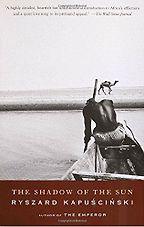
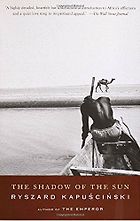
Earlier, you said it was as if he was travelling to ‘darkest Africa.’ Perhaps we might jump to Ryszard Kapuściński’s The Shadow of the Sun. A memoir of the author’s thirty years in Africa as a correspondent for a Polish press agency. He found himself in some rather dark situations.
Once you discover Kapuściński, it’s a love affair for life. He’s such a beautiful writer. What I take from Kapuściński is that he made a genuinely sincere attempt at discovering the truth of a place, or of a subject matter, or of a person. With lots of authors or journalists who go on these real life adventures, you get a sense that they’ve got a strong idea of what they want to get and the ‘journey’ is simply them going out and getting it. It’s not a sincere attempt at finding the truth, even with some of the very big name nonfiction writers. Whereas because Kapuściński is a writer with a genuine interest in finding out the truth, he often upends your preconceptions, which I think is what the greats often do.
“Once you discover Kapuściński, it’s a love affair for life”
I’ve always tried very hard to do this in my work, up to and including going on holiday with neo-Nazis, getting to know them in an empathetic way, trying to understand the reasons behind their Holocaust denial. I think the temptation of being any kind of storyteller, but especially a storyteller who deals in nonfiction, is to stick with a straightforward, crowd pleasing narrative of heroes and villains. If you write that narrative, it works. Telling people what they want to hear is a good way of getting famous and selling tens of thousands of books. It’s much harder to not write that book, in my view. You risk not doing so well in your career, and you risk upsetting people – which is not something to be done lightly these days, when it can often feel as if everyone is viewing the world through a dangerous and simplistic heroes-and-villains mindset.
The notion that we should try and understand people like neo-Nazis is sometimes seen as suspect. I find this position reductive, thuggish and poisonous. What is writing for, if not to try to understand the human condition a little better? How will we solve anything, in the world of people, if all we can do is point, sneer and ostracise?
“How will we solve anything, in the world of people, if all we can do is point, sneer and ostracise?”
I think my favourite moment in The Shadow of the Sun is when Kapuściński writes about how he keeps getting robbed in Lagos. Every time he leaves his house, he comes back to find it’s been ransacked. Obviously, he’s furious about this. Finally, he makes friends with an influential figure from the slum he’s living in. He sits down with him and says, ‘What am I going to do? I’m furious, they keep robbing from me.’ The other man says, ‘No, no, you should be happy that you’re being robbed from. At the moment, you’re useful to the people around you. You should see it as a form of acceptance. You’re being a valuable member of this community. When you stop being robbed – that’s when you should be scared.’
I’ve worked in Africa, and I’ve had droplets of what Kapuściński experienced. And some of the things that he says have a real ring of truth to them. He said once that when you’re in a place that has the potential to kick off, it’s when things go silent – those are the dangerous moments. It’s not when there are bombs and bullets, and shouting, and running around. It’s observations like that I find unforgettable.
Do you think that to write an extraordinary book like this it’s necessary to be an extraordinary person? Do you need to be the man who has “driv[en] along a road where they say no white man can come back alive,” as Kapuściński claimed to do? Jack London and Ryszard Kapuściński are both enormous characters. Maybe you do need heroes for a good narrative – it’s just that they are filling the role themselves.
I don’t think so. I suppose it takes a certain amount of courage. But not necessarily. Anna Funder, the author of Stasiland, didn’t risk her life and yet she produced an extraordinary, beautiful, and important piece of work in Stasiland. So I don’t think you need to necessarily go out and risk everything. I suppose you’ve got to have a level of curiosity about the world that overwhelms any fears you might have. I think ‘extraordinary individual’ is probably wrong. But I think you’ve got to have a kind of naïve courage.
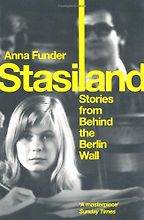
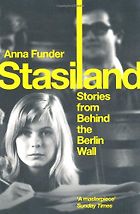
Then let’s talk about Anna Funder and Stasiland. Funder is very much an outsider, in as much as she comes from Australia, but writes this in-depth, immersive narrative about those who have worked for the Stasi, and tried to rebel. She met them after placing an advert in a newspaper. What is it about this book that marks it out from other books on the topic?
When Anna Funder’s book came out there hadn’t been that much written about the Stasi. When it did I felt this massive professional envy, that there was this incredible story – and often they are, these incredible stories – hiding in plain sight. It just takes somebody smart enough, like Funder clearly was, to see it and get out there and do the work.
At the beginning of the book, she’s working as a researcher at a TV company in Berlin, and she’s always saying: ‘We should do some stuff on the Stasi.’ And they say, ‘No one’s interested in the Stasi.’ I think there’s always the temptation, when you look at stories from recent history, because it’s recent history, to think it’s boring or irrelevant – it somehow doesn’t count as ‘history’ yet.
What definitely informed a lot of my work after reading Stasiland was her evenhanded approach to the subject. I was brought up with this straightforward story that said the capitalists are the good guys; the Communists are the bad guys. There’s a lot of truth to that, of course – look at the hundred million people killed under Communism. But then there’s a sequence in Stasiland where she comes across these people, I think they’re homeless, and they’re drunk. She talks to them. They start saying: ‘We wish it had never happened. We wish the wall was still up and Communism was still here.’ She’s asks: ‘Why?’ They say, ‘There weren’t any homeless people under Communism. Everybody had a job, everybody had a home.’
“The story that you’ve been brought up with is only part of the truth”
It’s that amazing moment of: wow, there’s another side to this story. Those are the bits in narrative nonfiction that I really adore. And of course Communism was in most ways a terrible thing. But they weren’t bad guys in that cartoon, two-dimensional, rubbing their hands together with evil delight on their faces way that we’re too often told about. They had a dream for the world that was amazing: we’re going to get rid of inequality! We’re going to get rid of unfair hierarchy! Everyone is going to work together and be the same, and earn the same, and everyone is going to have a place to live, everyone is going to have a job, everyone is going to have a great school to go to!
It was a disaster, taking many more innocent lives than the Nazis did, but we’re so used to being brought up with these bloody cartoon characters that it’s a shock when you hear the truth. This is what nonfiction writing should be. It should be having the courage to give perspectives that make us uncomfortable and tell us, actually, the story that you’ve been brought up with is only part of the truth.
Can you tell me about some of the people she meets?
One of my favourites was Hagen Koch, who actually mapped out the Berlin Wall. She tells the story of how he, an incredibly loyal member of the German Communist regime, started to rebel against them when they start meddling with his marriage.
The stories of people having big reversals of belief were fascinating. But also, his defence of the war – he said it was a good thing, because ‘we were a nation under attack.’ You see that narrative repeated in Israel. I’m sure lots of Trumps supporters would see that idea: we’re a country under attack from Mexico. I’m not making any comment about the right or wrongness of those arguments. It’s just interesting to see those same arguments cropping up again, and again, and again.
What Stasiland does really well is it shows that these aren’t just arguments. That these people believed these views to the roots of their souls. They absolutely believed that this was the right thing to do, that they were a nation under attack, that they had to protect themselves. I think that really informed The Heretics. The thesis that emerged in The Heretics was that we live our lives very much as stories. The human brain is a storyteller. We are the heroes of our own story. We like to think we’re morally good characters, and we like to think that everything that we believe is true. So we rearrange the ‘facts’ of the world in such a way that flatters our sense of personal heroism. I do that, you do that, that’s how the brain works, if you’re mentally healthy. So we’re all prejudiced, and we’re all biased, we’re all partial and partisan, and we find it very, very hard to truly understand the stories of the people on the other side of the window.
I think Anna Funder understands this very well and I’d love to see more of her kind of work in journalism generally. We don’t get enough, especially in our current moral outrage phase, when major news organisations are reliant on the generation of moral outrage to pay their bills. To me, it’s corrupted the form in a really unpleasant way. The economics of journalism these days means that writers have to hit those outrage buttons, because outrage means clicks and clicks mean keeping your job.
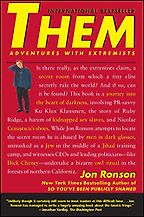
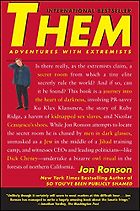
Absolutely. I think a lot of these stories are based on the writer purposefully, wilfully, refusing to see what has driven another person to behave in a certain way. Maybe that brings us to Jon Ronson. In Them: Adventures With Extremists (2001), he invested a great deal of time hanging out with people who many would describe as delusional. I suppose he’s also trying to find out what drives them. Is that what attracted you to this book?
The first Jon Ronson piece I ever read was the Guardian Weekend’s excerpt of Them, which was his story about the Bilderberg Group, a shadowy organisation that some people think rules the world. There’s a very comic scene in which there’s this guy called Big Jim Tucker, who’s made it his life mission to expose the Bilderberg group. Jon Ronson thinks this guy is a nutter and, reading it, I assumed the Bilderberg group was just some mad conspiratorial fantasy. They go to Portugal together, to this luxury hotel where Tucker thinks they’re meeting, and it suddenly emerges that there is indeed a high level secret meeting happening the next day. They’re ordered to leave and, as they drive away, Ronson realises they’re being followed. He rings up the British Embassy, he says: ‘I’m a humorous journalist out of my depth!’ It turned out the Bilderberg group were real. It was the most hilarious piece of journalism that I’d come across and it was gripping too. I’d only been a writer, professionally, for perhaps a year and I remember feeling this enormous sense of professional horror: how the hell did he do this?
One Jon Ronson piece that has really wedged itself in my own memory is his article about a foiled school shooting plot in North Pole, Alaska, a Christmas theme town where everyone poses as elves, replying to letters addressed to Santa. The whole set up was so unnerving and weird, like an episode of Twin Peaks.
It’s interesting that he never saw eye to eye with AA Gill, I don’t think, who is another big hero of mine. Ronson is almost like the yin to AA Gill’s yang. Gill was a beautiful prose stylist, he was an absolute poet, there was no one to touch him. But he couldn’t tell a story. He didn’t have to, because the quality of his prose and his skill at detail and thoughtful observation were such that you were just carried through to the end. Whereas Ronson is the opposite.
I can’t think of a writer who uses more simplistic prose and yet he’s got what Gill never had, which is this absolute genius for storytelling. He has this magic thing, where he can write a paragraph and you’re in the story. You just inhale it. I’ve been lucky enough to have met Jon once or twice. I interviewed him when The Men Who Stare at Goats came out, and I asked him to give me some advice as a then young writer. He said: “Brevity.” I thought, “Oh, that’s quite disappointing advice.”’ It took me a few years to realise he was right. Not only was it good advice, but it was exactly the advice I needed. It’s also the advice I still haven’t managed to absorb – I’m always getting sidetracked in my writing.
Are you ever in danger, as a writer making efforts to understand someone with fringe views, that you become convinced yourself? Have you ever been brought around to the views of anyone you’ve interviewed?
There have been lots of times where I’ve been left thinking, ‘Oh, I was wrong about that, totally.’ My most recent story was about the science behind Shaken Baby Syndrome. I pitched and perceived it was a piece about how the scientists who are sceptical of SBS diagnoses were being unfairly persecuted, and the police and prosecution were acting in bad faith, locking away all these innocent parents. But I changed my mind about much of that. Clearly innocent parents have been through hell, but the arguments put to me by the proponents of SBS were also extremely compelling. It’s only in doing the reporting that I realise why both sides are in possession of a chunk of the truth, which is why the whole area is in the mess that it’s in.
Support Five Books
Five Books interviews are expensive to produce. If you're enjoying this interview, please support us by donating a small amount.
But I think the biggest journey, actually, was in my first book, which I don’t talk about much anymore. It was about ghosts. I wrote it when I was in my twenties, and you can tell I was a keen young pup when you read it. Having been a lifelong atheist, this book begins with me hanging out with this guy called Lou Gentile. In the day he’s a heating engineer, and at nights he’s a demonologist. I thought this was hilarious and it was going to be a straightforward piss-take. But actually, it scared the shit out of me. Really. Everything he said was going to happen, happened. When I finally came back to my hotel I literally couldn’t sleep. That led to this year-long investigation, trying to find out whether ghosts exist. Then, that book led naturally to The Heretics, which was a deepening of the general investigation about human irrationality.
“By day he was a heating engineer, and by night he was a demonologist”
Since writing The Heretics, I understand much more about how the mind and brain work. So I’m much more sceptical about my ghostly journey now than I was when I wrote that first book. But I am still of the view that there are events that have happened, which science hasn’t yet properly explained. I think there will be an explanation for them, of course, but I still like to think that there is a bit of mystery out there about human existence. That was a big change for me. I wasn’t expecting to write that book at all.
You said you are more sceptical now. One thing that strikes me about Jon Ronson’s work in particular, is the open-mindedness that he appears to approach his subjects with. He comes from, or at least he writes it as though he’s coming from, a place of naivety. Do you think that’s a useful tool?
Definitely. I hope I’m not misremembering him, but I’m sure he has written somewhere that he deliberately doesn’t do a lot of research before he goes into a situation, because he wants to capture those moments of surprise.
That’s interesting, because I remember AA Gill said exactly the same about his travel writing, which I love.
That’s right, at the beginning of his collection AA Gill is Away. I do the same thing too. Because it’s narrative nonfiction, you want to go there and say to the person you’re meeting: ‘What’s going on?’ and, ‘Who’s he?’ and have that conversation there on the page, in the presence of the reader. You’re delivering the essential information that the reader needs, but in story form, rather than in that distant journalistic form of the newsman or the newswoman. For me, that’s much more immersive.
Get the weekly Five Books newsletter
For example, when I went to South Sudan: it was a war zone. I remember saying to World Vision, the people who were looking after me: ‘What’s going on? Who’s in charge?’ They looked at me as if I was an idiot, ‘What kind of journalist is this? How does he not know this?’ They didn’t get it, obviously. But those questions wound up being the opening scene of the piece: me landing at the airport saying, ‘What’s going on?’ So maybe that’s my advice. Keep the sense of unknowing.
Five Books aims to keep its book recommendations and interviews up to date. If you are the interviewee and would like to update your choice of books (or even just what you say about them) please email us at [email protected]
Will Storr is an award-winning journalist and author. He is the author of four critically acclaimed books, including Selfie: How We Became So Self-Obsessed and What It's Doing to Us (2017), and teaches popular journalism and storytelling classes in London at Guardian Masterclasses and The Faber Academy.
Will Storr is an award-winning journalist and author. He is the author of four critically acclaimed books, including Selfie: How We Became So Self-Obsessed and What It's Doing to Us (2017), and teaches popular journalism and storytelling classes in London at Guardian Masterclasses and The Faber Academy.