Summer is hotting up already, and I’m looking for something new and good to read. What are the new novels that should be on my radar this season?
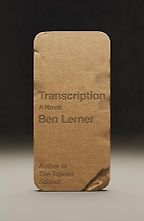
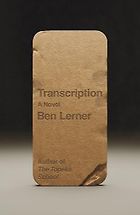
Well, the book that seems to have been on everyone’s lips is Ben Lerner’s latest novel, Transcription. Or perhaps it’s better to describe it as a novella; either way, it’s a slender book, “formally unstable”—as the New Yorker has it—that has made a big impact in the short time it has been out.
Interesting, tell me more about Ben Lerner’s Transcription.
Well, any new work by Lerner is highly anticipated. I, personally, love his first novel, Leaving the Atocha Station, and think often about his description of (mis)understanding a conversation held in Spanish, the many possible branching meanings of the sentences unfurling in his head. His follow-ups 10:04 and The Topeka School met with widespread adulation. (He’s also a poet, with four published collections, and has published a work of criticism called The Hatred of Poetry, in which he, ultimately, defends the form.)
Transcription features a Ben Lerner-like figure, who travels to Providence, Rhode Island, to interview a great poet and former mentor of his own. Shortly before the interview, which seems likely to be the ageing writer’s last, the protagonist breaks his phone, which is his only way of recording audio, and finds himself unable to explain the problem to his subject. They launch, then, into a long and unusually revealing conversation, which the interviewer cannot faithfully set down. The fallout from this conversation, or rather, his reconstruction of it, is revisited throughout the book.
Transcription has met, almost invariably, with rave reviews and is that rare beast: a slippery experimental novel that breaks into the bestseller lists. It is, declares the Guardian, an “intricate, uncanny, sometimes breathtakingly realistic” exploration of memory and connection. Out now.
Very interesting. Any other major new releases that I should be looking out for?
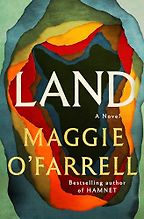
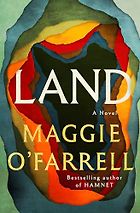
Maggie O’Farrell (Hamnet, The Marriage Portrait) has a new novel out, Land, which is set in 19th-century Ireland, as cartographers from Britain’s Ordnance Survey are working to re-map the whole island in the wake of terrible population collapse. Land was reportedly inspired by her discovery that her own great-great-grandfather made maps for the British around the time of the Great Famine, during which more than a million died.
“They were doing revisions to the second version of the map of Ireland – and it’s obvious why those revisions were needed. Because this huge cataclysm had swept through the country,” she told the BBC. “Whole villages had been wiped out, estates were redrawn and so many people had been evicted, it was necessary to do those revisions. But I couldn’t really get my head around what it must have been like doing that work, being someone who’d lived through it.” It is, she has said, her most political novel, and it has already been optioned by the same producer who brought Hamnet to cinema. Out 2 June.
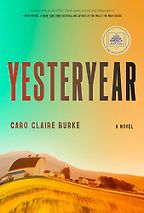
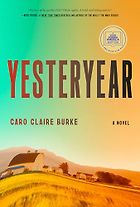
Another summer 2026 novel destined for the screen is Caro Claire Burke’s explosive debut Yesteryear, a speculative thriller in which a glamorous ‘trad wife’ influencer (the self-described “manic pixie American dreamgirl of this nation’s deepest, darkest fantasies”) apparently wakes up in 1855, and is forced to live for real the hard-knock pioneer lifestyle she has been romanticising for her millions of followers.
Yesteryear has already been, argues The Atlantic, “an unequivocal smash”—selling in the wagon-loads, and is certainly “the most talked-about novel of 2026 so far.” A Hollywood adaptation is already well underway, starring and produced by Anne Hathaway after what has been described as “a competitive bidding war.”
“Natalie is an electric antiheroine,” says the New York Times, and it comes to a “dizzying conclusion” after a twist you won’t see coming. If you’re looking for a book to speed through on a sun lounger this summer, this is it.
Brilliant. Any other highlights among the newly released novels?
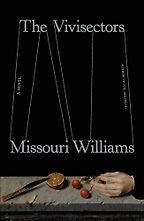
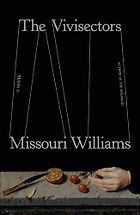
Missouri Williams, author of the macabre but highly acclaimed post-apocalyptic novel The Doloriad, has just released her second book, The Vivisectors, a Ballardian vision in which a crumbling university town (not unlike Oxford or Cambridge, say) has been overrun by vegetation: “dripping with wisteria”, the city is dense with the “stink of a distant magnolia.”
Alienated Agathe, a professor’s assistant, reckons with the horrifying consequences of her mother’s suicide attempt and falls for a charismatic young academic—“so handsome that he was repulsive; so perfect that he made you feel sick”—currently facing cancellation following many ill-advised intra-department affairs. If you like the grotesquery of Ottessa Moshfegh, or the surreal allegories of Sophie Mackintosh, then this is likely a book for you. Out now.
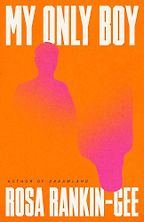
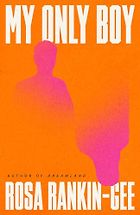
And I enjoyed Rosa Rankin Gee’s newest novel, My Only Boy, which is out now in the UK. We interviewed her about the best near-future dystopias following the publication of her previous book, Dreamland, which is shortly to be adapted into a six-part BBC drama. My Only Boy is also technically a near-future dystopia, albeit one that already feels ominously realistic, featuring as it does a coalition government dominated by a far-right, Nigel Farage-like figure, and a capital roasting through an intense heatwave.
In My Only Boy, we meet Elle, a disaster management specialist for a rapidly-expanding tech firm, as she falls suddenly and unexpectedly for a man she meets at a book launch. But this new love is beset by troubles: both party identifies as gay, and neither is ready to renounce that. Throughout, Elle’s morally bankrupt boss goads her to ever-greater levels of corruption as the company’s IPO approaches. Will the country collapse before they can cash out? It’s a thumping, state-of-the-nation thriller with a complex romance at its heart.
What new novels are you looking forward to this summer? Get in touch by email or social media to let us know.
May 27, 2026. Updated: May 28, 2026
Five Books aims to keep its book recommendations and interviews up to date. If you are the interviewee and would like to update your choice of books (or even just what you say about them) please email us at [email protected]
Five Books interviews are expensive to produce. If you've enjoyed this interview, please support us by donating a small amount.