Since cuneiform symbols were first used on clay tablets 5,000 years ago, humans have been recording not only information, but also stories. Some of the oldest writings were works of literature that speak to us across the millennia and continue to be published as books today. Five Books contributing editor Tuva Kahrs brings you five of the oldest books that have made it all the way from clay tablet or papyrus scroll to printed edition or e-book, influencing countless generations of readers and writers.
By way of introduction, can you talk a bit about the earliest known writing and what the oldest books were made of, if we can call them books?
The earliest writing is thought to have been for accounting purposes. When the Mesopotamian economy grew around 3500 BCE, it became useful to note down symbols to keep track of large quantities of commodities such as barley. Poems and stories, meanwhile, would have been recited or performed as songs or oral storytelling.
If we are talking about the earliest literary writing, that was in cuneiform script, with its distinctive wedge-shaped marks that — like the accounting symbols before them — were pressed into clay using a reed stylus. The language of the oldest literature is Sumerian, and geographically speaking we are still in Mesopotamia, in what is now southern Iraq.
Other ancient writing includes hieroglyphs carved into limestone stele and drawn on fragile papyrus scrolls several metres long, text painted onto pottery and animal skin, and Chinese characters inscribed on animal bone and turtle shell. Wooden writing tablets have a long history, and were especially handy when coated with wax, which made them reusable; you could scratch into the wax with a stylus and then erase it. When bound together, wax tablets are reminiscent of what we might think of as a notebook. Closer to books as we know them, there were eventually booklets of bound papyrus leaves and manuscripts of leather parchment. One of the oldest bound books in the world, thought to date from the 7th century BCE, is a tiny volume of six sheets of 24-carat gold engraved with Etruscan writing, found in what is now Bulgaria.
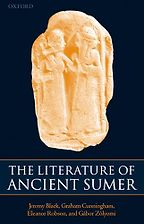
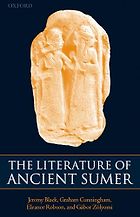
Your first book recommendation is The Literature of Ancient Sumer. Can you introduce it, please?
This book, published in 2004, is a fascinating anthology which grew out of a project called the Electronic Text Corpus of Sumerian Literature, based at the Oriental Institute of the University of Oxford. Although some of the compositions in it were probably first recited or sung, the translators have not tried too hard to be poetic, and the English is very readable. Short, informative prefaces to the texts make this an extremely accessible introduction to the world’s most ancient literature.
The chapter that I want to highlight in this book is the Keš temple hymn, because it is one of the very oldest literary works known to us. There are fragmentary sources from around 2500 BCE, and — unlike much other ancient literature — it seems to have changed very little over time. It is a hymn to the temple of Nintud, the birth goddess, divided into eight ‘houses’, or verses, each ending with rhetorical questions extolling the greatness of Keš, Nintud, and her warrior son Ašgi. The concluding lines repeat the unsettling phrase “draw near, man… but do not draw near!” stressing the awesome power of the temple and the divine presence within.
There is also a later poem to Keš temple in this anthology, attributed to Enheduana — the earliest named author — and hymns in her name to the magnificent Inana, described as a supreme deity who makes lesser gods “tremble like a solitary reed”.
The sheer variety of genres and topics in the oldest literature is a joy. Sumerian was used to record everything from sales deeds, court documents and medical texts to narrative myths, heroic tales, sorrowful laments, and hymns of extravagant praise. There is also ‘wisdom literature’ such as proverbs, animal fables and instructions; this book features The Instructions of Šuruppag, which is of a similar ancient vintage to the Keš temple hymn. Disputations were also recorded, some of which are like early rap-battles, with taunts and insults flying back and forth, as in The Debate Between Bird and Fish. Verses about Gilgamesh and The Flood Story are especially noteworthy because of their influence on later writing. Some chapters are intriguing as windows onto a very different time, but many still resonate with us simply as beautiful literature.
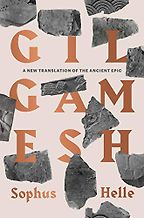
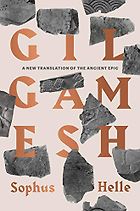
You mentioned Gilgamesh, which is perhaps the most famous of the oldest books. Tell us about it, please.
Gilgamesh is an irresistible epic poem that spans the ages and continues to speak to readers in different ways. It is thought to be based on a legendary king of Uruk (today known as Warka, in Iraq) who ruled in the first half of the 3rd millennium BCE. The Standard Babylonian full length version that we find in translation in bookshops and libraries nowadays predates the Iliad and the Odyssey by a few centuries, but there are older versions, and the earliest surviving poems about Gilgamesh would have been performed as standalone stories far earlier, over four thousand years ago.
It is no wonder that this tale still resonates with readers today. It tells us so much about being human — about love and loss, our fear of death, and search for meaning. Gilgamesh starts out as a magnificent but tyrannical ruler, a demigod with superhuman strength, great to have in battle but no protector of the people. The gods send the wild man Enkidu as a companion for Gilgamesh, and they become inseparable. Full of energy, they embark on youthful adventures together, but their arrogance leads to Enkidu’s death. Destroyed by grief, Gilgamesh sets out on a quest to learn the secret of life and death from Uta-napishti, who was made immortal after surviving the Flood. The quest is a failure, but Gilgamesh comes back to Uruk with a different understanding of kingship. His restlessness exhausted, what he now seeks is good advice and wisdom. Of course he does find a kind of immortality, by writing his story on a slab of stone.
What is so exciting with this ancient epic is that the story continues to evolve, not only because we retell and reinterpret it all the time, but because new fragments turn up from time to time, enabling gaps to be filled and lines to be added.
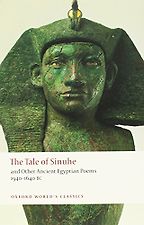
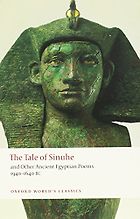
Next we have The Tale of Sinuhe. What is it about?
The Tale of Sinuhe, which was composed around 1875-1850 BCE, is the fictional story of an official’s flight from Egypt, his life in exile, and return in old age. It is written as if in the tradition of an autobiography for his tomb. Many copies have been found, and it is thought to have been a very popular work of literature in ancient Egypt. In today’s globalised world, the themes of culture, identity and belonging are perhaps what resonate most with this story.
What happens is that our narrator flees in a moment of panic when he overhears the news that the king is dead. It is not explicit, but we assume the king has been assassinated and that a period of chaos is likely to ensue. Sinuhe nearly dies of thirst, is rescued by nomads, and goes on to make a successful new life for himself in exile, all the while longing to return to Egypt but fearing that he will be punished as a defector.
In the end, Sinuhe is welcomed back to the Egyptian court after admitting that his flight was probably not divine intervention but an act of his own irrational heart, and he is given a burial in the royal enclosure around the pyramid of Senwosret I. After an extraordinary journey he has regained his true identity, reached his final resting place, and can now speak to us from his tomb.
This book is subtitled ‘and Other Ancient Egyptian Poems 1940-1640 BC’, and there are other intriguing chapters, among them The Tale of the Shipwrecked Sailor and The Dialogue of a Man and his Soul. The Tale of the Shipwrecked Sailor is, at least in part, also about a person’s journey through life. Set within a frame tale of a voyage interrupted by disasters, the storyteller speaks of our hope of achieving success in life before making landfall in death, and counsels putting on a brave face and enduring without despair. In an unexpected twist, the listener scoffs at this, asking what is the point — if someone is doomed — of hoping for a happy ending? In the internal Dialogue, the living man extols life after death, while his soul encourages him to think more positively about this life.
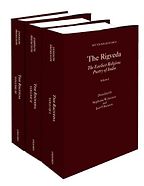
Let’s move on to the Rigveda, the earliest composition in the Hindu tradition.
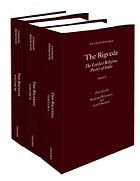
One of the four Vedas, the Rigveda is the oldest Sanskrit text. Over time, it has come to be celebrated not only as a religious text, but as finely crafted literature. It is a rich and unique work containing over a thousand hymns to deities including Agni, the divine embodiment of the ritual fire; Indra with his mythology of great victories over enemies both mortal and divine; and Ushas, the divine beauty of dawn. There are also hymns to ritual elements, as well as more unexpected objects of praise (anyone who has been to India in the monsoon will appreciate the hymn to frogs). Timeless human concerns also get their due, as in the wedding hymn and the gambler’s lament.
Much of the Rigveda is enigmatic, with a strong belief in the power of the word to make the ritual acts effective. There are hymns that meditate on the mysteries of the cosmos and the wonders of the world, that reflect on the relationship between humans and the divine, and more intimate expressions of deep devotion. Readers get a sense of a search for a balance between this life and the afterlife.
With all the oldest books, it is difficult to date their origin because they would first have been transmitted orally. This is especially the case with the Rigveda, which was composed to be recited in rituals and transmitted entirely orally for a very long time. A final collection and redaction probably took place around 1000 BCE. Over time, the text was committed to writing, but the Rigveda is still carefully memorised and recited by Vedic priests today.
Stephanie Jamison and Joel Brereton worked for decades to publish a magnificent three-volume English translation in 2014. Alternatively, you could go for their The Rigveda: A Guide to read more about it, and/or Wendy Doniger’s 1981 translation The Rig Veda, which has a selection of 108 of the hymns.
The Vedic Sanskrit of the Rigveda is linguistically close to Avestan, the Old Iranian language of the earliest sacred texts of Zoroastrianism. With roots in a long Indo-European poetic tradition, the Rigveda and the Gathasof Old Avestan mirror each other both in age and style, and the Gathas are also well worth exploring.
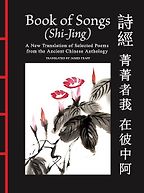
We have come to your final pick of the oldest books, the Book of Songs or Shijing. What can you tell us about it?
Although it is among the oldest books in the world, this collection of poems is very easy for readers to enjoy today. With lyrical simplicity and a focus on inner feelings and experiences, it is relatable across time and culture. Shijing has been incredibly influential in East Asia, including on Confucius and his followers, and even today most Chinese probably know some of the poems off by heart.
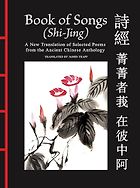
Variously translated as The Book of Songs, The Odes, and The Classic of Poetry, Shijing consists of around three hundred poems thought to date from the 11th to the 7th century BCE, with the eulogies and ballads being the oldest. There are odes of celebration and hymns of praise, formal verses about events at the Zhou court, dynastic legends, warriors and battles, feasting, friendship, and lamentations. Nature is an integral part of the Book of Songs, and we get a sense of the importance of the agricultural calendar and seasonal celebrations. The literary versions of folksongs, in particular, with universal themes such as love and longing, resonate as much now as they did when they were first sung. Many of the poems are visually very striking, and the images often feel surprisingly fresh.
If you want to read the whole collection there is Arthur Waley’s version from 1937, but James Trapp’s translation of 32 selected poems is a very attractive option. It was published in a beautiful gift edition in 2021, with the Chinese characters on one page and the English translation opposite. In the preface he writes: “The more you read the verses of the whole work, the more you realize how unchanging the preoccupations of humans are”.
February 8, 2026. Updated: April 10, 2026
Five Books aims to keep its book recommendations and interviews up to date. If you are the interviewee and would like to update your choice of books (or even just what you say about them) please email us at [email protected]
Tuva is a contributing editor and Children’s Editor at Five Books. She has a degree in Oriental Studies from Oxford University, where she specialised in classical Japanese poetry, and a Master's in international relations. She has spent two decades in Asia and hosts a Chinese literature book club. As well as interviews with authors and experts here, she brings you her own curated lists here, and her Children’s Editor’s picks can be found here.
Tuva is a contributing editor and Children’s Editor at Five Books. She has a degree in Oriental Studies from Oxford University, where she specialised in classical Japanese poetry, and a Master's in international relations. She has spent two decades in Asia and hosts a Chinese literature book club. As well as interviews with authors and experts here, she brings you her own curated lists here, and her Children’s Editor’s picks can be found here.