Thanks for joining us to discuss the shortlist for the 2026 Women’s Prize for Fiction. Perhaps you could start us off by reflecting on what the judges have been seeking to highlight or reward?
The Women’s Prize for Fiction is all about celebrating and championing women’s voices, women’s storytelling, and how women’s storytelling can change the world.
I have always believed that stories are the most powerful agent of change, and that women have been woefully left out of many of these stories over the years. The Women’s Prize aims to change that, and to shine a spotlight on the stories of women from all around the world, in all different genres. The Women’s Prize is trying to change the world by putting women’s voices, experiences, and what they have to say, into the world in a format that is so easily consumable that people won’t even feel like anything is actually changing. I think this is radically important.
How did the judging process work?
Well, my first port of call was to cry profusely at just how many books I and my fellow judges had to get through. We had a very supportive group chat that has cheered us all on and got us to the end of our reading, because it is both an incredible honour to be a judge for the Women’s Prize and an almost insurmountable amount of work. I think we had to read three books a week to hit our deadline—as well as our jobs and lives and our own writing and all the other things we do. So, yes, an intense amount of reading, but it has been a pretty remarkable experience.
The Women’s Prize is for women writing in English globally, within a year-long timeframe. Every publisher or imprint is allowed to submit two books, and judges have the opportunity to call in books that haven’t been submitted. This year, each and every one of us called in books. We thought: let’s read some more! That’s how the process begins.
Then the five judges—myself, Julia Gillard, Mona Arshi, Cariad Lloyd and Annie Macmanus—split the reading between us, so that every book is read by two judges so that a breadth of experience comes to each book. We were paired with different judges for different books. This way we can cast a much wider net, which is what we want. There have been a lot of spreadsheets!
Then we sat in a room and debated for seven hours to decide the initial longlist, then we whittled it down into this shortlist.
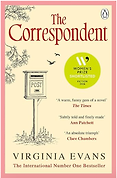
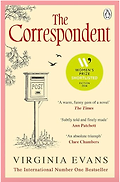
It must have brought you an incredible overview of the fiction being published today. Let’s talk first about the winner of the 2026 Women’s Prize for Fiction: Virginia Evans’ The Correspondent. It’s an epistolary novel—and has been a true word-of-mouth hit.
Yes! The Correspondent is so gorgeous. If you want to feel warm and lovely, The Correspondent is absolutely the book to read. I adored it. It is told entirely through letters between Sybil, the protagonist, and whoever she may be writing to. When I first heard about it, I didn’t really like the idea—but when I read it, I realised it was a brilliant way to tell a story. At some point, you realise Sybil might not be as reliable a narrator as you first believed.
Sybil is an older woman, now retired. She used to work with a judge, as his clerk. She’s brilliant, but lived in a time in which maybe the opportunity to become a high court judge was not open to her, and she’s reflecting on her life. Warmth is the word I keep using to describe it. It is so warm, so easy to read, you just fly through those pages.
Virginia Evans has done a glorious job at telling a story that has pace and depth and makes you want to keep reading. It’s the kind of book that will keep you up until 3 o’clock in the morning. It’s a real skill to keep a reader engaged like that, especially in this economy! And it’s a skill that is often undervalued in literature.
It’s gorgeously written, and just makes you feel great.
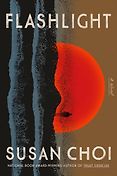
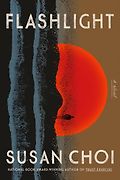
Now let me guide us through the shortlisted novels one by one, starting with Susan Choi’s Flashlight, which first featured on our site when it appeared on the 2025 Booker shortlist Since then it was also shortlisted for the Orwell Prize for political fiction.
Yes, it’s done incredibly well, and that’s a testament to Susan Choi’s skill as a writer. This is someone so good at their craft, you can sense it as you read. The judges were all so impressed by the breadth of this novel: you go from the United States to Japan to Korea, through so many different characters. It spans so many years. You really feel the weight of what this family has gone through.
I don’t want to give any spoilers, but when you get towards the end, you unlock an entire other set of characters that have gone through a similar ordeal, and it was so admirable how Susan Choi tied that all together into a story.
We all learned a lot through this novel. Well, Julia Gillard—as former Prime Minister of Australia—already had remarkable knowledge of the history of Korean kidnapping Korean-born citizens living in Japan, but I really felt like I personally learned a part of history that I hadn’t engaged with much. Susan Choi does this in a way that is so entertaining that I wanted to keep turning the page to find out what was going to happen next.
I loved her previous book, Trust Exercise, which is a very claustrophobic story set in an American performing arts school. But this is a completely different beast. Its scope is enormous.
Yes, it reminded me of those ancient Greek classics, the sprawling Iliad or Odyssey, those massive tales. It’s a very weighty book, and I don’t just mean thick. I love a chunky book, but it’s more about the miles and years and people she moves through. It’s a remarkable feat.
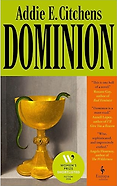
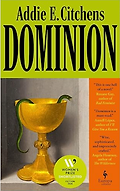
I agree. Next we come to Addie E. Citchens’s debut novel, Dominion. Am I pronouncing her name correctly?
Say ‘Citchens’ as in ‘kitchens.’ Dominion is a real punch in the throat. It will leave you feeling many, many things. It’s exquisitely told.
Dominion is about two women in the fictional town of Dominion, Mississippi: the pastor’s wife and the woman with the pastor’s son. It’s also about power, who gets power, and questions the power we give to men in religious positions of power. Who props those men up? Who keeps these men going? We see the pastor’s wife helping with the speeches he conducts from the pulpit every Sunday, and you start to wonder how much of the writing is done by him. It’s a fascinating look at the burden placed on women to uphold men, especially in religious communities, and especially when those communities are fraught with difficulties—whether that be poverty, race relations, whatever it may be.
Some people will find it a hard book to read. It’s emotionally visceral and deals with big, uncomfortable topics. But what I will say is that Addie E. Citchen’s writing is so exquisite that she will bring you through difficult things feeling like you have been somehow changed by them and are still able to go on. The ending, I think, is perfect. It left with with a sense of hope that women will prevail. It’s a fascinating look at women and how they prop men up.
This might depend on the judging panel, but would you say you are looking for books that foreground women’s issues?
No, not at all. There’s no bias towards books that talk about feminism and power and household labour. The Women’s Prize doesn’t focus on that specifically, it’s about women telling brilliant stories, period.
There were so many stories that we loved – stories about vampires and zombies, or ordinary days in the life – that didn’t deal with any of those stereotypical issues that we might talk about in progressive circles. I don’t think Flashlight does that, for example. It just so happens that this book does.
The criteria that we judge the Women’s Prize on are: excellence, originality and accessibility. We do want something a mass audience would want to read. There are some literary prizes that get quite intellectual about things, and the books they pick are not always the books your everyday reader will pick up.
I think the Women’s Prize does keep a foot in both camps. The shortlists are not purely popular fiction, but there is a popular element—you’re looking for a balance?
Yes. There’s no point in us sitting in a room being elitist about literature that no one is going to read. Or, sure, maybe someone is going to read it, but not the mass market. We are looking for stories that could be read by everyone: they are the ones that will change the world.
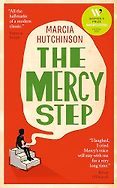
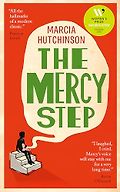
Thank you. Let me keep us moving. Next we have Marcia Hutchinson’s The Mercy Step, set in 1960s England. Tell us more.
The Mercy Step is told through the eyes of Mercy, a little girl. The book starts when Mercy is in the womb, yet to be born—which sounds baffling, but is exquisitely original and so brilliant. From the first page, it kind of hits you in the face and you think: Pay attention! This is important!
Mercy’s family live in Birmingham. They came over from the Caribbean, and are dealing with the difficulties of being immigrants in Britain, part of the Windrush Generation. Mercy is always trying to look out for her mum, always trying to call her mum back to her.
The book goes up until Mercy is about eleven. If anyone had told me that, I would have said I didn’t want to read a child’s perspective. But Marcia Hutchinson is a genius, because you don’t ever feel like you are in a juvenile book. You feel you are experiencing the world from a very different angle. It’s just a brilliant story.
Marcia has written in her Substack that she had 54 rejections from editors, which is baffling to me because it is so extraordinary, and beautifully written. It’s so breathtakingly original that myself and my fellow judges were all on the same page about it from the get-go.
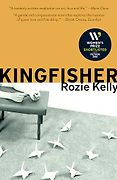
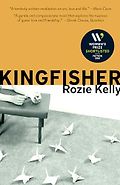
I think this is why prize shortlists are so useful. They bring great books to attention where they might have flown under the radar. Some of the books on this shortlist were released to great fanfare; others arrived more quietly. Could we talk next about Rozie Kelly’s Kingfisher? This was published by Saraband, a fairly small independent publisher.
Yes, and it is Rozie Kelly’s debut, which is remarkable. Kingfisher is about a young, queer man who falls in love with a poet. It’s an unconventional relationship for him, and he’s taken aback. The poet gets sick, and he ends up caring for her whenshe is dying.
Rozie has written this in a way that had me constantly stopping to put sticky tabs on the pages. There is real poetic lyricism to the way that she writes. I’ve read it a few times now, but even that first time I just thought: Wow.
It flips the usual power dynamic of an older man established in his career having a fling with a younger, wide-eyed ingénue. Here, it’s the woman who is older, established, celebrated, and it’s the young man who is desperate for her attention. I found it interesting how Rozie played with that dynamic. Really fascinating.
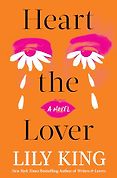
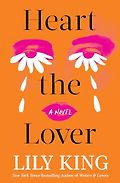
And I think that brings us to the final book that made the 2026 shortlist: Heart the Lover by Lily King. She appeared on Five Books not so very long ago, recommending literary love stories. Heart the Lover is about the very long tail of a college love triangle.
The minute I finished Heart the Lover, I sent a copy to my friend, saying: ‘You have to read this, and then we have to talk about it.’ She had been in love with someone quite religious, and Heart the Lover is about a young woman in love with a man who won’t sleep with her because of his religious views. Then she forwarded it on to another of our friends, and when she’d read it we all got on Facetime to talk about it, and the deep angst we felt for the men we loved in our university days.
It’s about that first love, how gripping it is, how it never leaves you, how it shapes who you become, and how it is always somehow laced in you. We follow our protagonist through the years, through this love that doesn’t work out, then the next love, and the triangle they are all in and how that informs who they are for the rest of their lives, even when everyone has moved on and married and had kids, become grown ups, and this is just a trifling love triangle from their college days.
Something happens in the book that brings them all back together again, and they all slot back into their roles. It’s about formative love, unrequited love, desperate love, first love. It really, really moved me. I remember reading it on holiday in Tenerife, lying by the pool trying not to cry in public. It was the very first book I had picked out of these huge boxes of books for judging.
That must have been good—to have such a strong response to a book early on in the process, so you had something to compare other books to.
Yes. Although I will say: we were all very diligent, we all had our grading systems and filing systems, our own notes about every book that we read. I knew I wanted to give every author and every book the same consideration that I hope to get myself as a writer. I know the other judges felt the same.
Interview by Cal Flyn, Deputy Editor
June 9, 2026. Updated: June 12, 2026
Five Books aims to keep its book recommendations and interviews up to date. If you are the interviewee and would like to update your choice of books (or even just what you say about them) please email us at [email protected]
Five Books interviews are expensive to produce. If you've enjoyed this interview, please support us by donating a small amount.