

Books by Andrew Graham-Dixon
Andrew Graham-Dixon is one of the leading art critics and presenters of arts television in the English-speaking world.
Andrew has presented numerous landmark documentaries on art for the BBC, including the acclaimed A History of British Art, Renaissance, and Art of Eternity. He has written a number of acclaimed books on subjects ranging from medieval painting and sculpture to the art of the present.
He has a long history of public service in the field of the visual arts, having judged the Turner Prize and the BP National Portrait Prize.

“Graham-Dixon contextualises Vermeer with terrific, vivid detail in the Netherlands of his era, particularly to radical liberal Christianity, and groups like the Remonstrants, who believed in revelation within the self in a gradual flowering of light rather than a thunderbolt from on high. Graham Dixon, with a true historian’s instinct, has brought us right back to the historical moment of his life, at a time when religion was all-encompassing and a central part of people’s life and way of living, which is immortalised by these astonishing paintings.” Read more...
The Best Historical Biographies of 2026
Roy Foster, Historian


“We really know very, very little about Caravaggio except that he had a quarrel about artichokes and killed somebody, possibly over a bet on a tennis match, or possibly over a woman. Out of this, Graham Dixon, who is a superb art historian, has made an absolute blood-and-guts, pacy book. Caravaggio was an arrogant, rebellious murderer. Graham Dixon manages to pull the tempestuous life out of the tempestuous times. This is the Rome of the popes and Machiavellian power games and the struggles of the Counter-Reformation…This book, I think, is brilliant. It reads like a thriller.” Read more...
Sue Prideaux, Biographer
Interviews with Andrew Graham-Dixon
-

1
Turner: Imagination and Reality
by Lawrence Gowing -
2
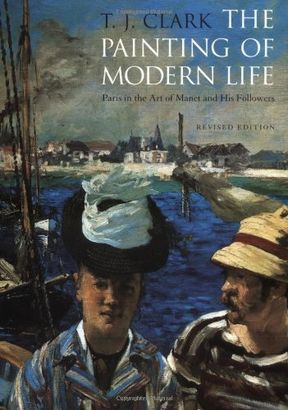
The Painting of Modern Life: Paris in the Art of Manet and His Followers
by T J Clark -
3
Literary Landscape: Turner and Constable
by Ronald Paulson -
4
Night Studio: A Memoir of Philip Guston
by Musa Mayer -
5
Neglected Genius: The Diaries of Benjamin Robert Haydon, 1808–1846
by Benjamin Robert Haydon
Andrew Graham-Dixon on His Favourite Art Books



Andrew Graham-Dixon on His Favourite Art Books
Art critic Andrew Graham-Dixon takes us through his favourite art books, one of which is the best thing he has ever read about art. He contends that Monet is a follower of Turner, reflects on how the purpose of history of art has changed, and introduces us to the diaries of an “astonishingly bad” painter which reveal him to be one of the nineteenth century’s greatest prose writers.
Interviews where books by Andrew Graham-Dixon were recommended


Five Biographies of Artists, recommended by Sue Prideaux
From the Baroque painter who killed a man in Rome during the Counter-Reformation to the surrealist artist who left Britain and died in Mexico City in 2011, award-winning biographer Sue Prideaux talks to us about her favorite biographies of artists. Her new biography of Paul Gauguin, Wild Thing, is out this week and has been longlisted for the Baillie Gifford Prize.
-
1
Maria Theresa, Empress: The Making of the Austrian Enlightenment
by Richard Bassett -
2
Crick: A Mind in Motion – from DNA to the Brain
by Matthew Cobb -
3
Vermeer: A Life Lost and Found
by Andrew Graham-Dixon -
4
The Mirror of Great Britain: A Life of James VI & I
by Clare Jackson -
5
The Brothers Grimm: A Biography
by Ann Schmiesing
The Best Historical Biographies of 2026, recommended by Roy Foster


The Best Historical Biographies of 2026, recommended by Roy Foster
The best biographies combine original research with accessible writing and a strong narrative drive, explains the historian Roy Foster, chair of the judges for the Elizabeth Longford Prize for Historical Biography. Here, he introduces us to the five “extraordinarily accomplished” books on their 2026 shortlist, including a reassessment of Austrian empress Maria Theresa and a portrait of the molecular biologist Francis Crick in the swinging 1960s.
