Before we get to the books, can you tell me a bit about the criteria for the Wolfson History Prize in general? What kind of books were you and the other judges looking for?
The general criteria are that these books should combine excellence in research with readability. Those are the two main criteria, and then, of course individual judges bring their own preferences and predilections to the table. My own being—but this is something that all the other judges share—that you want a set of books that are going to broaden our intellectual and cultural horizons.
Broadening doesn’t necessarily mean traveling far away. Some of the books that we have on the shortlist this year take us to wonderful places in space and in time, but two of the books are about Britain. One of them is about Victorian England, as seen from street level, and the other is about the African and Caribbean presence in Britain. Sometimes you don’t have to go very far to see things differently. It’s just about looking in a different way.
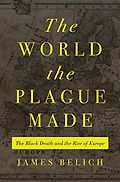
Let’s start with the most global book on the list. The World the Plague Made by James Belich is about the economic impact of the Black Death. He says in the book that where the plague struck in the mid-14th century it probably killed as much as 50 percent of the population. Will you tell me a bit about the book and why it’s on the shortlist?
This is a wonderfully ambitious book. It’s meticulously researched, which is one of the criteria for the prize. It’s also very well written, which often isn’t the case when you’re dealing with subjects like this, which are quite technical and where some of the material is quite dry. Jamie Belich has done a phenomenal amount of research and written it out in a very engaging way—or as engaging as one can be when one is talking about the Black Death.
Is he an economic historian?
No, he’s a Professor of Imperial and Global history—that’s the chair he holds here at the University of Oxford. But I think it’s in the nature of that kind of research that you have to have a good command of economic material and economic data. That is one of the other things that attracted our attention. Although it is very much centred on economic history, it’s also a book about the plague, and he discusses it at some considerable length. The book’s capacity to draw on different disciplines is something that we thought was very impressive.
Then there’s the grand sweep. With history books, sometimes you say they’re ambitious when they cover fifty or a hundred years. This is a book that starts in 1346 and makes an argument about the impact on the globe that stretches right into and up to the Industrial Revolution and beyond. This really is grand history, in the good old-fashioned sense of the term.
What he’s focusing on, in my understanding, is the Great Divergence, and finding an explanatory factor for why Europe drew ahead of Asia in the early modern period. As he says in the introduction, he’s testing out a new answer “to an old two-word question: Why Europe?”
Yes, and the reason why this is important in a wider sense is that one of the things that global history has tried to do, since its emergence, is to move away from the obsession with Europe and the idea that everything that has been important and significant in the world has been important and significant because it happened in Europe or has come from Europe.
One of the striking things about this book is that, in talking about the Great Divergence, he acknowledges that part of Europe does end up pulling ahead. But it’s not just Europe. There’s also what he calls the Muslim South—the Middle East and North Africa—and they are part of this movement too. And it’s not for any institutional or cultural reason, but simply by the arbitrary fact that those were also the places where the plague struck very hard.
To put it starkly, the argument of the book is that wherever the plague hit, these are the parts of the world that eventually benefited and prospered, and those places where the plague didn’t strike—India and China—ended up falling behind. He’s saying this is not about culture, this is not about institutions, this is not about religion—it’s the plague.
Do you think it’s a convincing argument?
He’s laid out the argument in as convincing a way as he can. If you push him—and there are places in the book where he acknowledges it—he accepts that the plague is not the only factor. What he’s really arguing, if one had to summarise it in a schematic way, is that while all these other variables mattered, the plague is the only thing that is common across the board, and therefore, the plague is the most significant factor.
“You want a set of books that are going to broaden our intellectual and cultural horizons”
The book is in four parts. I’m not a specialist in this period, but the bits that were illuminating for me were Parts Three and Four, where he’s talking about the Middle East and North Africa. Forgetting about the plague, just the way in which he demonstrates that these areas were also growing at that time, is very impressive and innovative. That’s where the major contribution of the book comes and Parts One and Two were just necessary to build that up. That’s also why it’s so long. What did they say about Schubert’s Ninth Symphony – ‘the heavenly length’? It does go on, but that’s what it takes to make and sustain this thesis.
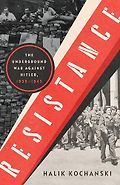
Let’s go on to the next book, which is also a long one. Resistance by Halik Kochanski is about World War II, which is often written about, but this book covers the resistance in every country that was occupied by an Axis power, so it’s about a lot of different places. I also liked that it opens with Czechoslovakia: I found it refreshing to start the story in a non-Western European country. Tell me why you liked it.
We liked it for the same reasons you did! It’s comprehensive, and that’s very important because a problem with history writing in general, but particularly with resistance, is that it tends to be written from a nation-centric point of view. Everybody wants to tell “their” story and how great they were or how terrible things were for them. That’s the framework through which most of these stories get told. Certainly, the Resistance memoir literature, which is vast, is almost all nation-centred.
But this was a pan-European movement and what she does really well is to identify first of all the commonalities. In all of these countries, when you look at underground resistance movements, similar things happened. They had clandestine literature, they collected intelligence, later on they started engaging in sabotage and armed conflict. All of this is happening at different moments and in different ways, but it is happening across Europe.
But looking at it across Europe gives you a sense that geography, too, matters. What happens in Eastern Europe is different from Western Europe. That’s the other big takeaway from the book. The Nazis, beyond a certain point in the East, simply regarded these territories as fodder. They wanted to enslave the local populations. It was an incredibly dumb strategy because one of its consequences was to render any kind of collaboration impossible. In Western Europe, the regime was different. They didn’t treat these countries in the same manner. They were brutal but not genocidal. That difference also has an impact on the kinds of resistance movements which emerged in different parts of Europe.
It’s also the remarkable feat of reading all this material in so many different languages. The book is an extraordinary achievement in that respect.
Speaking personally, I think it’s also a topical book because we’re talking about resistance at the moment. This is a book that helps us think about some of the obvious issues and also some of the awkward ones. We need to think carefully, because some of the organisations that in recent times we’ve called terrorists go on to become seen as freedom fighters. That was what was happening in Europe in the Second World War. The Nazis were calling all of these resistance organisations terrorists, and now we think of them differently.
Although it’s over 800 pages of quite dense print, I found it very readable. The writing is very accessible.
Yes, and here I can speak with a little bit more authority. A lot of it is about France, and because I’ve studied this period in detail, I know what a phenomenally complicated story it is. The French Resistance is three things: it’s Gaullism, it’s communism, and it’s the so-called internal resistance. The relationship among them is complex at any one time and over the six-year period, and at no point in the book does she put a foot wrong in writing about it. That she is able to get everything right in that way is very impressive and I am sure it’s the same for the other countries she is writing about.
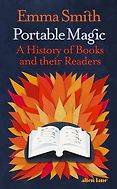
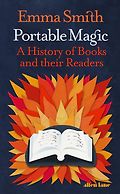
Should we talk about Portable Magic by Emma Smith now? This is a book about books and the title references the horror writer Stephen King, who in his memoir called books “a uniquely portable magic”, which I love. Why is this a Wolfson Prize-shortlisted book?
The history of books has now become, quite rightly, an important subject in its own right. Given the remit of the Wolfson Prize, books about books feature prominently in the line-up. The year that I was in contention, Richard Ovenden’s excellent work about the history of book burning was on the shortlist.
Emma Smith’s book brings a lot of pleasure. It’s very enjoyable. There are lots of juicy, tasty, and heart-warming anecdotes. We liked the way in which the stories are woven together. You’re moving around from the 12th century to the present. It’s not in a random way because there is an overall movement and sense of direction, and the sixteen chapters have particular themes to them.
You get a sense of the power of books. There’s power in a positive sense, but the Stephen King quotation is also about the potential for books to be, as Emma Smith says, sickening, disturbing and enraging. Books have that negative capacity, too. One of the chapters is about Mein Kampf. That chapter is topical because it’s all about freedom of expression, which is an important issue for us all at the moment.
This is a book that, in a very mild way, takes you to those big, important questions. I like the unassuming way in which she does that—not in a thumping-the-table, ‘this is what I think, therefore this is what we must all think’ way but opening issues up as questions to address. In fact, she doesn’t give answers. That’s what I like about her. She identifies the important things that we need to think about.
The other thing I liked was the notion of the physicality of books—what she calls “bookhood”—and the relationship that you develop with them. As we are having this conversation on Zoom, I see books behind you, you see books behind me here. We’re surrounded by them. We do all kinds of things with them: they’re like props. We live in a small flat in north Oxford which is completely overflowing and we don’t know what to do with them. We despair. That whole relationship with books is something she talks about in a very intelligent, subtle, and often touching way. For all of those reasons, we thought this book should be on the shortlist.
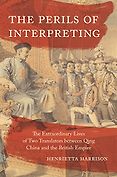
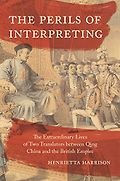
Let’s move on to Henrietta Harrison’s The Perils of Interpreting, which is about a key episode in Chinese history when, in 1793, the British envoy Lord Macartney was rebuffed by the Qianlong emperor. Tell me about this book, what it’s about, and why the judges liked it.
In a narrow sense, this is a twin biography. It’s about two translators who are actors in this big drama of the encounter between the British and Chinese empires in the late 18th and early 19th century—from the 1790s through to the Opium Wars in the late 1830s.
One of these two figures is George Staunton, who’s a child prodigy. He learns to speak Chinese when he’s very young and meets the emperor when he’s twelve years old. He must have been insufferable! He stays on in China and becomes an interpreter for the East India Company.
Then we have this remarkable character, Li Zibiao, who’s part of the Catholic tradition in China. A lot of people will discover the existence of this because there’s a general assumption that China in that period is completely inward-looking, and largely closed to the world. The fact that Li Zibiao goes to Naples, becomes a Catholic priest, and learns Latin doesn’t help his career. But at this particular moment, and in this encounter, he plays a very important role.
The slightly larger story Henrietta Harrison is telling is about the role of these two translators in mediating the encounter between these two powers that are trying to reach some kind of accommodation. It’s a wonderfully subtle book because when you look at the diplomatic history, the way in which this encounter is normally written about, it’s about clashes, about oppositions. It’s generally written in a binary way. What she’s trying to do is go beyond those oppositions and find, through these two people, the spaces where compromise and mutual understanding could be reached.
Translation is one critical way in which this could happen. She has wonderful examples. How you translate the Chinese word yi makes a huge difference: whether you’re calling the British ‘foreigners’ or ‘barbarians.’ You could translate it with either word. If you use one, it has one set of consequences; and if you do the other, it has a different set of consequences. That whole part of the book where she dwells on the skills that these interpreters bring to bear is fascinating.
In overall terms, the interpreters are not strong enough to be able to control the outcome, so, in the end, the two sides clash. But what the book implies—and she more or less says it—is that had they listened to their interpreters or taken them a bit more seriously, then the Opium Wars might not have happened in the way that they did.
When you study Chinese history, that meeting is such a caricature—the Qianlong emperor rejects the goods the British are offering as useless trinkets and that leads to the Opium Wars. But reading this book, it all comes to life. Lord Macartney spoke in Italian, which he’d learned in Italy, and then Li Zibiao translated from Italian into Chinese. All these details I found fascinating.
Also, one of the things that she digs out really impressively is the understanding that we now have of how badly this encounter went was created later on. It made me think of a more general point, which is that a lot of information we have about these landmark historical moments often come to us through understandings that we think are based on fact, but they aren’t at all. History is based on facts, but these facts are also social constructions.
The Chinese nationalists in the early 20th century absolutely had an agenda—a perfectly understandable one, which was to pump up China and bash the West—and therefore, they ended up providing this account, which more or less erased the role of more consensual approaches. That’s how history gets written.
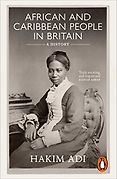
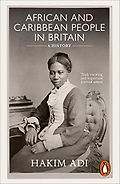
The last two books on the shortlist are very much focused on Britain. The first one is African and Caribbean People in Britain: A History, by Hakim Adi. This one is really interesting. It’s mindblowing that DNA is making that early history, which you would think was completely lost, accessible. Tell me about the book and why you liked it.
This one is taking a subject that we thought we knew a little bit about and giving it the full treatment. The classic work on this subject was written by Peter Fryer in the 1980s. It was called Staying Power, and it was a very good book. It was the first book that tried to tell the story of Black—Adi prefers to say African and Caribbean—people in Britain.
Since then, a lot more material has emerged, and Adi brings all of this new material together and also gives this panoptic view of the—I’ll say Black, just for shorthand—presence in the British Isles. It’s 10,000 years from Cheddar Man to Black Lives Matter. It’s remarkable. You see Black people here in Roman times: the Black emperor, and the Black legionaries. You see African explorers alongside Francis Drake. You see Black people here in Tudor times.
This is all pre-slavery. The Black presence before slavery is one of the many huge contributions of this book.
Adi is a specialist of Pan-Africanism and he also has fascinating things to say about that story in the 20th century and the numerous contributions that Black people have made to British institutions like the NHS.
It’s a book that is sweeping and comprehensive and, quite apart from anything else, destroys the myth, insofar as it needed to be destroyed, of white Britain—the idea that there was a point back in time when these islands were inhabited only by white people. You just can’t hold onto that view anymore, once you’ve read this book.
He opens with a dispute in the Daily Mail. It isn’t just history, it’s very much alive as a topic.
Absolutely, and he has some really good and important things to say—even though it isn’t his subject—about race. You can’t write a book like this without talking about the history of racism in Britain. He shows two things. One is that racism—you’d be surprised if it wasn’t there—turns out to have been there from the time of slavery onwards. He connects it very much to the institution of slavery. He also shows, very effectively, that racism and beliefs in racial inequality were always part of the argument used by the powerful and those elites who depended on enslavement for their success.
Five Books interviews are expensive to produce. If you're enjoying this interview, please support us by donating a small amount.
Once you get into the 18th century, however, you also start to see people mobilising against slavery. He shows that this is something that is done not only by Black people. A lot of other social groups are part of these campaigns. When you look at the late 18th and early 19th century, all the social protests that led to abolition happen partly because slaves are in revolt in the colonies (that isn’t part of his story, although he mentions it) but crucially, because of ordinary men and women. Women in particular pushed really hard, particularly in the 1820s, to get Wilberforce to embrace the immediate abolition of slavery. Wilberforce believed in gradual abolition: he thought it was something that would happen spontaneously and in the fullness of time. It’s this campaign of Black and other working men and women that makes the abolitionists in Britain finally embrace immediate abolition. That’s an important part of the story and just one example of how Black people contribute to the promotion of greater equality in Britain.
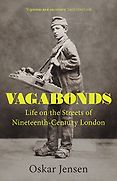
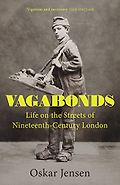
Lastly, let’s move on to Vagabonds: Life on the Streets of Nineteenth-Century London, by Oskar Jensen. Tell me what it’s about and why it’s so interesting.
What’s original about this book is that it tells us the story of Victorian London from 1780 to about 1870, but not through the voices of the people that we normally know or are familiar with, like Charles Dickens. What Jensen is trying to do in this book—and I think he pulls it off really effectively—is to do it from street level.
He tries to recapture the first-hand accounts of the beggars, the thieves, the musicians, the sex workers, the porters. There are all these occupations I didn’t even know about – road-crossing sweeper, for example; we encounter one of them, Margaret Cochrane, in the book. Unfortunately, because the material isn’t there to allow for a sustained engagement with them, you get only glimpses, but because he’s holding on to this one theme, you get a clear picture, over the aggregate of the book, of what life was like for people who were living in these precarious circumstances, like Mahomet Abraham, the blind sailor from Calcutta who begs on the streets with his dog.
What is very impressive and touching is that this is a world full of poverty, violence and arbitrariness, but people do extraordinary things as well. That’s what’s so great about this book: you see all the sides. You see what a struggle it is just to eke out an existence. Sometimes, life in the Victorian era is sugar-coated. Until recently, people were talking about Victorian values as if it was a great thing to go back to that time. This dispels that myth, but it also isn’t a book that simply looks at poor people as victims. It shows that they are capable—under certain, very limited circumstances—of doing something wonderful with their lives, even if it’s just for a fleeting instance.
What sources does he use to reconstruct those lives?
You have to jump around. There are a lot of Old Bailey trial records because, for a lot of these people, the only moments when their voices end up being heard is when they break the law. That is problematic as well, because what they’re saying isn’t necessarily what they would say if they were being interviewed. But you have to take what you’ve got.
I’m working on a book about the resistance of the slaves and there it’s the same problem. They didn’t write books. They were, for the most part, illiterate people. The few times when they appear in the records is when they carry out an insurrection, they get arrested, and then they’re interviewed before they go on trial. But what they say there doesn’t necessarily reflect what they would say in other circumstances.
The book draws from a wide range of sources, including also personal diaries and newspaper articles; this gives the text a real sense of immediacy, which is reinforced by his use of the present tense—a very effective narrative technique. Oskar Jensen has done a really comprehensive trawl of all the available material and come up with an impressive and evocative set of stories.
Interview by Sophie Roell, Editor
November 12, 2023. Updated: February 12, 2025
Five Books aims to keep its book recommendations and interviews up to date. If you are the interviewee and would like to update your choice of books (or even just what you say about them) please email us at [email protected]