

History Books
recommended by historians
Last updated: October 28, 2026




The Best Roman History Books, recommended by Ross King
To write The Shortest History of Ancient Rome, bestselling author Ross King went back to the insightful and often entertaining accounts Roman and Greek historians gave of the city’s past. He talks us through some of his favourites, from Polybius—who wrote during the Roman Republic’s heyday—to Cassius Dio, who penned his magnum opus as the Roman Empire was in its decline.
-

1
Assyria: The Rise and Fall of the World's First Empire
by Eckart Frahm -
2
In the Land of Ninkasi: A History of Beer in Ancient Mesopotamia
by Tate Paulette -
3
Weavers, Scribes, and Kings: A New History of the Ancient Near East
by Amanda Podany -
4
Ancient Mesopotamia Speaks: Highlights of the Yale Babylonian Collection
Edited by Agnete W. Lassen, Eckart Frahm, Klaus Wagensonner -
5
Enheduana: The Complete Poems of the World's First Author
by Enheduana & Sophus Helle (translator)
Books about Mesopotamia, recommended by Moudhy Al-Rashid


Books about Mesopotamia, recommended by Moudhy Al-Rashid
Mesopotamia, the fertile region between the Tigris and the Euphrates, is a hugely significant part of human history, yet has often been left out of the classical civilisations curriculum. Here, Moudhy Al-Rashid, author of Between Two Rivers: Ancient Mesopotamia and the Birth of History, recommends five recent books about Mesopotamia that shed light not only milestones of history, but on individual lives thousands of years ago.
-
1
The Diaries of Sir Alexander Cadogan, 1938-1945
by David Dilks (editor) -
2
Special Envoy to Churchill and Stalin, 1941-1946
by W. Averell Harriman with Elie Abel -
3
Vichy France: Old Guard New Order, 1940-1944
by Robert Paxton -
4
In Command of History: Churchill Fighting and Writing the Second World War
by David Reynolds -
5
The White House Papers of Harry Hopkins
by Robert E. Sherwood
World War 2 Nonfiction Books, recommended by Tim Bouverie


World War 2 Nonfiction Books, recommended by Tim Bouverie
With hindsight, it seems inevitable that the Allies would eventually defeat the Axis powers in World War II, but at the time it seemed anything but. Tim Bouverie, author of the prize-winning Allies at War: The Politics of Defeating Hitler, talks us through some of the best nonfiction books about the war and the alliances that led to Allied victory.
-
1
Inca Land: Explorations in the Highlands of Peru
by Hiram Bingham -
2
The Heights of Macchu Picchu
by Pablo Neruda & Tomas Q. Morin (translator) -
3
The Motorcycle Diaries: Notes on a Latin American Journey
by Che Guevara -
4
Machu Picchu: Unveiling the Mystery of the Incas
by Lucy C. Salazar (editor) & Richard Burger (editor) -
5
Cradle of Gold: The Story of Hiram Bingham, a Real-Life Indiana Jones, and the Search for Machu Picchu
by Christopher Heaney
The best books on Machu Picchu, recommended by Mark Rice


The best books on Machu Picchu, recommended by Mark Rice
Machu Picchu has become the symbol of Peru, but this symbol has never been straightforward. Mark Rice recommends five books that give the full picture of the iconic site: from the record by its ‘discoverer,’ to the views of Pablo Neruda and Che Guevara, right through to the latest archaeological and historical works.


The best books on Stonehenge, recommended by Susan Greaney
Stonehenge does not stand alone: it is surrounded by earlier monuments, it was built alongside a settlement and other sites, and it presides over graves and shrines from people who lived centuries and even millennia later. In modern history, it has inspired a Druidry movement, hosted a military airbase, drawn festival crowds and seen police brutality. Susan Greaney pulls out five books that tell the many stories of Stonehenge, the astonishing monument that continues to surprise us with each new excavation.
-
1
The Forgotten Highlander: An Incredible WWII Story of Survival in the Pacific
by Alistair Urquhart -
2
A War of Empires: Japan, India, Burma & Britain: 1941–45
by Robert Lyman -
3
Tales by Japanese Soldiers
by Kazuo Tamayama & John Nunneley -
4
With the Old Breed: At Peleliu and Okinawa
by E.B. Sledge -
5
Defeat into Victory
by William Slim
The best books on World War 2 in Asia, recommended by Lucy Betteridge-Dyson



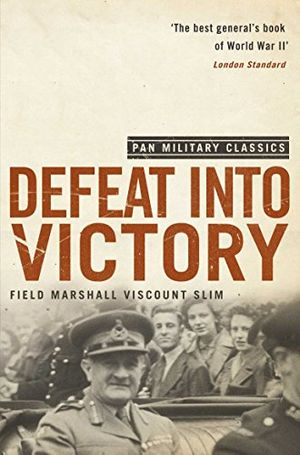
The best books on World War 2 in Asia, recommended by Lucy Betteridge-Dyson
The Allied army that ultimately won against the Japanese in Burma was one of the largest in the world, with a million men under command. Military historian Lucy Betteridge-Dyson, whose grandfather fought in the Burma campaign, talks us through the best books to understand more about it, from big-picture strategic overviews to heart-wrenching memoirs and firsthand accounts of soldiers who were there.
-
1
Columbus: And the Conquest of the Impossible
by Felipe Fernández-Armesto -
2
The Worlds of Christopher Columbus
by Carla Rahn Phillips & William D. Phillips Jr. -
3
Toward the Setting Sun: Columbus, Cabot, Vespucci, and the Race for America
by David Boyle -
4
The Catalogue of Shipwrecked Books: Young Columbus and the Quest for a Universal Library
by Edward Wilson-Lee -
5
Sinking Columbus: Contested History, Cultural Politics, and Mythmaking during the Quincenterary
by Stephen J. Summerhill
The best books on Christopher Columbus, recommended by Matthew Restall


The best books on Christopher Columbus, recommended by Matthew Restall
Heroic explorer or harbinger of doom? The impact of Christopher Columbus has become the focus of intense debate—in both academia and the arena of popular opinion—in recent years. We asked noted scholar of colonial Latin American history Matthew Restall to recommend five of the best books that explore Columbus’s life and legacy.
-
1
All His Spies: The Secret World of Robert Cecil
by Stephen Alford -
2
Augustus The Strong: A Study in Artistic Greatness and Political Fiasco
by Tim Blanning -
3
The Eagle and the Hart: The Tragedy of Richard II and Henry IV
by Helen Castor -
4
Henry V: The Astonishing Triumph of England's Greatest Warrior King
by Dan Jones -
5
The Rebel's Clinic: The Revolutionary Lives of Frantz Fanon
by Adam Shatz
The Best Historical Biography: The 2025 Elizabeth Longford Prize, recommended by Roy Foster


The Best Historical Biography: The 2025 Elizabeth Longford Prize, recommended by Roy Foster
A good historical biography should help us redefine and rethink what makes a person historically significant, says Roy Foster, chair of the judging panel of the Elizabeth Longford Prize. He talks us through the brilliant books that made the 2025 shortlist, including the lives of various monarchs who left their mark on European history, a portrait of an early modern spymaster, and a biography of Frantz Fanon, the anti-colonial writer.
-
1
Medieval England: A Social History and Archaeology from the Conquest to 1600 AD
by Colin Platt -
2
Living and Dying in England 1100-1540: The Monastic Experience
by Barbara Harvey -
3
The Great Household in Late Medieval England
by C. M. Woolgar -
4
Standards of Living in the Later Middle Ages: Social Change in England c.1200–1520
by Christopher Dyer -
5
Medicine & Society in Later Medieval England
by Carole Rawcliffe
The best books on Daily Life in Medieval England, recommended by Ian Mortimer


The best books on Daily Life in Medieval England, recommended by Ian Mortimer
“The past is a foreign country; they do things differently there,” wrote L.P. Hartley. The question is: in what ways? Historian Ian Mortimer talks us through five influential books that shed light on daily life in medieval England—from monastic communities and great households to the gruelling lives of the peasantry.
-
1
The Mystery of Easter Island
by Katherine Routledge -
2
Ethnology of Easter Island
by Alfred Metraux -
3
Te Pito Te Henua, Or Easter Island
by William J. Thomson -
4
The Survival of Easter Island: Dwindling Resources and Cultural Resilience
by Jan Boersema -
5
Stanley’s Dream: The Medical Expedition to Easter Island
by Jacalyn Duffin
The best books on Easter Island, recommended by Terry Hunt


The best books on Easter Island, recommended by Terry Hunt
Remote and romanticised, Easter Island – or Rapa Nui – has often been misportrayed as a mysterious site of ecocidal ruin. Terry Hunt chooses five books that paint a truer picture of the island’s history, from the accounts of early voyages to the pressures of joining the modern world. The tale that emerges is one of ingenuity, resilience, and mighty ‘statues that walked’ – as well as a lot of rats.
