

United States Books
recommended by scholars, novelists and journalists
Last updated: August 24, 2026
Our United States book coverage is very broad, covering aspects of the country’s history, cultural life and political life, as well as its literature.
Classic American Literature | American history books | The American Civil War | American Politics Books | The US Constitution | American Conservatism | Progressivism | US Foreign Policy | Boston | New York Books | Los Angeles | San Francisco | Las Vegas | New Orleans | American Historical Fiction | Books about Jimmy Carter |


The best books on The United States, recommended by Don Watson
For all its rugged individualism, frontier violence, and capitalist churn, there’s always a search for grace in America, argues Don Watson, author of the excellent The Shortest History of the United States of America. As the country celebrates the 250th anniversary of its Declaration of Independence from the Kingdom of Great Britain, we asked him for books to read to learn more about it.




The Great American Novel, recommended by Lawrence Buell
Albeit an object of satire and overreach, the ‘Great American Novel’ remains a vital concept in American literature, encouraging writers to capture the essence of national culture and history, argues Lawrence Buell, Professor of American Literature Emeritus at Harvard University. He talks us through the origins of the phrase and nominates five novels as contenders.


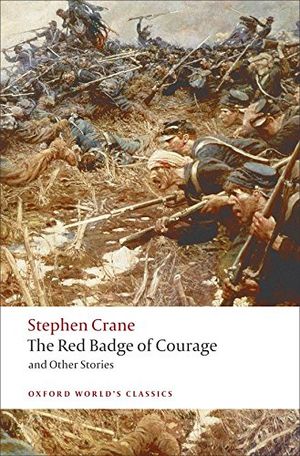


Classic Novels of the American Civil War, recommended by Craig A. Warren
The American Civil War (1861–1865) was a watershed moment in the history of the United States—and, as a result, has made an enormous impact on American literature, explains Craig A. Warren, author of Scars to Prove It: The Civil War Soldier and American Fiction. Here, he recommends five key texts: classic novels of the American Civil War that, together, offer a panoramic view of a country in crisis.
-

1
The Concept of the Political
by Carl Schmitt -
2
One Man’s Freedom: Goldwater, King, and the Struggle over an American Ideal
by Nicholas Buccola -
3
Jesus and John Wayne: How White Evangelicals Corrupted a Faith and Fractured a Nation
by Kristin Kobes du Mez -
4
Liberalism as a Way of Life
by Alexandre Lefebvre -
5
The Limits of Critique
by Rita Felski
The best books on MAGA, recommended by Laura Field


The best books on MAGA, recommended by Laura Field
While often associated with populism and economic dissatisfaction, the success of the MAGA movement in the United States is also rooted in a distinctive set of ideas about culture, identity, authority, and national renewal. Political theorist Laura Field recommends five books that explore the movement’s intellectual challenge to liberal democracy, from the work of Carl Schmitt in 1930s Germany to cultural shifts in evangelical Christianity today.
-
1
Changing National Identities at the Frontier: Texas and New Mexico, 1800–1850
by Andrés Reséndez -
2
Quitting the Nation: Emigrant Rights in North America
by Eric R. Schlereth -
3
Breakaway Americas: The Unmanifest Future of the Jacksonian United States
by Thomas Richards Jr. -
4
A Failed Vision of Empire: The Collapse of Manifest Destiny, 1845–1872
by Daniel J. Burge -
5
The Age of the Borderlands: Indians, Slaves, and the Limits of Manifest Destiny: 1790-1850
by Andrew Isenberg
The best books on Manifest Destiny, recommended by Andrew Isenberg


The best books on Manifest Destiny, recommended by Andrew Isenberg
‘Manifest Destiny’ was an idea brought forward in the United States in the 1830s as a rationalisation for western expansion. But it was always contested, argues Andrew Isenberg, Distinguished Professor of American History at the University of Kansas, as he selects five history books that, together, offer insight into what the borderlands of the American West were really like.
-
1
The Stamp Act Crisis: Prologue to Revolution
by Edmund Morgan & Helen Morgan -
2
The Marketplace of Revolution: How Consumer Politics Shaped American Independence
by T.H. Breen -
3
The Ideological Origins of the American Revolution
by Bernard Bailyn -
4
The Radicalism of the American Revolution
by Gordon S. Wood -
5
The Will of the People: The Revolutionary Birth of America
by T.H. Breen
The Best Books on the American Revolution, recommended by T.H. Breen


The Best Books on the American Revolution, recommended by T.H. Breen
The American Revolution began as a war for independence but, by its end, the war had transformed the thirteen colonies into a republic. Historian T.H. Breen recommends the best books which relay the revolutionary impact of the American War of Independence.


The Best Novels about the History of the United States, recommended by Bernard T. Joy
An exploration of the history of the United States may require novels that are challenging to read but offer the reward of really making you think about a complex subject. Literary scholar Bernard T. Joy talks us through five novels that explore U.S. history, from colonial times to the end of the 20th century.


The Best 20th-Century American Detective Novels, recommended by Dave Zeltserman
Many well-loved American detective novels feature cynical private investigator protagonists facing down hardened criminals and deep-set corruption. We asked Dave Zeltserman, author of Small Crimes, to recommend five brilliant books from this popular genre, from a 1920s small town murder mystery to a 1980s postmodern trilogy.


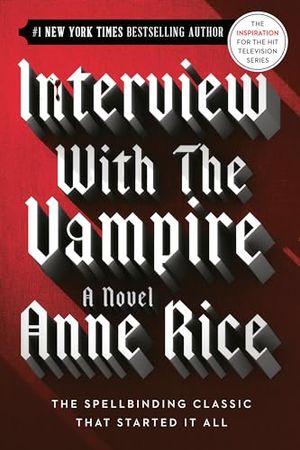

The Best 20th-Century American Horror Books, recommended by V. Castro
Horror is entertaining, but also a great way of shining a light on painful subjects people don’t want to talk about, says Mexican American horror writer V. Castro. As American horror has opened up to a much greater diversity of writers, she talks us through some of the classics—books that continue to inspire and form the bedrock of the genre.
-
1
Reclaiming History: The Assassination of President John F. Kennedy
by Vincent Bugliosi -
2
False Witness: The Real Story of Jim Garrison's Investigation and Oliver Stone's Film JFK
by Patricia Lambert -
3
The Killing of Robert F. Kennedy: An Investigation of Motive, Means, and Opportunity
by Dan E. Moldea -
4
Raven: The Untold Story of the Rev. Jim Jones and His People
by Tim Reiterman -
5
Warrant for Genocide: The Myth of the Jewish World Conspiracy and the Protocols of the Elders of Zion
by Norman Cohn
The best books on Conspiracy Theories, recommended by David Free


The best books on Conspiracy Theories, recommended by David Free
Conspiracy theories are not just harmless speculation but a dangerous form of belief that can have terrible consequences in the real world, says writer and critic David Free, creator of the Ghosts of Dallas podcast. He recommends books to understand conspiracy theories, from the assassination of JFK to the ‘Protocols of the Elders of Zion.’
