You’ve just written The Shortest History of the United States and you’ve also written a book about your travels in the US, which gives a slightly different perspective on the country. How would you describe the United States to someone who had just arrived from outer space or has never been there?
Well, without wanting to dodge the question, that would depend very much on where they touched down. That’s the thing about the place: nothing much pulls it together and it really beggars belief that it has held together for as long as it has. It’s held together by a rousing, ecstatic anthem, a flag and some very fine words.
There’s all the talk about democracy—well, they sort of believe in democracy, but as one rather cross Republican told me years ago, ‘Forget the democracy. We’re a republic.’ That’s what was happening in 1776 and thereabouts and that’s what the Civil War was fought over.
A veteran English journalist in Washington once said to me that one should think of America as an elective monarchy. That’s the truest thing I was ever told. It was just after 9/11 and he pointed out that George W Bush, an unimpressive president, was rating at over 90% popularity. The courtiers had gathered and everyone had rushed to be on his side, because he was the president. If it had been a coyote, they would have gathered around it, because he was the man.
The powers invested in the president—even before people like Trump expanded them—are much greater than any European monarch has any longer. Americans have carried the Declaration of Independence into the 21st century, but they also carried these extraordinary powers from the 18th century. So the fact that, having removed a mad, tyrannical king, they now have another one, shouldn’t be surprising to us, in a way. The grounds were always there.
The place is insanely diverse. One of the nicest men I ever met, Horton Foote, the playwright, who came from Texas, said that he came from one part of Texas, and his wife—like LBJ and Lady Bird—from another and it was as if they were from entirely different countries.
So there’s a geographical and cultural difference, and there is a class system, which they don’t believe in. There is no working class in America. As we’ve noticed in the last 30 or so years, they don’t use the term. One of the books I’ve mentioned is Isabel Wilkerson’s Caste. That is a very hard book to deny. There is a caste system in the United States, and it’s been there since day one. You don’t have to wander around the US for long to feel it, the sense that it’s real. That is a quite brilliant book.
The last place this person should touch down is Washington, DC, but what is heartland America? I’ve never really been too sure. I think it’s somewhere in the vicinity of Wisconsin, but not in Madison. As a former Republican mayor said of Madison, it’s 24 square miles surrounded by reality. I was there in 2016 during the Clinton-Trump election and if you put the radio on, you just hear you’re going in and out of red and blue country.
So let’s say this person landed in Wisconsin or Michigan, you would meet the nicest people you’ve ever met in your life. They are utterly hospitable. They’ll feed you bad coffee and food, but be really nice to you. When the elections are on, Republican or Democrat, they’ll treat you well.
What divides Americans is hard to say, but there’s a marvellous quote in the novel by Henry Adams, which is that politics is the systematic organization of hatreds. I’ve never heard a better definition and it’s never been truer than now. The hatreds run really deep—and yet, just as deep, runs the hand-on-the-heart America.
In a way, liberals now are hated by right-wing Americans—so-called conservative Americans who don’t strike me as conservative at all. I’m conservative; they’re radical reactionaries—in the way that communists were hated in the 1940s and 50s. They’re hated as if they are poison to the republic and the fact that American liberalism rebuilt the country from the Depression on, and worked really well at least for white America, has been completely forgotten.
The question at the moment is, ‘Is all this a result of political bullshit, grandstanding? Is it all because of Newt Gingrich and the Republican tactic of blocking and opposing everything, and the lunacy of the neocons?’ Or is what’s happening in America now, the division, endemic? Has it always been there? Is it structural? Is there just no room any longer to pretend that there’s common ground so one can cross the aisle, so-called? I don’t think we know the answer to that.
But what’s hard to think of is how, politically, you can reverse the process now. If Trump falls down the stairs of Air Force One, and that’s the end of him, tomorrow, who will replace him? How will it be different? Can the Democrats organize themselves and win the White House again? How much damage has been done? How much can they put decent people back in charge of the major departments and institutions? Can they take down Trump’s name from the Kennedy Center and take the ballroom down? That, I think, is the big puzzle: is this an existential moment from which there’s no reversing?
Don, you’re portraying quite a grim situation, but the US remains an economic powerhouse. How do you reconcile the tariffs and textbook mistakes with America’s continued economic strength? Do you think that’s just a hangover that will gradually be lost as well?
No, I don’t think that. The Chinese are overtaking them in many, many things, including cars, which are dear to America’s heart. This is the second time they’ve been taken over with cars: the Japanese did it first.
There’s no question about the extraordinary energy of the place, the capacity for innovation. The place is a marvel. Whenever I go there, I look at all the people and wonder how they do it. I also wonder whether they’re not completely mad and that there aren’t better things to do, like living in Oxfordshire in a nice room like you’re in, and reading books. They don’t seem to be inclined to that at all.
But I do think they have thrown away too much of the necessary cohesion to keep going for much longer. It’s often said—and you wonder whether it can be true when it’s so cliched—that neoliberalism was a folly of immense proportions. It did the United States terrible, terrible damage, as it did to the UK, and it’s done here in Australia to some extent. Like any closed ideological position, it was crazy, driven by fanatical men of not much talent. The neocons, like Rumsfeld and Cheney, weren’t very smart fellas. They were just people who hung out in political offices and found a way to get into power. They were hanging out with Richard Nixon way back. They had nothing to really recommend them as minds, but they took over and we all paid a price.
Let’s turn to the books you’ve chosen. How did you approach picking these particular five?
I approached it thinking, ‘How the hell can I pick out five books about the United States out of all the absolutely marvellous books that have come out of the country?’ We have to give them credit for that as well.
In some cases, they’ve had an influence on my own thinking about America. I suppose all the books have, in their way, some more specifically than others. I tried to choose a bit of a cross-section, both geographical and cultural. Leaving out Faulkner and Fitzgerald and Edith Wharton and heaps and heaps of others was quite hard, because they’re beautiful writers.
But I chose Huck Finn.
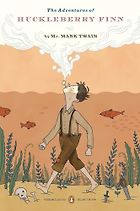
Yes, let’s start with the Adventures of Huckleberry Finn by Mark Twain, your first choice.
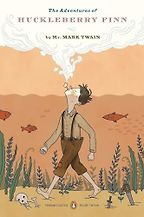
I read Huckleberry Finn in abridged versions when I was a kid, like everyone did, and I only read it properly when I was working in the prime minister’s office. I used to read it at night because the funny thing about politics is that it’s immensely busy one moment, and you’re flat out, and then suddenly it’s like nothing is happening at all. It’s like living in a void. So I’d go home to my little flat in Canberra and read about Huck Finn floating down the Mississippi.
I love Mark Twain. I think he’s the great American. There are others, but Twain has a sensibility which is very difficult to resist. It’s how I feel about Robert Burns and Scotland, just this lovely view of the world.
Mark Twain is funny, but his genius was to find the poetry in the vernacular. We now take it for granted in American writing, but the beautiful dialogue he came up with changed American literature. He grandfathered the whole lot.
And it’s a gorgeous story. I hate the bit at the end, but it’s a great story. I don’t think I’ll ever get around to reading the new version, which is told from the point of view of Jim. I don’t think it’s necessary – I think you can read Huckleberry Finn without coming away as a Southern racist.
Twain’s other books, some of them are genius, some of them are ordinary, but Huckleberry Finn is one of the most beautiful books I’ve ever read.
Would you say it’s an accurate picture of the American South at that time?
It’s a fairly kind picture. Mark Twain wasn’t beyond writing to an audience, and I’m sure he knew that to write too graphically about Jim Crow would have put people off. Read in conjunction with Isabel Wilkerson or James Baldwin or Ralph Ellison or Richard Wright, you can forgive his overlooking some of the horrors. But Jim is a slave, and he’s going to go back to slavery and he’ll get flogged, and you’re left in no doubt about that.
Mark Twain grew up in Missourah, as he called it—Missouri to us—and his father had slaves. He ended up being ashamed of this fact. He fought briefly on the Confederate side in the Civil War. He was in a small platoon, which he said they abandoned after two weeks when they ran out of umbrellas. He headed West and stayed right away from the Civil War. He was smart, but he was conservative, like a lot of us are when we’re young.
Then he married into a New England abolitionist family, and he became more and more fiercely critical of America, of slavery, of Jim Crow, and wrote a couple of ferocious tracts. He also was a founding member of the Anti-Imperialist League, which opposed the Spanish-American War and deplored what they were doing in Cuba and the Philippines. So he ended up as a rather bitter left winger.
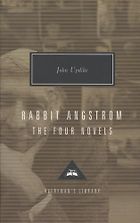
Let’s go on to your next choice, which is The Rabbit Quartet by John Updike. It’s funny, when I was leaving the UK to go to graduate school in the US in 1998, an American friend gave me the first book in the quartet, Rabbit, Run, to read as an introduction to the US. It must capture something about the place!
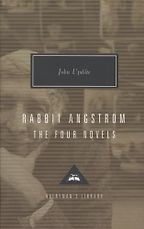
Yes, it does. Rabbit, the nickname of the main character, Harry Angstrom, is a person who has great potential. He’s got money, he’s got a job (most of the time), and he loves America.
But he can’t bring himself to stop eating and watching TV and wasting himself. He’s never satisfied with anything—cars, women—and goes looking elsewhere. He seems to me a man of appetites, in the way that America is a land of appetites.
Like most people, he’s never quite going to get to the part where he starts a high-tech business in Silicon Valley. He’s not even going to get his own car dealership. He’s just going to be a salesman. His best days are behind him on the basketball court at college. He’s 26 and he’s burned out.
So he’s a rather grim figure in lots of ways, but it’s also a great novel. Or four of them—they have been published all together as one 1,500+ page Rabbit Angstrom.
Of all the 20th-century American writers, Updike’s powers of description are just unbelievable. If you write for a living, you don’t want to read Updike too often, or you’ll give up. He’s a beautiful stylist and he can describe anything—the hair on the back of your hand. I don’t know how he does it. He’s a brilliant observer, and just has a magical gift, which he knew he had.
I think that’s why he kept going to church, because he thought it was God-given, that his talent must have come from somewhere. He was an Episcopalian, a Protestant, and for all his outrageous misdemeanours, he kept going to church all his life.
So is Rabbit at all autobiographical or a purely fictional figure?
No, a man who wrote 60 books isn’t a Rabbit Angstrom. Rabbit would have got the first page out and then just got bored. Rabbit is interested in money; he wants a sunken sitting room in his house. He is the full-blown American materialist. He can’t think about anything for too long without a drink. He’s a nice fellow but nothing like Updike — although Updike had a similar sexual appetite.
Do you also like the four novels as a historian, for telling a tale of America over these decades?
I don’t think you could read anything better to tell you what happened in America in the last half of the 20th century — at least to white, middle-class America. He spends quite a bit of time as a car salesman. That’s the funny thing about American novels—Roth did the same in American Pastoral, which is a book I thought about putting on the list: they give lots of detail about business. Updike talks about Toyotas. This is Rabbit’s world, but the bloke who lives next door to me is exactly the same. He talks about cars all the time. Australia is very similar in that regard.
An awful lot of America’s power comes from building temptations and dreams. I have this theory that an extraordinary number of Americans — and Rabbit is a bit like that — walk around believing that they’re separated from another world by a thin membrane. One day, they will walk through it and be in the kingdom of God or on the David Letterman show. It will be fabulous, and they’ll be there.
There is always a search for the transcendent and the ecstatic in America, and Hollywood works on that, too. I don’t think there’s any other culture that is quite as ingenuous as America is. You’ll meet people, and they’ll tell you their life story and they’re going to be president of the US — because anyone can be president.
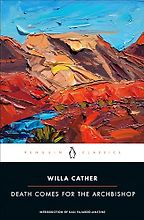
Let’s go on to your next recommendation, Death Comes for the Archbishop by Willa Cather.
This is set at the other end of America, the Southwest, which is such a different world. I drove through New Mexico twice, and it is the most tedious landscape. You think you’re going to go mad if you go over another rise and it’s exactly the same. It’s bad enough doing it at 100 kilometres per hour, but in Death Comes for the Archbishop, the bishop is on a horse, which makes it even worse.
This is Cormac McCarthy country or where Breaking Bad is set. The Americans get the Southwest after the Spanish-American War. This was the war where Ulysses S. Grant got his stripes, though he said it was the most unjust war ever fought. He hated it; it was just a grab to extend the reach of slavery, really. Out of it came New Mexico.
Willa Cather does not depict the mad violence that Cormac McCarthy writes about much later, but writes about a Catholic bishop and a priest. The book captures something rather lovely, which is that for all its rugged individualism, frontier violence, and capitalist churn, there’s always this search for grace in America. I haven’t seen it in any other country that I’ve been to. You can drive all day on Sunday through Appalachia, say, and you’ll hear the singing in the churches. People talk about religion very openly and freely. There’s something very touching about it.
So this bishop and priest come to bring grace to this wild frontier. The bishop is riding through this country on a horse that’s dying of thirst, and he’s not much better. The trees are all exactly the same, the little hillocks are the same, and the heat is appalling. Then he comes to a tree that’s cruciform. So he gets off the horse, kneels, and prays to this tree for half an hour. It seems to me wonderfully symbolic of the American quest for grace and deliverance. So I included this book because it’s so gentle, even though there’s violence in there.
Willa Cather also revealed in the book that Kit Carson—who we watched on our TV screens in the 1950s if we had one—was actually a horrible man who rounded up the last of the Navajo and the Hopi and put them in a concentration camp. A real pig of a man, really, like so many of our heroes turn out to be.
But I chose this book to say—and Updike is onto the same thing—that this need for putting some kind of structure in place for life to be lived around runs deep in America, and the church is the main hope. The US is so avowedly materialist that you need a backbone of belief, over and above belief in the flag, and in a way that coexists with the ecstatic side of religion and secular culture.
It sounds a great book.
It’s lovely. All her books are fabulous. She was terrific. She’s quite interesting in that her character, the bishop or archbishop, as he becomes, has a very strong feminine side. There’s a sexual ambiguity about him, almost, as there probably was with Willa. She was mixing it up a bit.
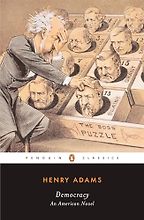
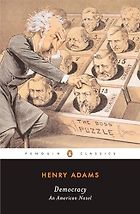
Let’s go to your next choice, which is Democracy: An American Novel by Henry Adams. You said earlier that somebody new to the US who wants to find out what it’s all about should go to Washington, DC last. This novel is pretty overtly about Washington, DC, isn’t it?
It is. It’s a terrific book. I read it far too late. Henry Adams was one of the Adams family – his great-grandfather was the second president and his grandfather was also president. They’re Boston Brahmins who go all the way back to the Puritans.
His great-grandmother, Abigail Adams, was a fantastic woman who wrote a letter to her husband saying, ‘Well, you may have removed the colonies from the tyranny of England, but you’ve done nothing about the much greater tyranny of men over women.’ She was really onto him and the whole lot of them. It’s funny, everyone says, ‘well of course they didn’t include women anywhere, that’s how everyone was back then.’ But there are always voices which take the other view. I tried to work the thread of women’s voices through The Shortest History. There are a lot of threads, but it was incredibly regressive for a long time. They had to fight tooth and nail to get the vote in 1920.
Henry Adams wrote this book with a female heroine. The main character is very smart but highly marriageable. A politician—in a way an avatar of democracy—comes out of the Midwest and is doing very well in Washington. In the way of 19th-century novels, you read it thinking, ‘Whatever you do, don’t marry him. He’s bad.’
The novel is full of Adams’s Brahmin contempt for democracy, up to a point. The functioning of it does tend to bear out an awful lot of aristocratic reservations about how it’s going to work. Mark Twain worked in Washington briefly and came away believing it was the most corrupt place he’d ever been to. Adams was writing, as Twain was, in the middle of the Gilded Age and there is fantastic, outrageous corruption. Not as bad as today’s, but getting close. When those great fortunes were built, you could just buy votes as easy as you like. Everything from half-price tickets on a railway train to land deals. It was really America for sale.
Adams simply loathed the crassness and the materialism and the corruption and everything else which we now go on about with America, much as Twain did, much as William James did. There’s a literary awareness all through this — voices which are shy about the worth of American society. The sharpest critics of America have always been Americans, with maybe the exception of Tocqueville.
Tocqueville was phenomenal, by the way. He wrote Democracy in America in the 1830s. He never went west of the Mississippi, and he was only there for about eight weeks. And his book is still quoted as if it’s the gospel about the United States, which means, firstly, that he was a genius, and secondly, that America hasn’t changed much.
It’s interesting talking about corruption in Washington, because I suppose I always thought of ‘draining the swamp’ as a populist device to get votes, rather than an accurate description of what’s really going on there.
Some times have been worse than others. When it gets too bad, they pass another amendment. It happens in democracies — one way or another, people do deals. The American philosophy is pragmatism and William James formalized it and made it respectable. But it can’t work without deals. US history is hung on massive compromises, like slavery and the Missouri Compromise. Even after the Civil War, more deals enabled Jim Crow to thrive and a kind of apartheid to replace slavery. Reconstruction was abandoned.
You could say it’s not the failure of Americans to live up to the fine words — it’s that the fine words fail to live up to any possible reality. They set bars which they couldn’t possibly reach. The Declaration of Independence was a wonderful document that Lincoln carried with him everywhere and always referred to. It was written by a man with 600 slaves and edited by a man with 200 slaves. That’s a lot of human beings to have at your disposal. Thomas Jefferson had several children with Sally Hemings — while states were furiously passing miscegenation laws which remained in existence up to the 1960s! It’s pretty mad.
The Declaration of Independence, the preamble of the Constitution, Lincoln’s Gettysburg and Second Inaugural addresses are magnificent things. But as soon as they’re over, people are going to go home and think, ‘Well, that didn’t really help much, did it?’ Or that national anthem that no one can sing. That says it all to me, that you have to be a trained vocalist to sing The Star-Spangled Banner, really. Every town I ever went to had somebody who could sing it because no one else could. And if you want to see the absolutely pivotal performance of that, it is Whitney Houston at the Super Bowl. When we’ve finished, put it on. It is phenomenal. It is ecstatic. It’s brilliant. It gives you goosebumps. And then there’s a flyover of jets with people standing at attention or waving. She’s in a tracksuit, but everyone else is either in uniform or in football kit. It is like ecstasy and militaristic all at the same time. It’s like liberation as fascism and fascism as liberation at the same time.
Another video to watch is Marian Anderson at the Lincoln Memorial. She was one of the great contraltos of the world, but couldn’t stay in hotels when she did American tours because she was black. It is pretty damn amazing, but that was still going on in the 1950s.
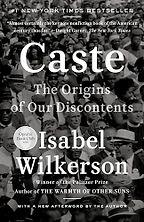
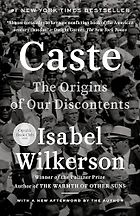
Let’s turn to your last book, Caste by Isabel Wilkerson. Tell me about this book; is it a history?
It is amazingly well researched. No doubt someone could go through it and make criticisms — as you can with any history, but it’s very hard to deny. If the things she describes that happened from the 17th century onwards, and to her, were the only things she described, it’d still be horrifying. But the fact is that for every one of those, there are millions of others. You have to conclude that this is something that really is at the core of America’s problems.
As she points out, the election of Obama was followed immediately by Trump and the birther movement. Race runs all the way through that. When Kamala Harris took over the Democratic nomination, the first thing Trump raised was race. He went to a gathering and started talking about whether she is Black. You can’t think about America without understanding that it is deeply built on race. For half of the American voting population, having a Black White House was just more than they could handle.
I remember being in Ohio in 2008 and then going back a year later. The great fear in the slavery days was that the slaves would rise up and they’d hack us to death like they did in Haiti. The fear of an uprising was such that you just had to keep them down and you could mutilate them and do whatever you liked to them. She argues that there never was a system of slavery as utterly devastating as the American system. Ancient Greece had nothing on the US. Hitler was enormously impressed, not only by slavery, but by Jim Crow and the miscegenation and race laws of 1924 or so. It’s like a disease that you keep putting aside and pretending you haven’t got, but it’s there all the time.
Trump understood this. He took the same view as every politician who’s successful, which is that politics means you do whatever is necessary. That’s pragmatism. He thought, ‘This is a racist country, and that’s what I’m going to play on. I’ll actually nurture every bit of hatred, fear and loathing I can find.’ The best example I can think of is a lovely couple I met in a town called Zanesville, Ohio. It’s a rustbelt town. In the 1950s, it had a population of 65,000 and when I got there in 2008 it had a population of 27,000. It used to have a dozen synagogues. It now had one. It’s just a collapsing town. This couple had come from Detroit. They were a middle-class Black couple and when they arrived, they couldn’t get a house — no one would rent to them. Finally they managed to buy a house with a paddock in which they put their kids’ pony.
It began with someone writing ‘go home’ on their house. They were teaching at the local college and one day they came home and found the kids’ pony had been decapitated. It was appalling, the things that had happened to them. The clan was operating in Zanesville — it’s still there, I’m told.
But before I left town, they took me downstairs to show me their pride and joy. In the garage, there was a big motorbike and sidecar decked out with American flags and painted in the American colours, which they liked to travel around on. Here’s this country which has treated you terribly, and yet you’re as patriotic as the next person! I wonder now, ten years on, whether they are still as patriotic. What do you do if you’re in that position, and you know the president who has been elected depends on an anti-black sentiment to stay in power?
You can see how John Brown ends up hacking white people. The rebellions are so savage when they occur. Trump would love it. He’s desperate for more demonstrations. He’d love to see the tanks rolling down the streets.
Finally, Don, tell me about your book, The Shortest History of the United States. Was it fun to write and try to distill everything you’ve read and experienced in the United States over the past few decades?
No, it wasn’t fun. I haven’t written history for years. I was an academic historian, but I’ve been freelancing for 40 years. I said to the publisher, ‘Get an American to write it. Americans won’t buy an outsider’s history.’ Anyway, he insisted, and I cursed him at times. It was hard to write, but all books are. You very rarely get an easy one. You had to get the bones of the thing right without it getting really boring. Even if it was only anecdotal, I had to get a bit of meat on the bones, bits of viscera. Then you’d think you were going well, and realize you hadn’t mentioned something that was absolutely fundamental. The other day, I realized I hadn’t mentioned the Mason-Dixon Line! But it was too late. It’s an impossible task.
It’s not bad. I’m not ashamed of it. I think it’s pretty good in places. It’s a great story. Even before Hollywood took them over, there are so many great characters. I came away thinking that FDR was the great American of the 20th century, even though he was a pure pragmatist. I think both our prime ministers, yours and ours, would do well to study FDR as quickly as possible. If you’re going to reform a country and take it where it’s got to go, you have to do things; you have to act. If you don’t stay ahead, it’ll catch you up. It seems to me that both Mr. Starmer and Mr. Albanese could learn from that. You have to get in front of the game and be doing something. And you’ll be amazed, when you’re doing something, how your words make more sense, and they start to ring. They won’t ring if you’re not doing anything, which is, I think, what happened to Obama, in a way, by the end. It just felt like all words, ringing words, and don’t give me any more of those Gettysburg, Lincolnian cadences – give us something else.
Interview by Sophie Roell, Editor
July 4, 2026. Updated: August 24, 2026
Five Books aims to keep its book recommendations and interviews up to date. If you are the interviewee and would like to update your choice of books (or even just what you say about them) please email us at [email protected]
Five Books interviews are expensive to produce. If you've enjoyed this interview, please support us by donating a small amount.